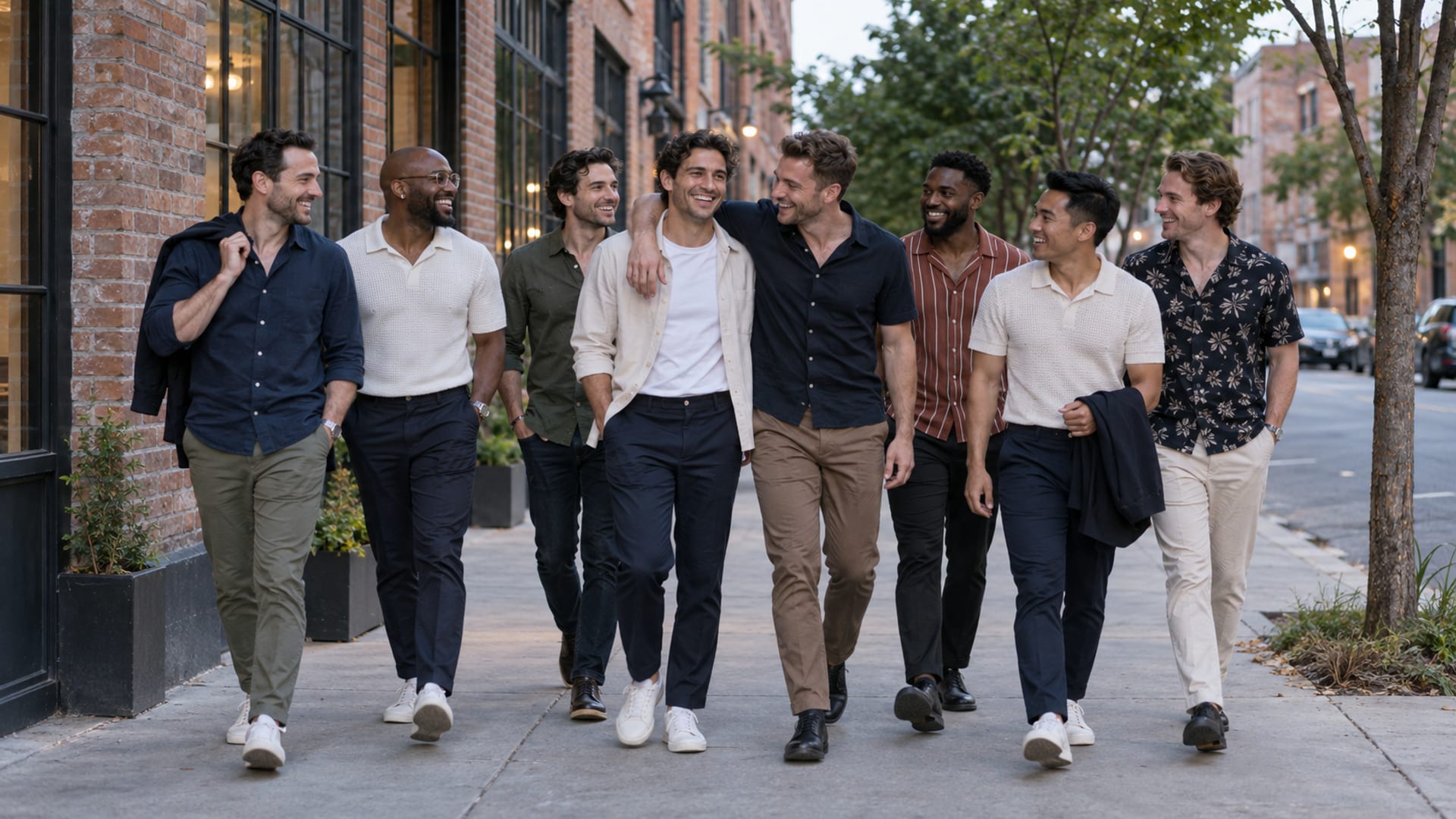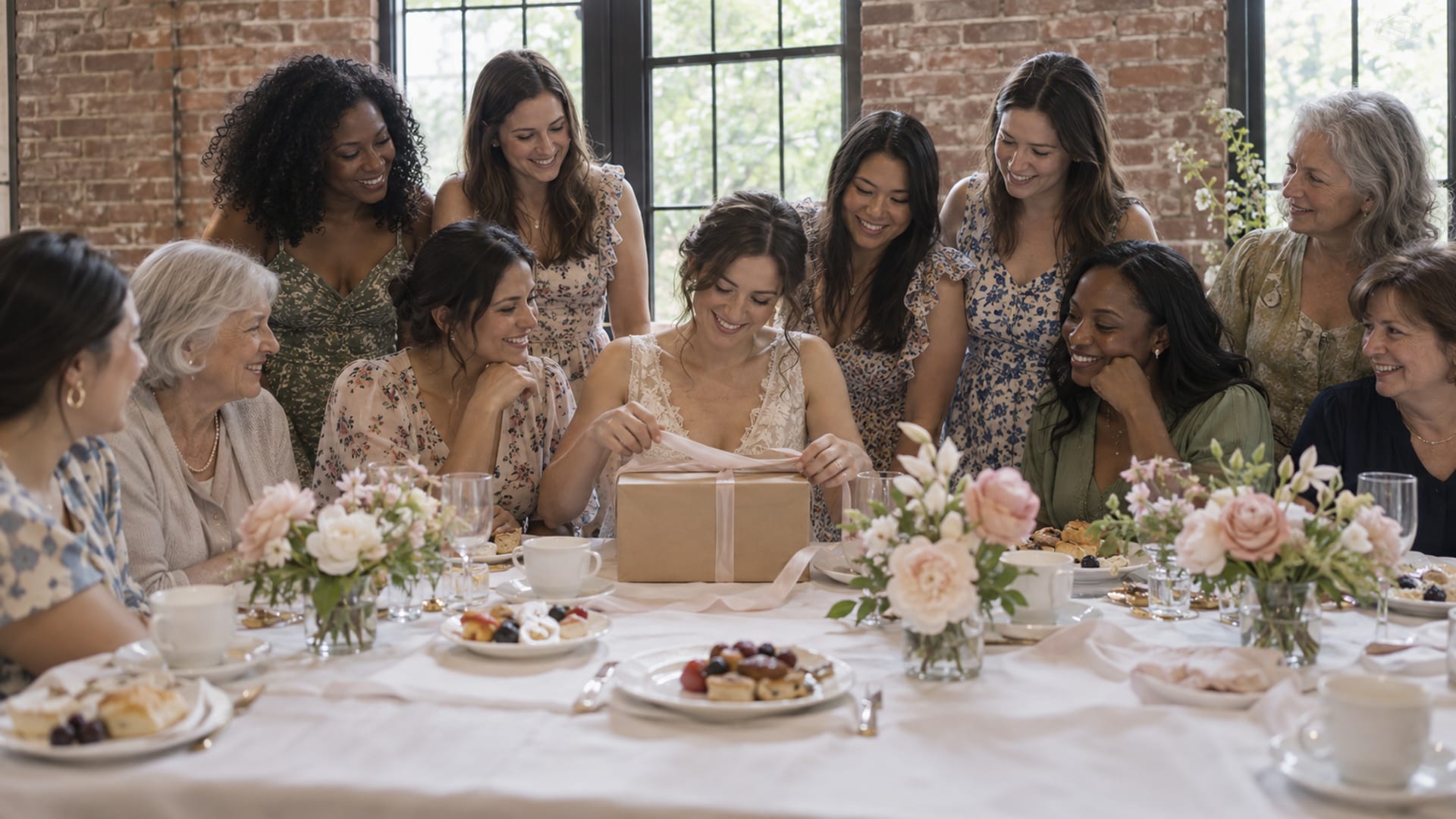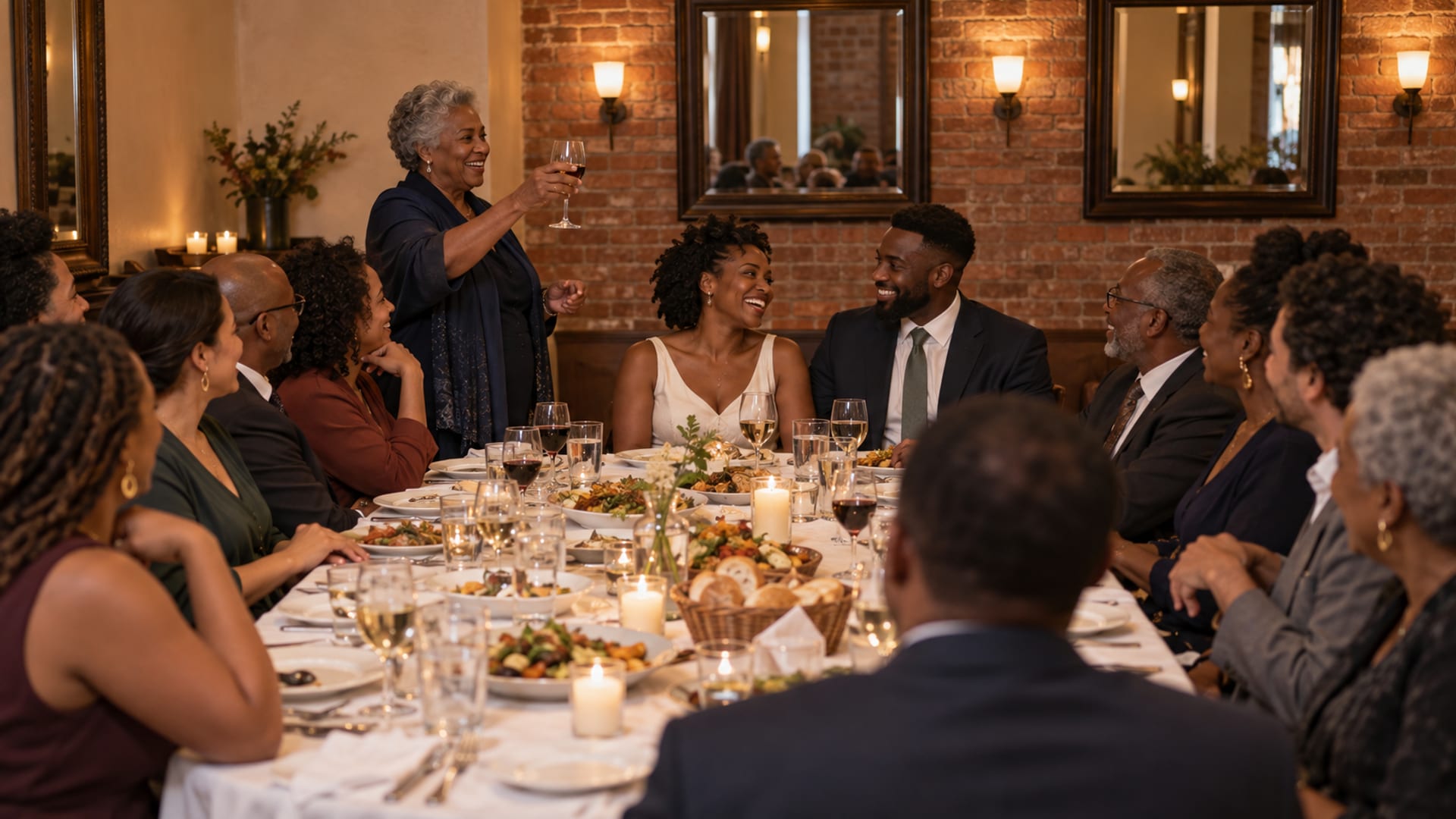
A rehearsal dinner is a private or group meal held after your wedding rehearsal, usually the night before the wedding. The usual guest list is the two of you, your wedding party and their partners, close family, and your officiant and their partner, with out-of-town guests added when the budget allows (Emily Post, read September 28, 2026). The groom's family traditionally hosts, but you, either family or another host can pay. In New York City the cost depends on guest count and venue: Sonnyboy lists group menus at $50 or $60 per person, Peak lists a private dinner at $315 per person, and Hawksmoor sets a $2,500 minimum spend for certain rooms (all read September 28, 2026).
Key takeaways
Tap a card to bring it forward.
- The core guest list is the wedding party and partners, the officiant and partner, parents, grandparents, siblings, and parents of young attendants.
- The groom's family traditionally hosts, but any host works; agree on who is paying before invitations go out.
- NYC prices are quoted per person or as a minimum spend, and tax, gratuity and fees usually come on top.
- Many private rooms, rooftops, lofts and boats price by quote only, so ask for a written total.
- A park dinner with more than 20 people needs an NYC Parks permit, applied for at least 21 days ahead.
- Plan for two to three hours and an early finish before the wedding day.
What a rehearsal dinner is, and how it differs from a welcome party
The rehearsal dinner is the smaller of the two pre-wedding gatherings. It follows the ceremony rehearsal, brings together the people who have a role in the wedding and the families closest to you, and gives everyone a calm evening before the main event. It is separate from your marriage license, any City Clerk ceremony and the reception, and it needs none of them.
A welcome party is a broader event for guests who traveled in, and Greenvelope (updated September 12, 2026) treats it as its own gathering with a wider guest list. You can combine the two, but decide that on purpose. A combined event needs one guest list, one RSVP process and one budget, and it will cost more than an inner-circle dinner.
The format is flexible too. Emily Post notes that the dinner can be a formal meal, a buffet, a picnic, a clambake, a brunch or a luncheon, so a Sunday brunch in Brooklyn or a long table at a neighborhood restaurant counts just as much as a seated dinner in a private room.
Who to invite
Start with the traditional list from Emily Post and adjust from there:
- The two of you.
- Everyone in the wedding party, plus their spouses, fiancés or significant others.
- Your officiant and their partner.
- Parents, stepparents and grandparents.
- Siblings who are not in the wedding party.
- Parents of young attendants, such as flower children and ring bearers.
Count this list before you contact any venue, because that number decides whether a single private room works.
Out-of-town guests are where the list tends to grow. Emily Post says you may invite them if budget and circumstances allow, but you do not have to. If you want to welcome travelers without doubling the dinner, a separate welcome gathering, a meet-up at the hotel bar, or a short list of nearby restaurants they can try on their own all do the job. The guide to where your wedding guests should stay in NYC, by borough, helps you pick a spot close to where most of them are sleeping.
Who traditionally pays, and how that is changing
Traditionally, the groom's family hosts and pays. Emily Post calls this customary rather than required, and Martha Stewart (updated August 8, 2026) notes that the couple, either family or both families now host, often splitting costs by agreement. Relatives or friends can host as well.
The practical step is to settle the host and the budget before anyone books a room or sends an invitation. The invitation should name the host. If the evening is really a get-together where each person pays their own way, say so clearly, because Emily Post treats a self-paid group meal as a different kind of event from a hosted dinner, and guests should know which one they are coming to.
Which NYC venue type fits your guest count
Your guest count narrows the choices quickly.
Restaurant private rooms suit smaller groups and come with a kitchen, staff and a set menu already in place. At Hawksmoor in Gramercy, the Lord Bronx room seats up to 14 and Ty Whoppity up to 12 (Hawksmoor). Peak's private dining room takes a 10-person minimum and seats up to 16 (Peak brochure).
Group dining and semi-private tables can work when you do not need a closed door. Sonnyboy on the Lower East Side takes large group dinners of 8 to 14 people, and private events of 15 to 30 (Sonnyboy). Semi-private means other diners may be nearby, which matters if you plan long toasts.
Rooftops give you the skyline but add weather and building rules to the plan; see the rooftop section below.
Lofts are usually empty rooms. Expect to bring in a caterer, rentals and staff, and to follow the building's rules and insurance requirements, so ask the space for a full quote before comparing it with a restaurant.
Boats can host a buffet or a sit-down dinner. iBoatNYC lists private charters with food and beverage packages; pricing comes by quote.
Parks need a permit once the group passes 20 people, covered in the park section below.
For rooftops, lofts and boats, request a written quote that shows every charge, because a total you can compare matters more than a starting price.
Published NYC price examples
These figures come from each venue's own page or brochure, read September 28, 2026. Prices change with the date, the time, the guest count and the menu, so treat them as a starting point for your own quote.
Tap or hover a row to highlight it.
| Venue | What is published | What is extra | Source |
|---|---|---|---|
| VenueSonnyboy, Lower East Side | What is published$50 or $60 per person, shared-style prix fixe, groups of 8 to 14 | What is extraDrinks à la carte; private events of 15 to 30 have a minimum that varies by night | SourceSonnyboy |
| VenueHawksmoor, Gramercy | What is published$2,500 minimum food and beverage spend for dinner in Lord Bronx or Ty Whoppity | What is extra8.875% sales tax, 5% event administration fee, suggested 20% gratuity | SourceHawksmoor terms |
| VenuePeak | What is published$315 per person, three courses, room rental and 2.5 hours of service; 10-person minimum | What is extraBeverages à la carte, 20% gratuity, 8.875% sales tax | SourcePeak brochure |
Two quick calculations show how the extras add up. At Peak, ten guests at $315 makes $3,150 for food and the room; adding 20% gratuity and 8.875% tax on that amount brings it to about $4,060 before a single drink. At Hawksmoor, 12 guests reaching the $2,500 minimum works out to about $208 a person, and if the tax, the 5% fee and a 20% gratuity are all figured on that minimum, the total comes to about $3,347. The Peak brochure was posted in 2023, so confirm the current price with the restaurant before you plan around it.
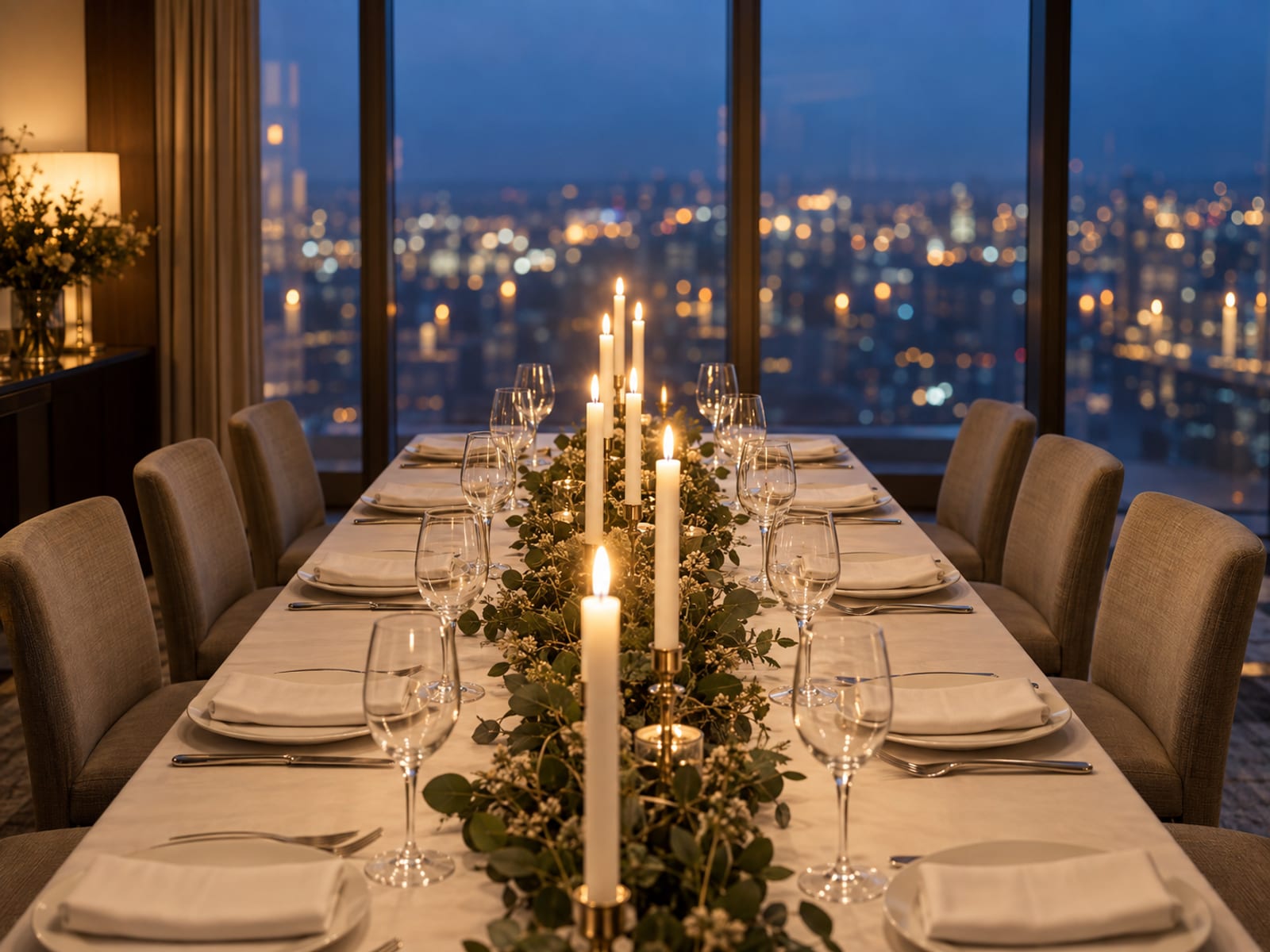
For wider context, The Knot (updated March 30, 2025) reports a $2,700 national average total for couples married in 2024, with $1,630 for weddings of 50 or fewer guests and $3,139 for weddings over 100. Zola (updated February 19, 2026) gives a national range of about $55 to $150 per person. Both are national figures, and a Manhattan private room can sit well above them. There is no single citywide average per guest to budget from, so build your number from the actual quote. The guide to what a NYC wedding costs, from Manhattan to the outer boroughs, shows how the dinner fits into the full budget.
What to ask before signing a venue contract
A private-dining contract is short, but a few lines in it decide your real total. Ask each venue on your shortlist:
- Is the room fully private or semi-private?
- What is the guaranteed minimum, and does it cover food only, food and beverage, or a room fee?
- Are tax, gratuity and any administration fee included in the quote or added on top?
- How much is the deposit, and is any of it refundable?
- What are the cancellation and postponement terms?
- When is the final guest count due, and are you charged for guests who do not show up?
- Can the kitchen handle allergies and cultural or religious dietary needs?
- Can you give speeches, play music, hand out gifts and bring a cake?
- Are outside wine, cake, décor or entertainment allowed, and is there a fee?
- What time can guests arrive, and when must the room be empty?
- Is the space accessible for every guest, including older relatives?
- For outdoor or rooftop space, what happens if the weather turns?
An accordion file with labeled sections for each venue's quote, menu, contract and deposit receipt keeps the numbers side by side while you compare, and the contract within reach once you sign.
When to book, and what deposits and cancellations look like
Emily Post advises reserving the venue once the wedding and rehearsal dates are set. There is no citywide lead time, so the practical order is: fix the date and rehearsal time, settle the host and budget, estimate the guest count, then start inquiring. Popular private rooms may need an earlier inquiry, so contact those first.

Terms vary by venue, and Hawksmoor's published terms show what a firm contract looks like (Hawksmoor terms). It asks for a signed contract and a 50% non-refundable deposit, applied to the minimum, and it may release the booking if both are not received within seven days. Final guest count, menu, beverage, décor, cake and gift-bag choices are due at least five business days before the event, and the guaranteed count is billed even if fewer guests arrive.
Other venues work differently. Peak's brochure says availability is not confirmed until 30 days before the date, with set seating times, so you would hold a backup until then (Peak brochure). Sonnyboy asks you to request the private-event minimum for your specific night (Sonnyboy).
Invitations follow the wedding invitations, generally three to six weeks before the dinner, according to Emily Post. If families on both sides read Spanish more comfortably, a bilingual insert that names the "cena de ensayo," the host, the dress code and the RSVP date keeps everyone on the same page.
Rehearsal dinner booking order
Tap or hover a step to follow the order.
Fix the date and rehearsal time
Reserve the venue once the wedding and rehearsal dates are set.
Settle the host and budget
Agree on who is paying before anyone books a room or sends an invitation.
Estimate the guest count
That number decides whether a single private room works.
Start inquiring
Contact popular private rooms first, and ask for a written quote.
Sign and pay the deposit
Hawksmoor, for example, asks for a signed contract and a 50% non-refundable deposit within seven days.
Send invitations
After the wedding invitations, generally three to six weeks before the dinner.
Confirm the final details
At Hawksmoor, the final count, menu and other choices are due at least five business days before.
What the dinner includes and what guests wear
Most rehearsal dinners follow a simple arc (Emily Post). The host welcomes everyone, families and friends who have not met are introduced, and the meal is served. The host usually gives the first toast, then family members, attendants or friends may add their own, and the two of you thank your parents, attendants, officiant and guests. This is also a natural moment for attendant or parent gifts, if you are giving them.
Greenvelope describes a typical length of about two to three hours and recommends ending early. In practice, that means booking a room with an end time that leaves the wedding party a full night's sleep, and telling guests that end time on the invitation.
For attire, state the dress code plainly on the invitation. Greenvelope suggests dressing one step less formal than the wedding: cocktail attire when the wedding is black tie, and dressy casual when the wedding is cocktail. For a casual wedding or a relaxed restaurant, let the venue, the time of day and the weather guide the wording. Guests shuttling between a hotel, the rehearsal and dinner will appreciate a note about the dress code early, and a breathable garment bag with a luggage sleeve keeps an outfit ready for the evening.
What changes if the dinner is in a park or on a rooftop
A park dinner runs on NYC Parks rules. A permit is required for events with more than 20 attendees in a park, the special-event processing fee is $25, and applications must come in at least 21 days before the event (NYC Parks, read September 28, 2026). Sound, tents and signage can bring extra fees. If a caterer will serve food on site, ask whether it needs a temporary food-service permit from NYC Health. The guide to getting a park ceremony permit in NYC walks through the application.
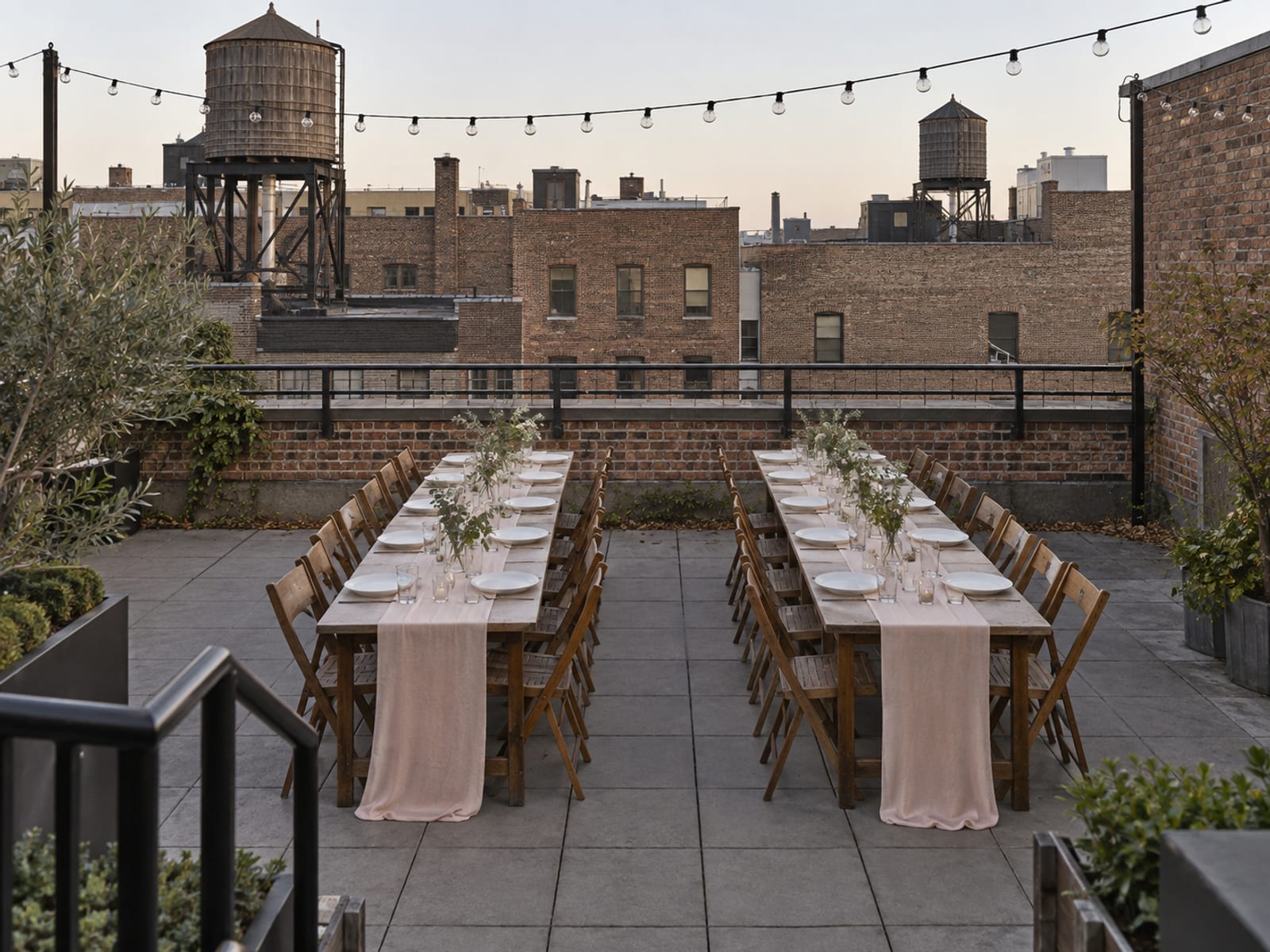
A rooftop is governed by building and fire-safety rules instead. NYC Buildings says a rooftop dining space reached through interior space may count as a place of assembly at 75 occupants or more, and it uses an occupant load of 10 square feet per person for the area used. A place of assembly needs a Certificate of Operation, issued after plan approval and inspection and renewed with an annual FDNY inspection. The venue holds these approvals, so ask to confirm the space is approved for your guest count. Also ask where dinner moves if it rains, and bring a compact umbrella for the walk in. Rooftop weddings in NYC: permits, cost and the weather plan covers the weather side in more detail.
Quick check: deposits, permits and timing
Answer every question to check.
Questions couples ask about rehearsal dinners
These are the questions that tend to come up once the room is booked.
Does the rehearsal dinner have to be the night before?
No. It is usually the evening before the wedding, but Emily Post notes that a brunch or luncheon works too. The rehearsal itself can happen right before the meal or at another time.
Is the officiant invited?
Yes. The traditional list includes your officiant and their partner, alongside the wedding party, parents, grandparents, siblings and parents of young attendants (Emily Post).
Does a restaurant rehearsal dinner need a permit?
A dinner inside a restaurant runs under that restaurant's existing approvals, so you usually have nothing to apply for. Permits come in when you move outdoors, such as a park gathering of more than 20 people (NYC Parks).
Can guests pay for their own meals?
They can, if the invitation says so clearly. A self-paid group dinner is a different event from a hosted one, and guests should know which it is before they accept (Emily Post).
Your next step
Once you know who is hosting and roughly how many people are coming, email two or three venues for a written quote and run each one through the contract questions above. Then place the dinner in your overall budget with the guide to what a NYC wedding costs, from Manhattan to the outer boroughs. If your guests are spread across boroughs, getting wedding guests around New York City: shuttles, subways, cars and parking helps you plan the ride to dinner. And if you are marrying at City Hall and want something simpler, where to eat or celebrate after a City Hall wedding has ideas that work the night before as well.