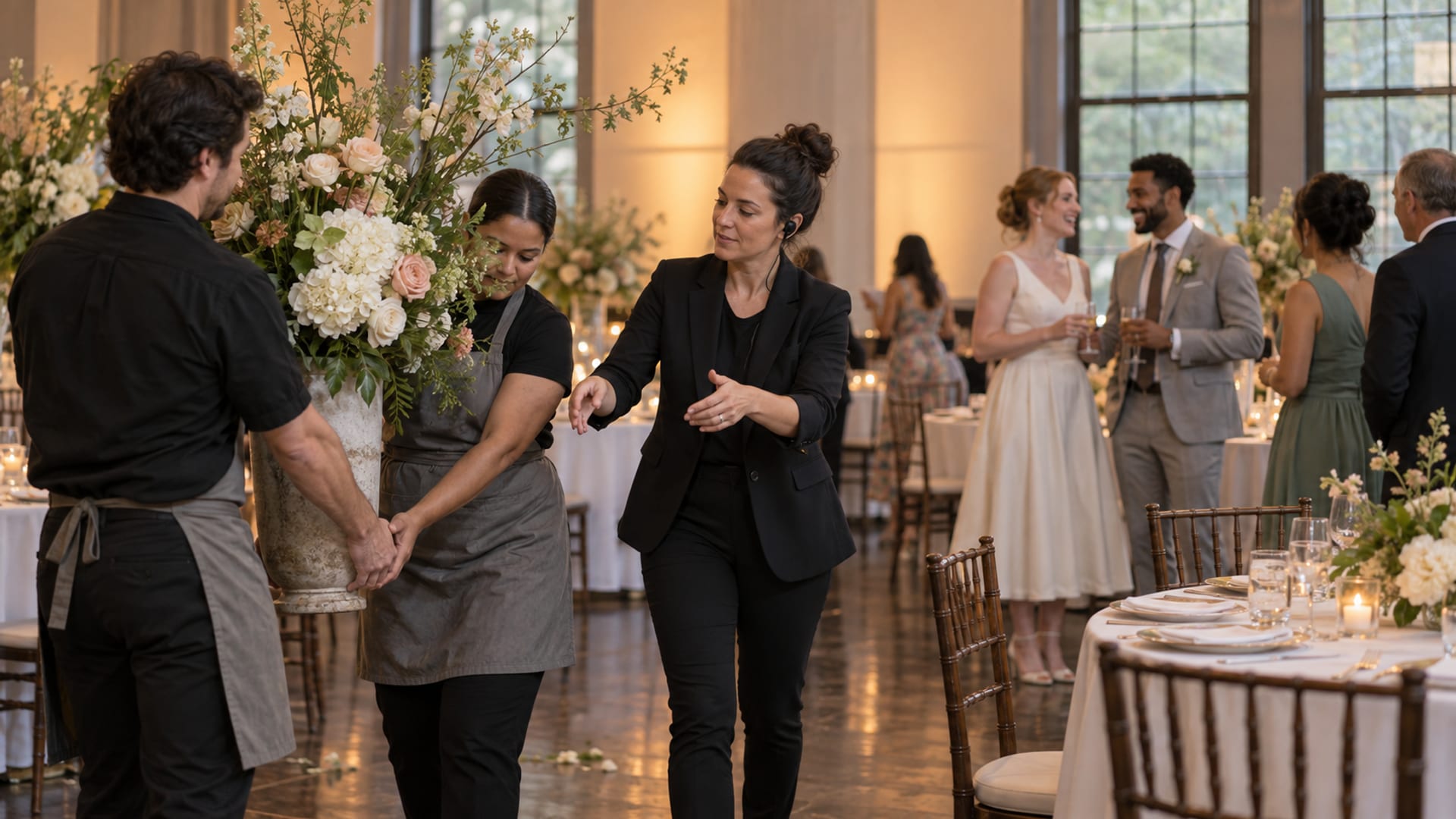
A workable order starts with the host or parents, moves to chosen family or attendants, and ends with the two of you if you want to speak. Nothing makes that order mandatory. The Knot says couples change the lineup all the time, and Emily Post describes the host as the traditional first toast.
When several people speak, aim for under five minutes each, as Zola recommends. Speeches usually come once guests are seated and served. If your list is long, the rehearsal dinner can hold some of them.
Before you book a room, ask one question: who supplies the microphone and the speakers? In a restaurant, loft or small private room, that answer shapes the rest of the plan.
Key takeaways
Tap a card to bring it forward.
- Start with the host or parents, then family or attendants, then the two of you if you want to speak; the order is yours to set.
- Under five minutes per speaker is the target when several people speak; fewer speakers can run longer.
- Put speeches after guests are seated and served, between courses or before dessert, or move extra remarks to the rehearsal dinner.
- Ask the venue, DJ or band who supplies the microphone, who runs it and when the sound check happens.
- Arrange a feed from the sound board for the videographer, plus a backup recorder.
- Ask whether an NYPD sound permit applies to a speaking program at your location.
Who speaks, and in what order
Etiquette sources agree on the broad shape and differ on the details, which is useful: it means you can pick what suits your families. Emily Post lists the host first and says the best man has traditionally given the first reception toast, with parents, the maid or matron of honor, the couple, family and close friends following. Zola describes maid of honor, then best man, then the father of the bride. The Knot starts with the hosting parent or parents, then the other parents, the attendants and the couple.
A flexible version works for most receptions. Open with whoever is hosting, which may be a parent, both of you or a family member. Follow with chosen family or attendants, and close with the two of you if you want a thank-you moment. Each of these roles is customary, not required. If one of you has no wedding party, if there are two grooms or two brides, or if a parent is not part of the day, The Knot gives examples of weddings that simply skip a role.
Write the speaker list before the reception timeline is final. Then tell each person the order, the time target and roughly when in the evening they will stand up.
A flexible speaking order
Tap or hover a step to follow the order.
Open
Whoever is hosting, which may be a parent, both of you or a family member.
Follow
Chosen family or attendants.
Close
The two of you, if you want a thank-you moment.
How long each speech should be
Length depends on how many people are speaking. Zola recommends keeping speeches under five minutes and building in extra schedule time in case someone runs over. An Ottawa Wedding Magazine planning feature gives a wider range: five to seven minutes is generally enough, ten minutes can work if only two people speak, and speeches should be shorter when eight people speak. That feature is older and not specific to New York, so treat it as a planning reference.
Tap or hover a row to highlight it.
| Situation | Suggested length per speech | Source |
|---|---|---|
| SituationSeveral people speaking | Suggested length per speechUnder five minutes | SourceZola |
| SituationGeneral planning amount | Suggested length per speechFive to seven minutes | SourceOttawa Wedding Magazine feature |
| SituationOnly two people speaking | Suggested length per speechUp to ten minutes can work | SourceOttawa Wedding Magazine feature |
| SituationAbout eight people speaking | Suggested length per speechShorter than five to seven minutes | SourceOttawa Wedding Magazine feature |
Size the whole block, not just each speech. Walking to the microphone, an introduction, laughter and applause all add time. Five speakers at five minutes each is 25 minutes of speaking before any of that, so set a total for the block and give your caterer and DJ or band the same number.
When speeches fall in the evening
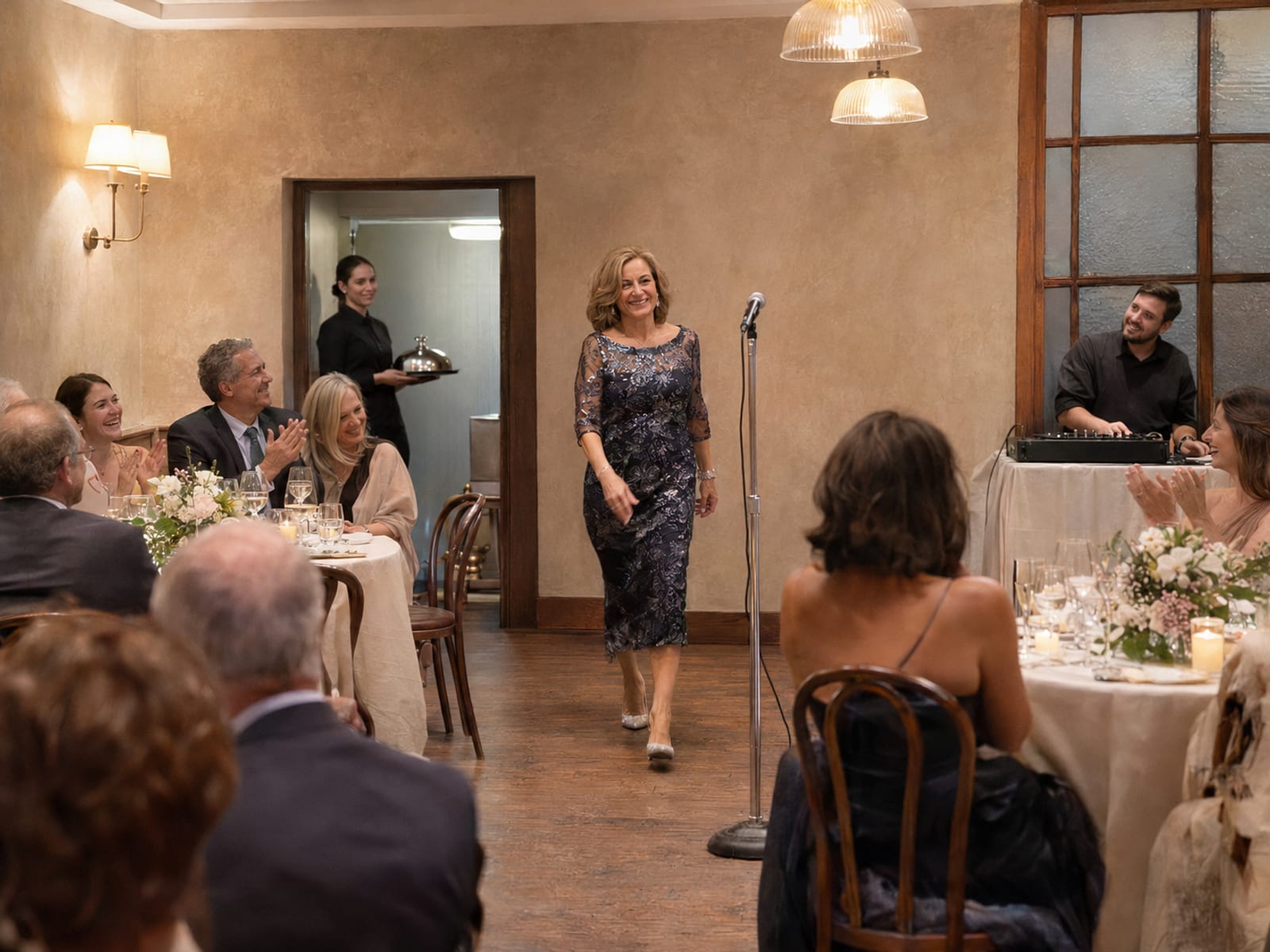
Emily Post puts the formal reception toast after guests have a glass of champagne or a nonalcoholic alternative and, at a sit-down dinner, as soon as everyone is seated. At a cocktail-style reception, the toast can come after you arrive. Zola's sample timeline places speeches after guests are served, between the first dance and the parent dances.
Your choices include right after your entrance and before dinner service, after guests are seated and served, between courses if the caterer agrees, and before dessert. You can also hold a short welcome at the reception and save longer family remarks for the rehearsal dinner. The Knot says moving some or all speeches there is increasingly common when the list is long. Our rehearsal dinner guide covers planning that evening.
Whatever you choose, write the position into the timeline that the caterer, venue, DJ or band, coordinator and videographer all receive. Confirm with the caterer whether service pauses during speeches.
Keeping several speeches on time
Most overruns come from a loose plan, not a long-winded speaker. These steps help:
- Tell each speaker the target length when you ask them to speak.
- Ask for notes several days ahead and encourage practice aloud, as Emily Post suggests.
- Give the emcee, DJ or coordinator the running order and each speaker's name, so introductions are short.
- Set one handoff point for the microphone.
- Agree on a quiet signal with each speaker and the coordinator for when time is nearly up.
- Tell the DJ or band the exact cue for the next moment, such as the first dance or dessert.
- Move extra remarks to the rehearsal dinner instead of squeezing them in.
If speeches stretch the evening, check how they affect your paid time. Our guide to venue hours and overtime explains how end times work.
The microphone plan
A microphone alone does not mean every guest hears. The speakers have to be placed well, someone has to run the mixer, and the speaker has to hold the microphone correctly. Settle these details with whoever supplies the sound:
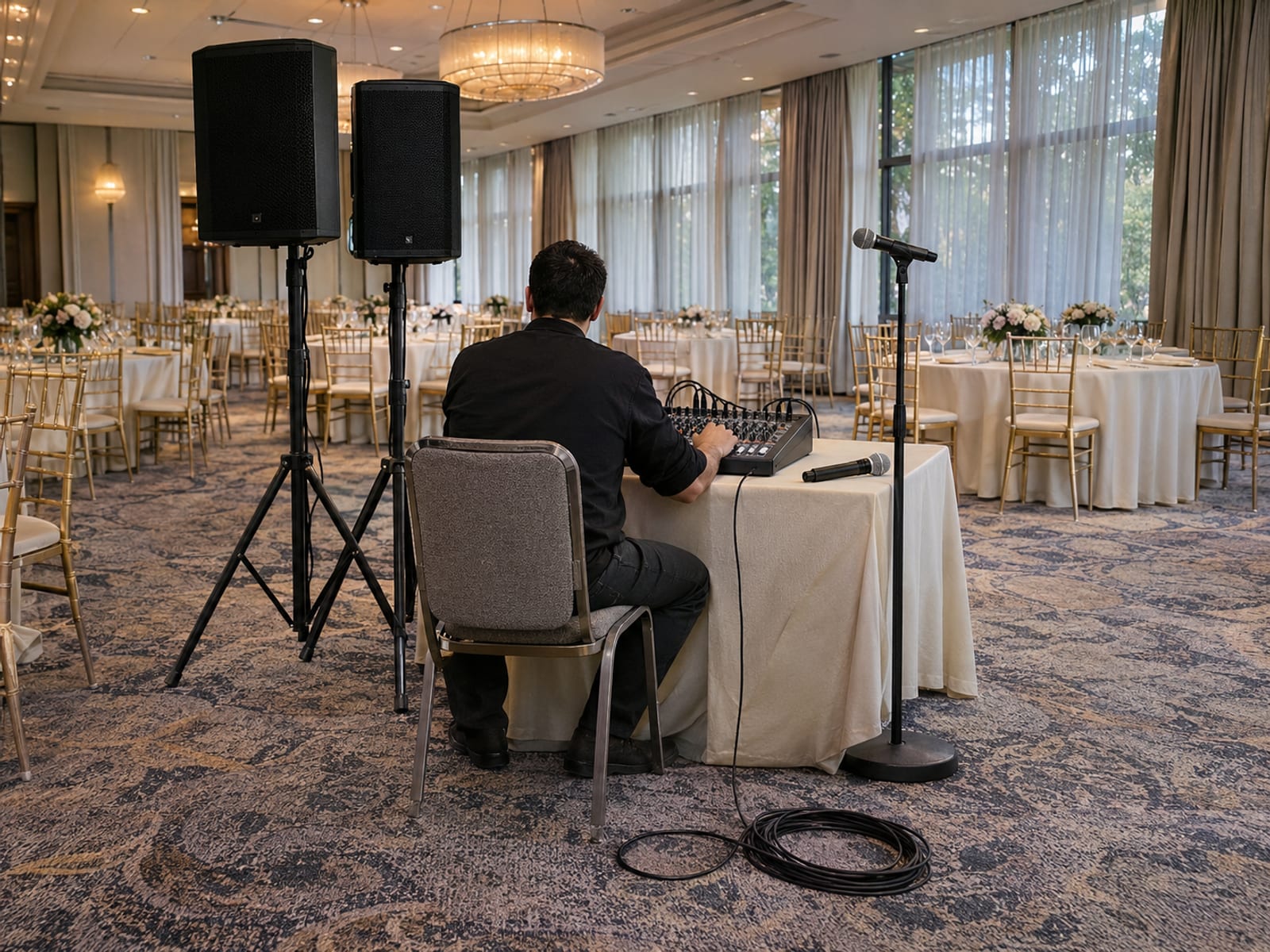
- Microphone type: handheld, wired, wireless or lavalier. A wireless handheld lets speakers move, but ask the venue or DJ to test batteries, range and feedback before guests arrive.
- A second microphone and a stand: useful when two people toast together or a speaker prefers both hands free.
- Speakers and mixer: where they stand, and whether sound is available during dinner as well as dancing.
- An operator: who keeps the microphone live only when needed and prevents feedback.
- Batteries and backup equipment: whether they are included.
- A sound check: a time, with a speaker using a normal voice.
What is included depends on the business, so confirm in writing. Sounds & Sirens, an NYC DJ company, lists microphones among its services and separately lists PA systems, wireless microphones, monitors and engineers. A band presentation from McLean Avenue Band includes a wireless microphone for toasts, though that does not mean every package carries the same equipment. For a broader comparison, read DJ or live band for an NYC wedding.
If the venue has no sound system, ask a party-rental company about an outside PA, microphone, podium or stand, and get the price in a dated quote.
Getting clean speech audio for your wedding film
Camera microphones are useful for sync and ambience, but they are rarely the best source for speeches. Danbren Media recommends more than one audio source and, for toasts, asking the DJ or band for a feed from the board or placing a recorder near a speaker. AfterRushes suggests taking speeches from the venue or DJ desk, recording near the PA speaker, or attaching a lavalier to the handheld microphone or stand.
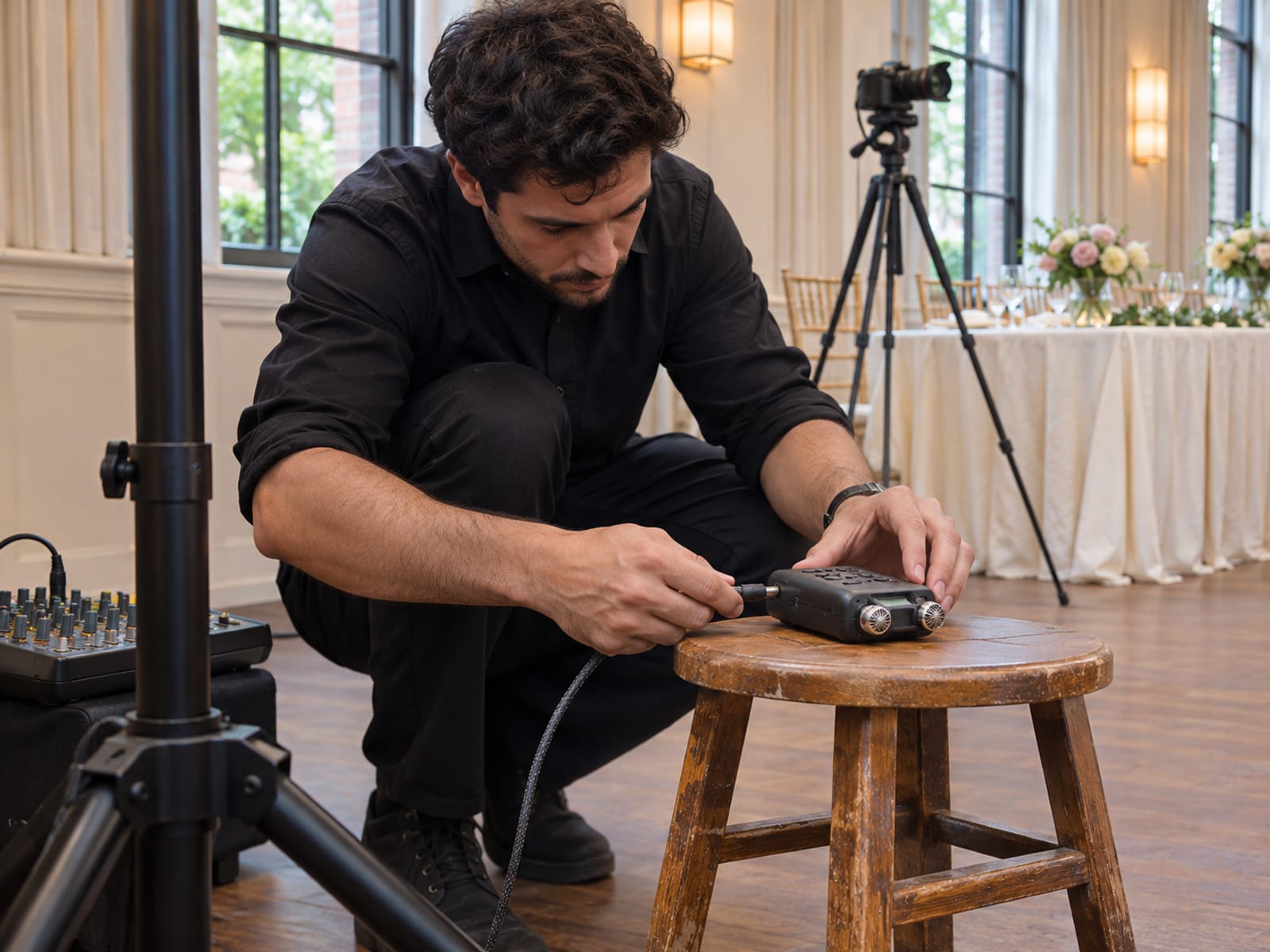
A good plan has the DJ, band or venue supplying the one microphone every speaker uses, and the videographer receiving a tested feed from the board. A recorder near the PA acts as the backup, because a desk feed can drop out or be switched off. Camera audio keeps running for sync.
Have the videographer confirm the feed type (line level or mic level, mono or stereo) and bring the right cables and adapters. A lapel microphone clipped to a speaker is only worth using if the videographer or sound operator approves it. Send the speech schedule to the videographer too. Our videographer guide covers choosing and briefing one.
What to ask an NYC venue or restaurant before booking
Venues describe their sound in very different terms. Docks Oyster Bar lists a speaker system, microphone and podium in its Midtown private dining room, which holds 70 seated or 80 standing. Laterna Estiatorio lists a plug-and-play sound system for music or speeches in its private rooms. Equipment lists like these are a starting point; confirm what applies to your date and room.
Ask these questions before you sign:
- Is a microphone included, and is it handheld, wired, wireless or lavalier?
- Is a second microphone or a stand available?
- Who operates the mixer, and is there a labor or overtime charge?
- Is the room enclosed, and how much does background music or neighboring sound carry in?
- Can an outside DJ or band connect to the house system?
- When can the sound check happen?
- Can the videographer take a line-level or auxiliary output?
- Does the venue have rules on amplified speech or recording?
- Will service pause during speeches?
- Does a food-and-beverage minimum apply?
Sound permits belong on this list too. NYC's event office says amplified sound for a speaking program requires an NYPD sound permit. The NYPD sound-device application is filed at the precinct where the device will be used, at least five days before the event, with a $45 fee for the first day. A venue's own sound policy is a separate matter. Describe your location, event format and sound setup to the venue and the precinct, and confirm whether a permit applies.
Bilingual and Spanish-language remarks
If family members speak Spanish, English or both, decide how each speech will work before the event. You could translate each speech, summarize it, interpret it one sentence at a time, or have the speaker give it in both languages. Translating every speech can nearly double the speaking time, so build that into the block.
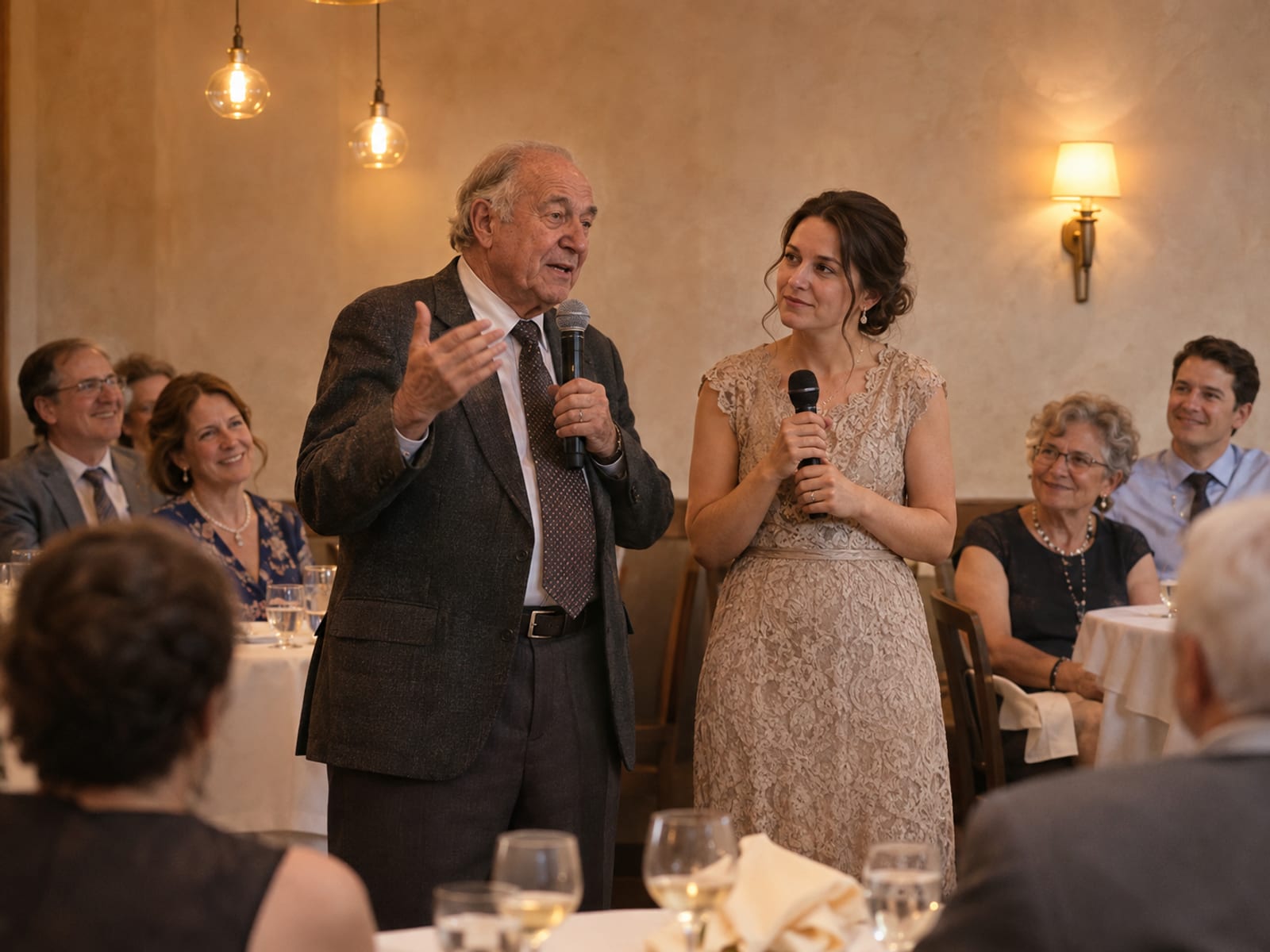
Agree on who translates and how the microphone is passed. A translator standing beside the speaker usually needs either a second microphone or a clean handoff. Tell the DJ, coordinator and videographer which languages will be used and in what order.
Quick check: speeches and sound
Answer every question to check.
Questions about wedding speeches and sound
Planning a speech block raises a handful of questions again and again. These answers add to what the sections above cover.
Who speaks first at a wedding?
Traditionally, the host or hosting parents. Emily Post also describes the best man as traditionally first for a reception toast, so pick the pattern that fits your families.
How many speeches are too many?
There is no fixed number. When the list grows, shorten each speech or move some to the rehearsal dinner, where timing is looser.
Does the venue provide a wedding microphone?
Some venues and restaurants publish that they provide a microphone, podium or sound system, but inclusions vary. Ask for the equipment, the operator, the setup time and any fee in your contract.
How does the videographer record speeches?
Ask for a direct feed from the venue or DJ sound board, plus a recorder near the speakers as a backup. Cables and adapters should be sorted out before the day.
What helps guests with hearing loss follow a speech?
Place speakers so everyone has a clear line of sight to the person speaking, and ask the venue about assistive listening options. A printed copy of a long speech or a quick caption plan is easy to arrange when the speakers know early.
Your next step
Write your speaker list today, with a time next to each name and a total for the block. Then send three questions to your venue, DJ or band, and videographer: who supplies the microphone, when is the sound check, and how will the videographer receive audio? Once those answers are in writing, put the order into your run of show.
Terms in this guide
Tap a term to see what it means.
Sound check. A set time before guests arrive when a speaker tests the microphone and speakers in a normal voice.