Send save-the-dates about 6 to 9 months before a local wedding, and about 9 to 12 months before when guests are flying in or coming from abroad. Mail formal invitations about 6 to 8 weeks ahead, or about 10 to 12 weeks ahead when guests need real time to plan travel. Set the RSVP deadline about 3 to 4 weeks before the wedding, or earlier if your venue or caterer needs a final count sooner. Your wedding website holds the full NYC itinerary: exact addresses, hotel and transit information, dress code, meal questions and online RSVPs. Adjust every date to your venue's final-count deadline and to how far your guests are traveling.
Key takeaways
Tap a card to bring it forward.
- Save-the-dates go out 6 to 9 months ahead for a local guest list and 9 to 12 months ahead for out-of-town or international guests.
- Formal invitations go out 6 to 8 weeks ahead, or 10 to 12 weeks ahead when guests need substantial travel planning.
- Your RSVP date comes from the venue or caterer final-count deadline; 3 to 4 weeks before the wedding is the usual planning range.
- If a City Hall ceremony is separate from your reception, list each event with its own guests, address and time.
- Ask for meal choices using the real menu names, and ask about allergies in their own required question.
- Square envelopes cost more to mail, so measure one finished invitation and put it on a scale before you buy stamps.
When should save-the-dates, invitations and the RSVP deadline go out?
Work backward from the wedding date, and let the guests who travel the farthest set the pace. The Knot recommends sending save-the-dates 6 to 9 months ahead, and its destination wedding guidance stretches that to 9 to 12 months when guests need to arrange airfare and a place to stay. Emily Post says to assemble and mail invitations 6 to 8 weeks before the wedding, and The Knot suggests about 10 to 12 weeks for a destination-style guest list.
For the RSVP deadline, The Knot points to about 3 to 4 weeks before the wedding, with roughly 2 weeks as the latest point that still works when final vendor numbers are due. For weddings that need a lot of travel, lodging or transportation coordination, it describes earlier deadlines of about 8 to 10 weeks, or even 3 months. These are planning ranges from wedding-planning sources, not rules.
| If your guests are | Save-the-date | Invitations | RSVP due |
|---|---|---|---|
| Mostly local | 6 to 9 months ahead | 6 to 8 weeks ahead | 3 to 4 weeks ahead |
| Out of town or international | 9 to 12 months ahead | 10 to 12 weeks ahead | 8 to 10 weeks ahead, up to about 3 months if travel or room blocks need an early answer |
The date that actually controls your RSVP deadline is the one in your venue and caterer contracts. Those final-count deadlines vary, so read yours before you print anything, then choose an RSVP date that falls comfortably before it. Launch the website before or alongside the save-the-date so the card has somewhere to send people. For the full calendar of what to book and when, see the NYC wedding planning timeline, and if some of your guests are coming from abroad, getting married in NYC as a visitor covers their side of the trip.
Working backward from the wedding
Tap or hover a step to follow the order.
Save-the-dates
About 6 to 9 months before for a local guest list, or 9 to 12 months before when guests are flying in or coming from abroad.
Invitations
About 6 to 8 weeks before, or about 10 to 12 weeks before when guests need real time to plan travel.
RSVP deadline
About 3 to 4 weeks before the wedding, or earlier if your venue or caterer needs a final count sooner.
What should your NYC wedding website include?
Think of the website as the place for everything that would crowd an invitation. Zola recommends the schedule, location, date, time, attire, travel, accommodations, directions, parking, FAQs and registry, and The Knot lists travel, dress code, event details and RSVP sections. For an NYC wedding, that adds up to:

- your names, the date and a short schedule for the ceremony, the reception and any welcome event, rehearsal dinner or brunch;
- the exact street address of every event, with entrance instructions and floor or room details when they matter;
- hotel neighborhoods, plus a room-block booking link and the cutoff date if the hotel gave you one;
- subway, bus, ferry, taxi and rideshare directions, nearby airports and rough transfer options;
- parking, and whether it is limited, paid or unavailable;
- accessibility details, including step-free routes and elevator information once you have confirmed them;
- a dress code in plain words, with footwear and weather notes for anything outdoors or in a park;
- arrival time and any security or check-in step;
- meal, allergy and dietary questions, registry details and a contact for day-of questions;
- Spanish-language essentials, or a full Spanish version, if some guests will read it that way.
Directions are the part to hold until you are certain. Add the exact venue address first, then link guests to current MTA or venue directions so nothing goes stale. If you want more detail on where guests tend to stay, where wedding guests stay in NYC breaks it down by borough, and what to wear to a wedding in NYC covers dress code wording.
How do you describe a City Hall ceremony and a later reception?
If you are marrying at the Marriage Bureau and celebrating somewhere else, treat them as two events and say so in plain language. Guests need to know which event they are invited to, where each one happens and whether the reception follows right away or later. Emily Post's invitation wording samples show how to structure the host, couple, event, date, time, place and RSVP, and the City Clerk's Marriage Bureau page is the place for official ceremony terms and appointment details. A simple version reads:
"Please join us for a civil ceremony at the New York City Marriage Bureau on [date] at [time]. A celebration will follow at [venue] at [time]. Details and RSVP: [website]."
If only some guests are coming to the ceremony, say that clearly and give the reception its own invitation with its own time and location. If the ceremony is private, do not imply that every reception guest is invited to City Hall, and think about whether to print the City Hall address at all. Give each guest list its own RSVP question on the website, so a cousin invited only to the party is never asked about the ceremony. For the ceremony itself, a City Hall wedding in NYC, step by step walks through the day.
Invitation wording also depends on who is hosting. Emily Post describes versions for one family, both families, the couple hosting themselves and other relatives hosting, and distinguishes "the honour of your presence" for a house-of-worship ceremony from "the pleasure of your company" in other settings. Choose the version that matches who is actually paying and welcoming guests.
Should you use paper RSVPs, online RSVPs or both?
You can pick whichever fits your guests. Online RSVP is supported by the major platforms, including Joy, Zola and The Knot, and The Knot discusses whether to include reply cards when guests can answer online. Online forms are easier to track, can ask a different question for each event and can set household, child and plus-one permissions so the right people see the right choices.
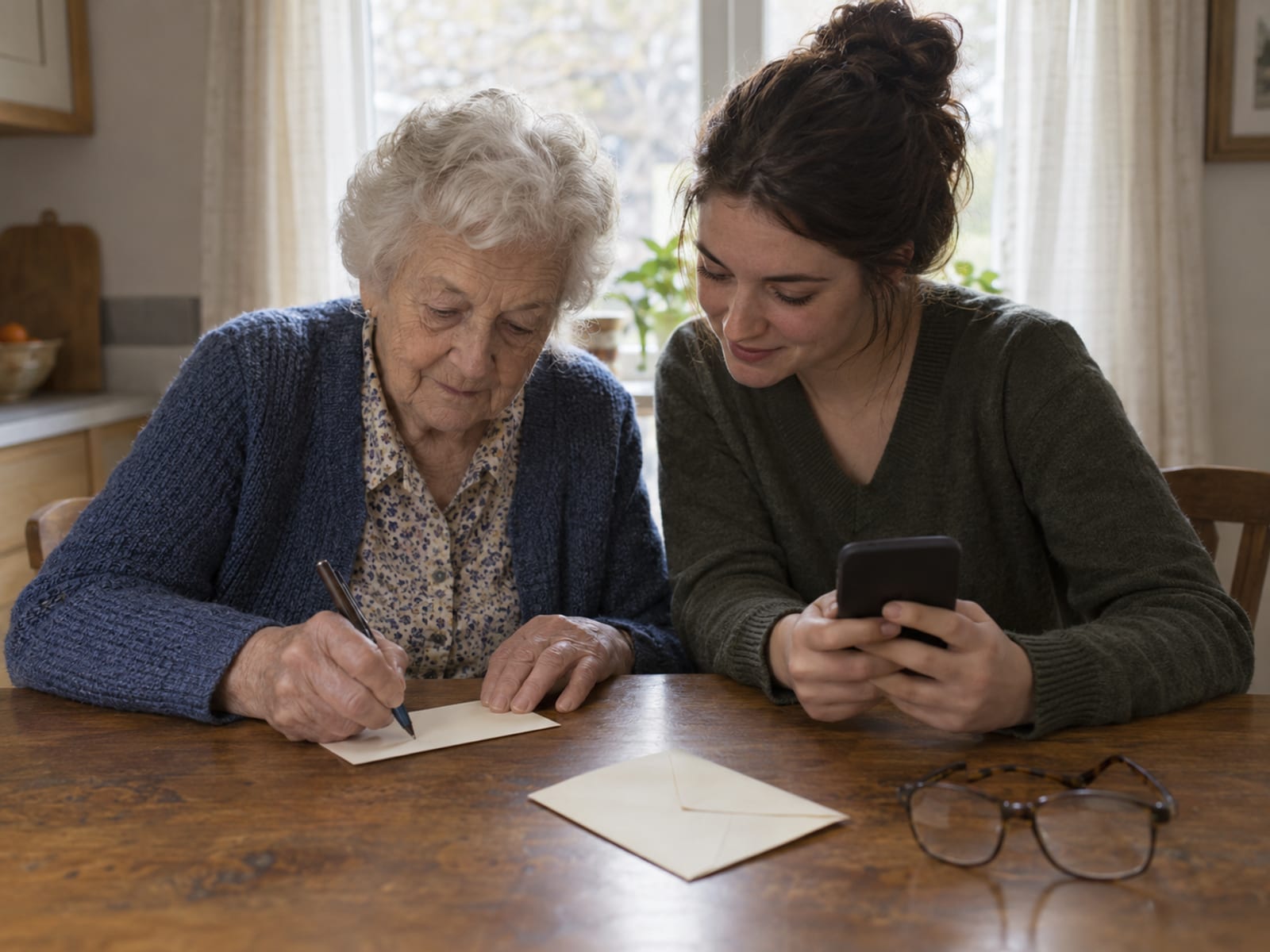
Paper still earns its place for older relatives, guests with limited internet access and some international guests. A common compromise is an invitation with a QR code and a short web address printed on it, plus a mailed reply card or a phone number for anyone who prefers it. Point the QR code straight to the RSVP page rather than the homepage, and print the short web address beside it as a fallback. Choose high contrast for the code so it scans in poor light.
If you are building a custom domain into the plan, compare the free feature set first. All three platforms publish free websites with RSVP tools, and paid extras are optional:
Tap or hover a row to highlight it.
| Platform | Free, as published | Optional paid extras |
|---|---|---|
| PlatformZola | Free, as publishedWebsite, templates, password protection, registry, online RSVP, guest list, meal preferences, travel and accommodation information | Optional paid extrasCustom domain, listed as starting at $17.99; a Zola comparison page lists $14.95 a year, so confirm at checkout |
| PlatformThe Knot | Free, as publishedWebsite, templates, registry, RSVP collection, guest messaging, travel and dress code sections | Optional paid extrasCustom domain at $19.99 for one year or $39.98 for two; .wedding domains at $99.99 a year |
| PlatformJoy | Free, as publishedWebsite, hosting, online RSVP, unlimited guests, multiple events, meal and dietary questions, privacy controls | Optional paid extrasCustom domains, text messaging and premium stationery; Joy puts domains at about $20 to $40 a year through a domain provider |
Features and prices differ by country, domain availability and checkout date, and these were read in October 2026, so confirm the terms on the platform before you publish or pay.
How do you collect meal choices and dietary needs?
Build the guest list before you turn RSVPs on, then work through the form in this order:
- Add each guest to the events they are actually invited to.
- Set household, child and plus-one permissions.
- Ask attendance for each event separately.
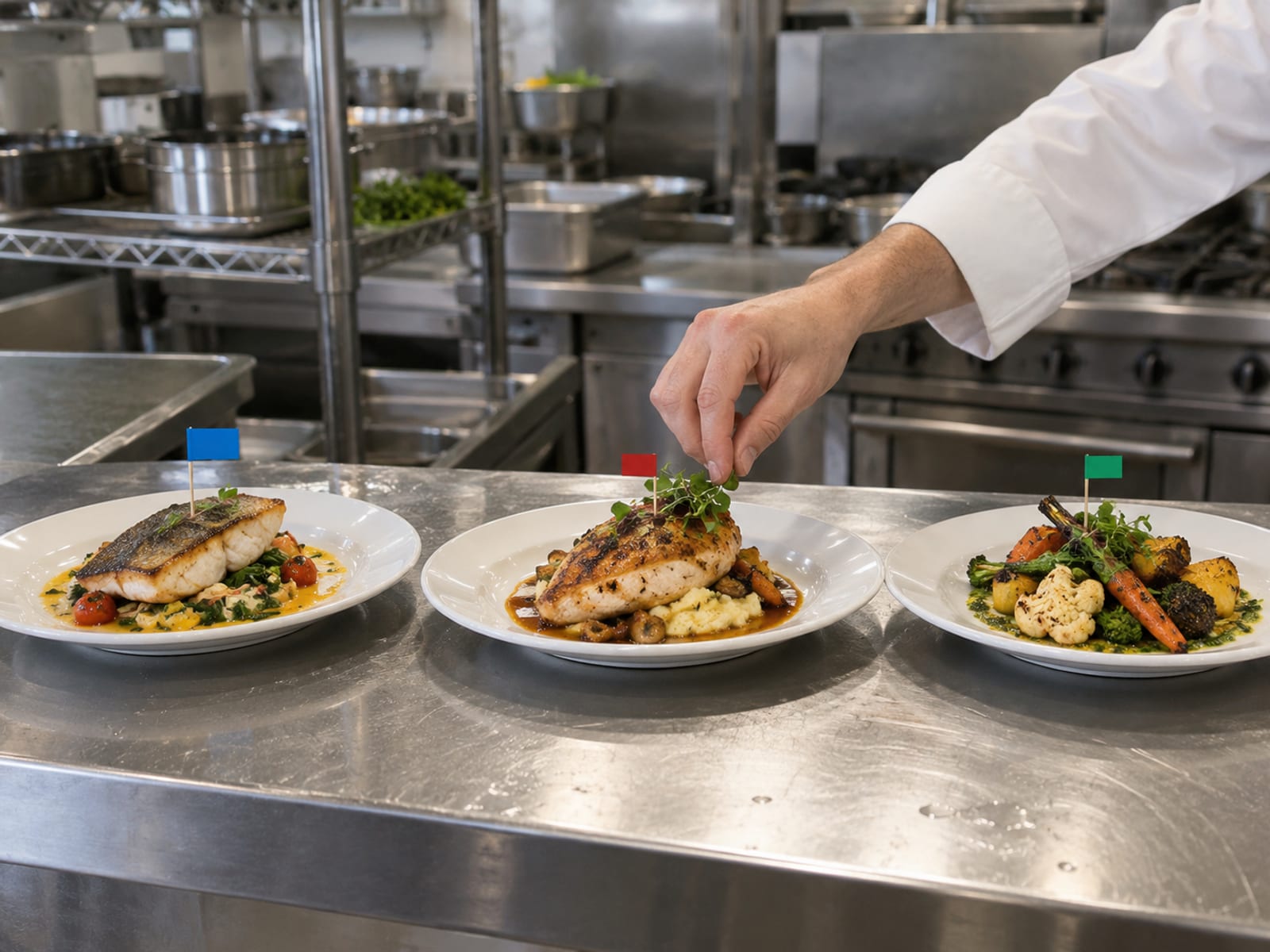
- Ask for a meal choice using the exact names on your caterer's menu.
- Ask about allergies and dietary restrictions in their own required question, so a guest does not skip it by picking an entree.
- Add transportation, hotel or accessibility questions only if you will use the answers.
- Test the whole form on a phone before you share the link.
Both Zola and Joy publish meal and dietary tools, and Joy adds multi-event RSVPs, custom questions and guest messaging. When responses close, export the final list and send the caterer and venue the confirmed numbers, including meal counts and every allergy note. Then lock or turn off the online form so a late change does not slip past your final count. A sturdy document folder keeps proofs, guest addresses, venue emails and the final count in one place, and a sheet of the caterer's menu names next to the export helps you catch a mismatch.
What do invitations and postage cost?
Price depends on paper, printing method, quantity, shape, weight and finishing, so treat anything below as an example, not an average. Zola's invitation shop showed standard examples from $1.79 to $1.99 each, foil-stamped at $2.49 and letterpress at $4.49 when read in October 2026. One product page listed $1.99 each, $159.20 for 80 cards, $5.99 shipping and delivery in 5 to 10 business days, with free guest and return addressing, envelopes and samples. Zola also says rush orders have a 3 to 5 day printing turnaround before shipping time is added. For fully custom work, Minted listed invitations "starting at $650," which is a starting price for custom design, not a per-card cost.
Postage is where shape matters. USPS lists standard rectangular letter stamps starting at $0.82, square, oversized or unusually shaped envelopes starting at $1.31 and large envelopes starting at $1.69. A First-Class letter can go up to 3.5 ounces and a large envelope up to 13 ounces. Square, rigid, lumpy or unusually shaped pieces are treated as nonmachinable, and rigid or uneven large envelopes may be treated as packages. USPS's Notice 123 showed prices effective October 4, 2026.
So, before you buy stamps, assemble one complete sample with every insert and put it on a postage scale that reads in ounces. A sample kit from your printer also lets you compare paper, ink, foil and envelope sizes before you order the full run. Ask your printer for a current quote for your exact quantity, paper, finish, addressing and shipping, and ask how long a proof takes, since proof turnaround eats into the 6 to 12 weeks before your wedding.
How do you follow up with late RSVPs?
Start by telling guests, kindly, that you would like to hear as soon as they know. The Knot notes that planners encourage guests to respond early, and you can set the deadline so there is room for final counts, seating and vendor coordination. Then use The Knot's follow-up guidance as a rhythm:

- Send a friendly nudge a few days before the deadline, by message from the website if your platform has one.
- After the deadline, contact each person who has not replied, personally and directly.
- Say what you need (attendance and a meal choice) and the date you need it by.
- Do not treat silence as a "no" until you have made and noted a follow-up attempt.
- Give your caterer and venue confirmed numbers only.
A short note works well: "We're finalizing our guest count and want to save you a seat. Could you tell us by [date] whether you can come, and your meal choice?" It keeps the tone warm and makes it clear that the date comes from the venue, not from impatience.
Quick check: invitations and RSVPs
Answer every question to check.
Questions about wedding websites, invitations and RSVPs
When should save-the-dates go out?
Generally 6 to 9 months before the wedding. For a destination-style wedding or substantial international travel, 9 to 12 months is a commonly published range.
When should the RSVP deadline be?
A practical range is 3 to 4 weeks before the wedding. It has to leave time for the venue, caterer, seating plan and transportation, so check your contract deadlines first.
Can guests RSVP online without a paper card?
Yes. Zola, The Knot and Joy all publish online RSVP tools, and you can still offer paper cards or a direct phone number to guests who prefer them.
How much postage does a square invitation need?
USPS treats square and other nonmachinable pieces differently from standard rectangular letters, with stamps starting at $1.31 instead of $0.82. Measure the finished envelope and put it on a scale with all its inserts before you buy.
Should a City Hall ceremony and a later reception be listed separately?
Yes. State who is invited to each event, the address, the start time and whether the reception follows right away or later.
Your next step
Open your venue and caterer contracts and write down the final-count deadline. Set your RSVP date a little ahead of it, then work backward to invitations and save-the-dates. Once you have those four dates, pick a website platform, add your addresses, and send the save-the-date with the link on it. If you also need a ceremony slot, the NYC marriage license guide covers the paperwork that comes before the day itself.
Terms in this guide
Tap a term to see what it means.
Final-count deadline. The date in your venue and caterer contracts that controls your RSVP date; it varies from contract to contract.