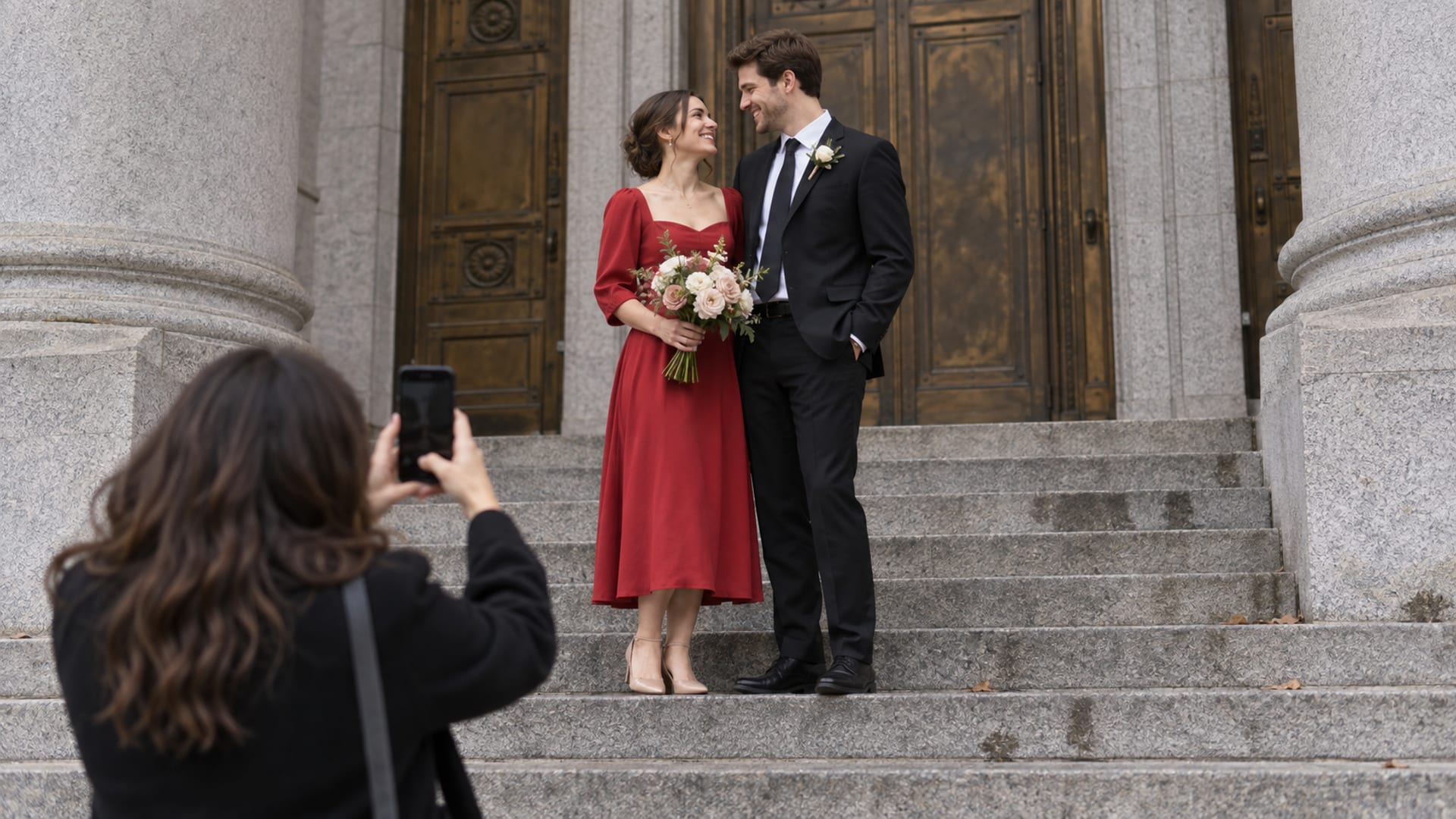
Your wedding party can be any size, include people of any gender and does not have to be balanced. Choose people who can realistically give the time, travel, money and support you are going to ask of them. A person of honor and a best person are optional honor roles, and attendants, ushers, readers and a day-of point person can each have a clear job.
If you are marrying at the City Clerk, the legal requirement is one witness who is 18 or older. The ceremony has an attendance limit, so check the Clerk's current announcement before you invite anyone. A standing wedding party is not required.
Below you will find how to pick a size, what each role does, what taking part can cost a friend, who pays for what, and how to ask so that saying no is easy.
Key takeaways
Tap a card to bring it forward.
- Any number works. Uneven sides, a tiny party or no party at all are all normal choices.
- Titles and roles are not tied to gender; the people you pick can stand on either side.
- Only the legal witness is required, and at a City Clerk ceremony that is one person who is 18 or older.
- State the expected cost, dates and duties before anyone says yes, and say plainly that no is fine.
- Friends who cannot take on the full role can read, usher, greet guests or be your day-of point person.
Do you need a wedding party at all?
No. A wedding party is a tradition, and the only person the law asks for is a witness. If you are planning a City Clerk ceremony, NYC311 (checked November 2026) lists a $25 ceremony fee, a valid New York State marriage license, identification, and at least one witness over 18. You and your witness bring the same type of photo identification used for the marriage license.
The same NYC311 page lists an attendance limit of six people in total, counting the two of you and the witness. That leaves room for a few guests, not a processional. Arrival is between 8:30 a.m. and 3:15 p.m., Monday through Friday, by appointment. Check the City Clerk's current attendance limit before the day, because it is a total and not a number per person. Our City Hall wedding guide walks through the full appointment.
If your ceremony is somewhere else, such as a venue, a park or a restaurant, the wedding party is simply your choice. Many couples in New York choose one person to stand with them, or none, and put the energy into the guests and the food.
How many people should you choose?
Choose as many or as few as fit your ceremony space, your budget and your closest relationships. Equal numbers on each side are not required, according to The Knot's wedding party glossary and Emily Post. You can have three people on one side and one on the other, or everyone walking in together.
Smaller weddings often suit smaller parties. The Knot's 2026 Real Weddings Study, which covers weddings held in 2025, reports an average of 92 guests for lower-spend weddings and 141 for higher-spend weddings. Those are national figures, not an NYC wedding-party average, so use them as context and not as a target.
A useful test: for each person you are thinking of, can you say what you will ask of them, when, and what it will cost them? If you cannot answer yet, wait. A party of two who know their jobs is easier on everyone than a party of eight who are guessing.
What does each role do?
Titles are flexible, and every duty below is customary rather than required. Emily Post and The Knot describe the usual jobs, and you decide the real assignment for your wedding.
Tap or hover a row to highlight it.
| Role | Also called | What the job usually involves |
|---|---|---|
| RolePerson of honor | Also calledMaid, matron or man of honor; honor attendant | What the job usually involvesHelps choose attire, coordinates the attendants, helps plan optional pre-wedding events, holds a ring or bouquet, helps you during the reception, may give a toast |
| RoleBest person | Also calledBest man, best woman | What the job usually involvesCoordinates attendants, helps with timing and payments, holds a ring, helps with transportation and rental clothing, may organize an optional celebration and give a toast |
| RoleAttendants | Also calledBridesmaids, groomsmen, bridespeople, groom's people | What the job usually involvesAttend agreed events, get their attire, arrive on time, take part in the processional, help guests and support you |
| RoleUshers | Also calledGreeters | What the job usually involvesHand out programs, guide seating, know the reserved seats, help guests who need directions or accessibility support |
| RoleReaders | Also calledCeremony participants | What the job usually involvesRead a piece you choose at the ceremony |
| RoleDay-of point person | Also calledHelper, coordinator friend | What the job usually involvesAnswers questions on the day, holds the contact list and schedule; not a professional planner unless you agree on that |
A person of honor or best person is optional, and you can have two or none. A toast is customary for the best person but not a hard rule for every wedding. If you want a speech, say so when you ask, and see our guide to wedding speeches and toasts for the rest.
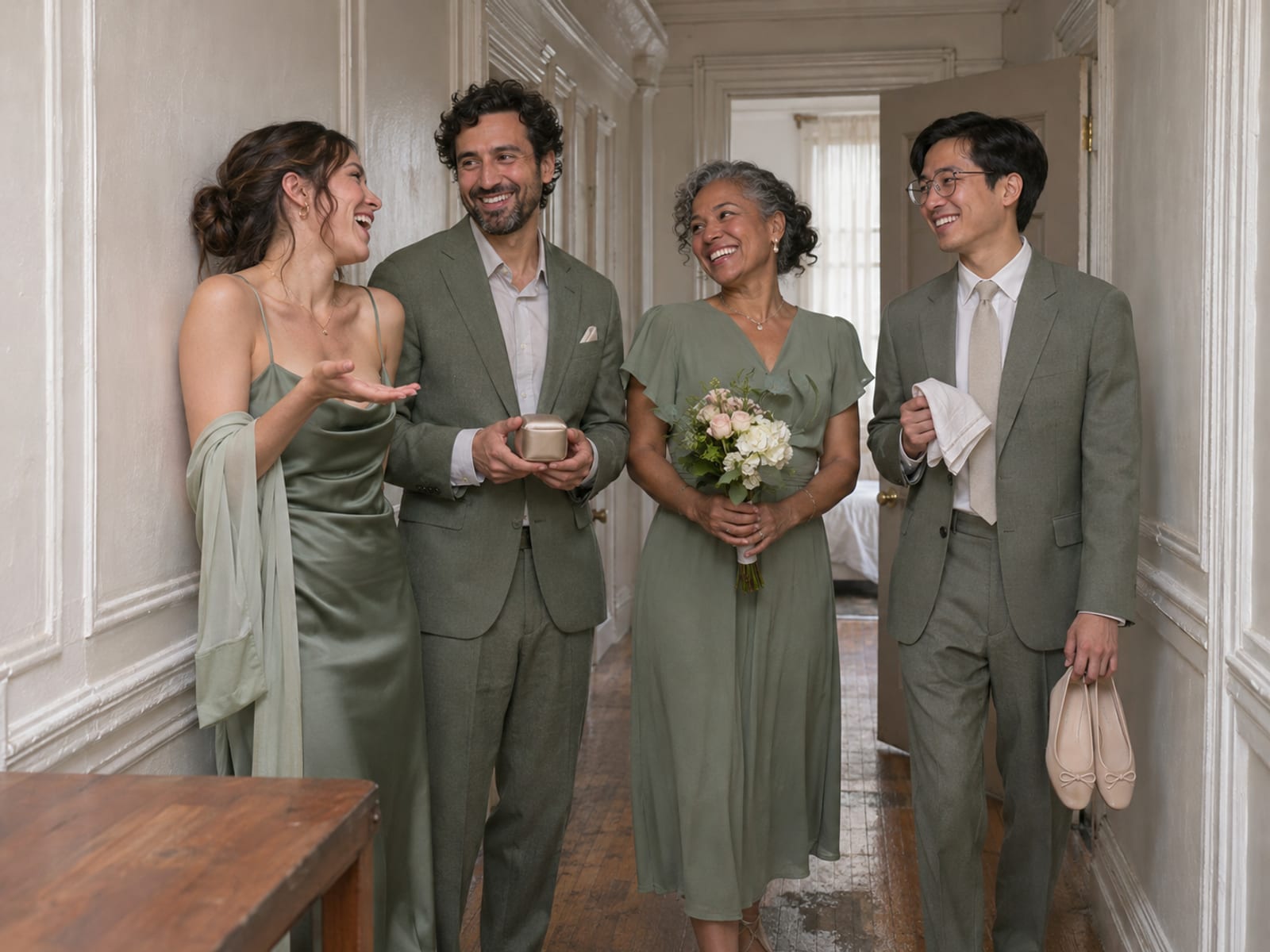
What is legally required, and what is optional?
One thing is required by New York for a ceremony, and that is at least one witness. The witness does not have to be in your wedding party, and every attendant does not sign anything. Confirm the current procedure with the issuing office or your officiant, and use the NYC311 page for City Clerk ceremonies.
Everything else is etiquette. Matching genders, equal numbers, a toast, a bachelor or bachelorette event and attendants who stand at the front are all traditions you can keep, change or skip. The Knot says that relationship status has no bearing on who can be an attendant, so a married friend or a single friend can stand up alike.
For the state rules on the license, the New York State Department of Health lists a 24-hour waiting period and a 60-day validity. Confirm the current waiting period, validity and fee with the issuing clerk before you book dates or travel.
What can taking part cost an attendant in NYC?
More than most couples expect. A LendingTree survey of more than 2,100 Americans reports average bridal-party spending of $824 across attire, pre-wedding events and the wedding itself. It also reports that 56% felt pressure to spend beyond what they could afford and 50% went into debt. These are national numbers, not an NYC average.

For NYC attire, the dated examples below come from the vendors' own pages. Ask the vendor for a current group rate, because prices change.
Tap or hover a row to highlight it.
| Item | Published price | Source |
|---|---|---|
| ItemBridesmaid dresses, Brooklyn | Published price$200 to $350; appointments required | SourceLotus Bridal |
| ItemClassic tuxedo rental | Published price$199 | SourceAn NYC factory outlet |
| ItemFull tuxedo package | Published price$279 | SourceAn NYC factory outlet |
| ItemFull rental package | Published price$243 plus tax | SourceRobbie & Co. |
| ItemSame-week rush fee | Published price$20, subject to the vendor's terms | SourceRobbie & Co. |
Attire is only one line. Add alterations, shoes, travel to New York, a hotel, a share of a shower or bachelor or bachelorette event, a gift and optional hair and makeup. Before you ask, write your own estimate, then ask each person for a private budget before you finalize anything required.
Who pays for what?
Whatever you state up front. Emily Post describes a traditional split, where attendants pay for their own attire and travel, and says that responsibilities vary and should fit the circumstances. You can pay for some or all of it, and that is a kind choice, not a rule.
Make it an agreement you say out loud. A simple version looks like this:
- You cover: anything you require that is unusual, such as a specific outfit, or hair and makeup if you want one look.
- Attendants cover: their own travel and a share of any event they choose to join.
- Optional: events like a shower, a bachelor or bachelorette party and a rehearsal dinner are invitations, not requirements.
For the events themselves, see our guides to a bridal shower, a bachelorette party and a rehearsal dinner. The point here is whether attendance or hosting is expected, and you can say it is not.
If you want to pay for everyone's outfits, you will want a firm number early. Our guide to NYC wedding costs can help you see where that fits in your budget.
What should attendants wear?
Pick something that works for your ceremony and fits a range of budgets. For a short civil ceremony, a dress or suit already in a closet often does the job. For a larger wedding, rentals are common, and the details of suits, tuxedos and lead times are in our suit and tuxedo rental guide.
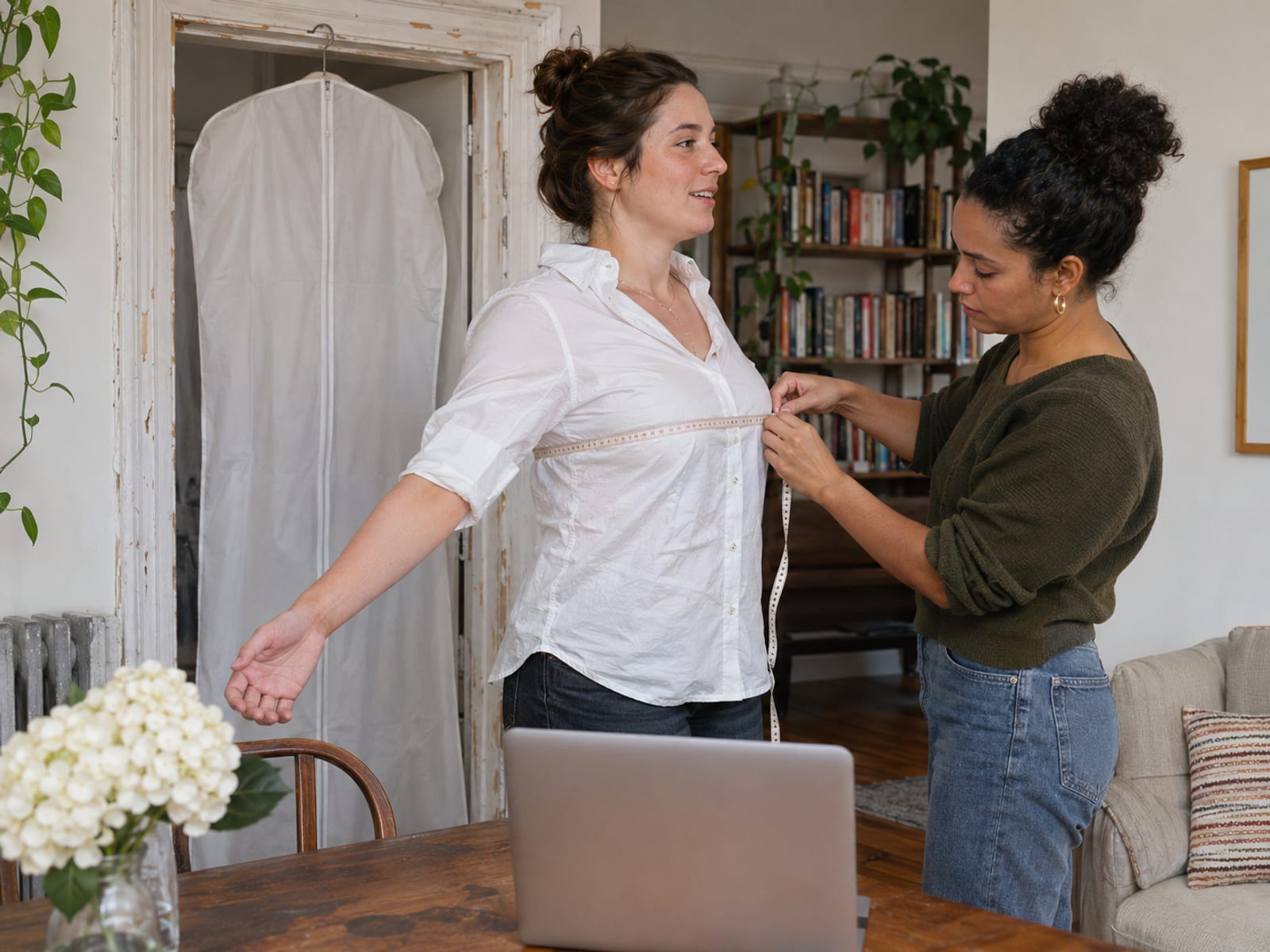
From the examples above, Robbie & Co. lists a full package that includes a jacket, pants, a vest or cummerbund or suspenders, a shirt, studs, cufflinks, shoes, a pocket square and a tie or bow tie. It recommends arriving two to four days before the event for a try-on. If attendants live in other states, ask each one to send measurements early, and give the order date plus a margin for alterations.
Different outfits that coordinate are fine, and let people choose within a color or a style. A tape measure is a handy item for remote fittings, and a garment bag helps with the trip to New York; look for a full-length bag with reinforced handles. Neither is something an attendant has to buy.
How do you ask someone?
Ask privately, in person or by phone, and give the person time to answer. Before you ask, decide the duties, the dates, the number of events, the attire, the estimated cost, travel and lodging, rehearsal attendance and whether you expect a speech.
A short script you can adapt:
"Would you be willing to be my [role]? The wedding is on [date] in [location]. The expected costs are about [amount] for [items], and the events we expect are [list]. You do not have to answer right away, and it is completely fine to say no."
Say the cost range even if it feels awkward. The LendingTree survey shows that many attendants feel pressure to spend more than they can, and naming the number first removes that pressure. A gift box or a note is a nice extra, though it is never a substitute for clear information.
What if someone cannot afford it, or has to say no?
Take the no kindly. A friend who declines is telling you what they can give, and a warm reply keeps the friendship. Reply with something like: "Thank you for telling me. I would still love for you to be there, and I have another job in mind if you want it."

Then offer a role that does not need as much time or money. The Knot and Emily Post both describe jobs that do not involve standing at the front:
- A ceremony reader or welcome speaker.
- An usher or greeter.
- A guest-accessibility helper.
- A transportation contact or a hotel contact for out-of-town guests.
- Someone who holds documents, rings or personal items.
- A program distributor.
- A day-of point person.
Give whoever takes a role a specific task, a time, a meeting point, a contact list and a clear limit on what they decide. Tell friends who are not in the party early, and in person if you can.
Can a wedding party be mixed-gender or nontraditional?
Yes. The Knot says people of any gender can fill any role. A person of honor can be a man or a woman or a nonbinary friend, and anyone can stand on either side. Titles can be bridesperson, groom's person, attendant, honor attendant, or a name you invent.
The party can have unequal numbers, different outfits, separate walking arrangements or no sides at all. A person can walk alone, enter with a partner or take part without standing. The best test is whether each person is comfortable and knows their job.
Quick check: your wedding party
Answer every question to check.
Questions about wedding parties in NYC
These are the quick answers couples ask most.
How many people should be in a wedding party?
As many or as few as suit your ceremony, budget, relationships and logistics. Equal numbers are not required.
Does every attendant sign the marriage license?
No. New York requires at least one witness. Confirm the current ceremony procedure with the issuing office or your officiant.
Can someone take part without standing up?
Yes. They can read, usher, help with transportation, manage personal items, greet guests or serve as the day-of point person.
Who pays for the clothing?
Traditional etiquette commonly assigns attire to attendants, but you can pay all or part of it. State the arrangement before anyone accepts.
Your next step
Write your list of roles first, then the duties, dates and a cost estimate for each one. After that, have the ask conversation with the first person on the list, using the script above. If a City Clerk appointment is part of your plan, confirm the appointment and the attendance limit before you invite anyone. Our NYC marriage license guide covers the paperwork that comes first.
Terms in this guide
Tap a term to see what it means.
Witness. The one person New York requires at a ceremony; at a City Clerk ceremony, someone who is 18 or older, who does not have to be in your wedding party.