Wedding transportation in NYC usually comes down to four choices: a private shuttle, public transit, individual cars or rideshare, and parking. The right one depends on your guest count, how far the hotels sit from the ceremony and reception, which boroughs are involved, accessibility, formalwear, alcohol service and whether a vehicle has to wait. A central Manhattan wedding a short walk from a step-free subway station is a different case from a remote venue or a guest list spread across three boroughs. Check the route in the MTA Trip Planner and the curb rules on NYC DOT's Charter & Tour Buses page, then confirm the loading spot, minimum hours, tolls, parking and accessibility before you book anything.
Key takeaways
Tap a card to bring it forward.
- A venue near a step-free station can work with transit and individual rides; remote venues, several boroughs, older guests and late returns favor a scheduled shuttle.
- One 2026 example: Glyde Bus lists a 16-seat Sprinter at $200 an hour with a five-hour minimum, so the minimum alone is $1,000 before extras.
- The subway and local bus cost $3.00 with OMNY, transfers between them are free, and the Staten Island Ferry is free.
- A shuttle can load quickly at the curb but cannot park there; a Manhattan bus meter is $20 an hour with a three-hour maximum.
- Vehicles entering Manhattan at or below 60th Street pay the congestion toll, from $9 for a car to $21.60 for a tour bus at peak with E-ZPass.
- Recheck elevators, closures and the operator's details close to the date, and give guests written directions with a backup plan.
Shuttle, subway, taxi, ferry or parking: matching the choice to your guests and route
Start with two lists: where your guests are sleeping, and every address they need to reach that day (ceremony, photos, reception, after-party). Then count who will actually need a ride. The answer usually falls out of those two lists.
If most guests are staying near a Manhattan venue that sits close to a subway station with an elevator, transit plus a few taxis or rideshares often covers it.
If the ceremony and reception are in different places, your hotels are spread across boroughs, or the venue is well outside the subway map, a scheduled vehicle starts to make sense. The same is true when many guests are older, using wheelchairs or walkers, traveling with children, or dressed in heels on a rainy evening, and when guests who drove to the ceremony will be drinking at the reception.
The Staten Island Ferry is a real option for a narrow set of plans: it runs between Whitehall Terminal in Lower Manhattan and St. George Terminal on Staten Island, and it is free. It is not a general way to move between boroughs, so it only helps when your hotel or venue sits near one of those terminals.
Parking mainly concerns guests driving in from New Jersey, Long Island, Westchester or the Hudson Valley, who need a named garage near the venue.
When a private shuttle is worth paying for
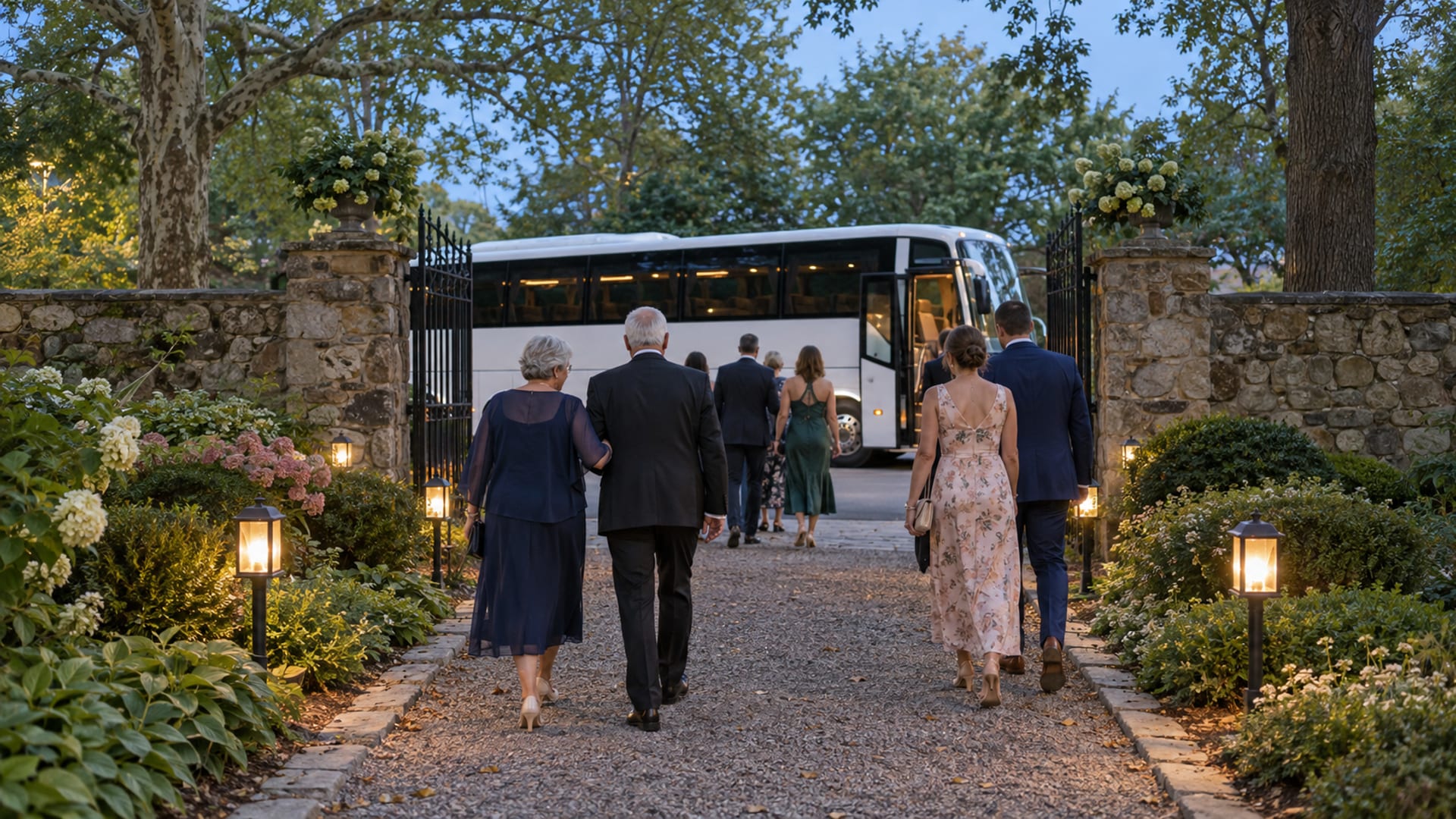
A shuttle earns its cost when it removes a problem guests would otherwise solve alone. The clearest cases are a hotel loop that brings a room block to the ceremony, a transfer between a ceremony and a reception in different neighborhoods, a venue outside the city, and the ride back after the reception, when trains run less often and guests are tired.
It also helps when many guests have never ridden the NYC subway, or would find stairs, transfers and long walks hard. One vehicle with a known departure time is easier to explain than subway directions, and it keeps the group together so the ceremony starts on time.
Several smaller vehicles can beat one large coach. A Sprinter fits streets and driveways a coach cannot, and two vans can serve two hotels at once, so ask operators to quote both setups. If most guests are local and the venue is easy to reach, you might cover only the late return.
What NYC wedding transportation costs, and what the price leaves out
Operators price by the hour with a minimum block, so the minimum usually sets your floor. The rates below are the operators' own published figures, read September 28, 2026; ask each for a current written quote for your date and route.
Tap or hover a row to highlight it.
| Operator and vehicle | Published rate | Minimum | Source, read September 28, 2026 |
|---|---|---|---|
| Operator and vehicleGlyde Bus Sprinter, 8 to 16 passengers | Published rate$200 per hour | Minimum5 hours ($1,000); 10-hour day $2,000 | Source, read September 28, 2026Glyde Bus |
| Operator and vehicleGlyde Bus minibus, 23 to 29 passengers | Published rate$225 per hour | Minimum5 hours ($1,125); 10-hour day $2,250 | Source, read September 28, 2026Glyde Bus |
| Operator and vehicleGlyde Bus minicoach, 35 to 39 passengers | Published rate$250 per hour | Minimum5 hours ($1,250) | Source, read September 28, 2026Glyde Bus |
| Operator and vehicleWedding Transportation NYC executive sedan | Published rate$120 per hour | Minimum3 hours | Source, read September 28, 2026Wedding Transportation NYC |
| Operator and vehicleWedding Transportation NYC luxury SUV | Published rate$150 per hour | Minimum3 hours | Source, read September 28, 2026Wedding Transportation NYC |
| Operator and vehicleWedding Transportation NYC Mercedes S-Class | Published rate$230 per hour | Minimum3 hours | Source, read September 28, 2026Wedding Transportation NYC |
| Operator and vehicleWedding Transportation NYC Mercedes Sprinter | Published rate$240 per hour | Minimum3 hours | Source, read September 28, 2026Wedding Transportation NYC |
| Operator and vehicleChauffeur Service NYC executive sedan | Published rate$117 per hour | Minimum3 hours | Source, read September 28, 2026Chauffeur Service NYC |
| Operator and vehicleChauffeur Service NYC luxury SUV | Published rate$149.50 per hour | Minimum3 hours | Source, read September 28, 2026Chauffeur Service NYC |
Glyde Bus also publishes an estimated $2,400 to $3,100 all-in range for a standard dedicated NYC wedding shuttle, depending on bus size, length and route. Wedding Transportation NYC says its estimates include gratuity and applicable service or card charges, with the final quote still to be confirmed. NYC Limousine bills its hourly rates before tax, surcharges and gratuity, and tolls and airport fees can be added; it prices the actual itinerary by quote.
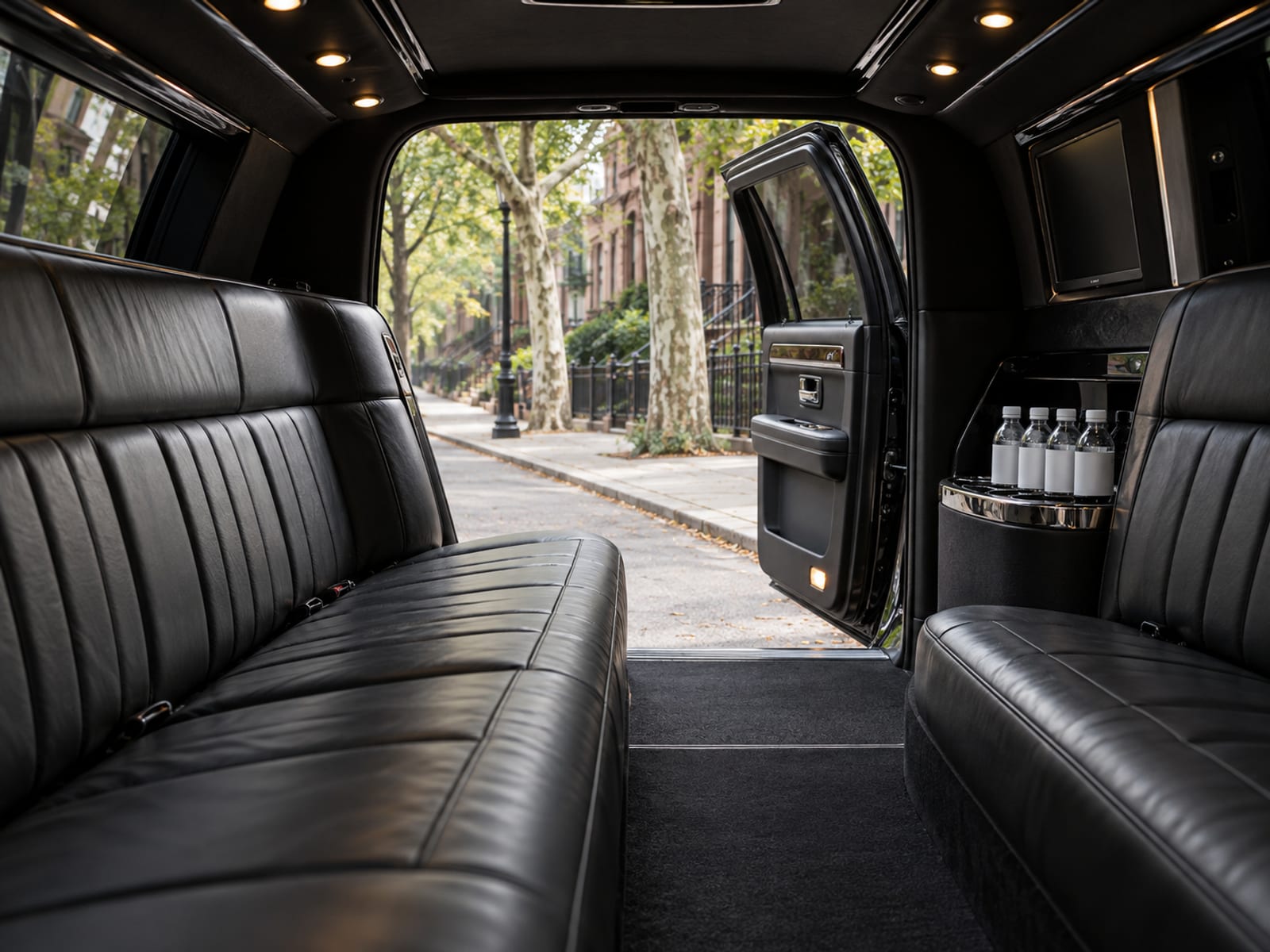
What a headline rate can leave out: tax, gratuity, tolls, the congestion toll, parking or staging fees, fuel, wait time, overtime and the time the vehicle spends driving from and back to its garage. Trolleys and vintage cars are generally quoted per event, so ask for a dated written quote with every item listed. Rideshare fares change with the route, the hour and demand; guests should check the live price in the app on the day.
Subway and bus fares, OMNY and transfers for guests who ride transit
Transit is the simplest option for guests who are comfortable with it. According to the MTA's 2026 fare materials, the subway and local bus cost $3.00 per ride with OMNY from January 4, 2026, the express bus costs $7.25, and OMNY caps subway and local-bus spending at $35.00 a week. Fares can change, so recheck them when you write your guest directions.
OMNY means guests can tap a contactless credit or debit card, a phone, a wearable or an OMNY card at the turnstile, and transfers between the subway and local bus are free. Guests just tap the same card or device each time.
The fare is rarely the hard part. Stairs, long walks, transfers in formalwear and late-night service changes can turn a cheap ride into a hard one, so trace the route on the Trip Planner before you recommend it, including which station entrance is closest to the venue door.
Planning an accessible route and checking elevators close to the date
If any guest needs a step-free route, plan it separately rather than assuming the regular directions work. The MTA Trip Planner has an accessible-trip option, and the MTA's accessibility guidance says that option accounts for current service status and elevator outages.
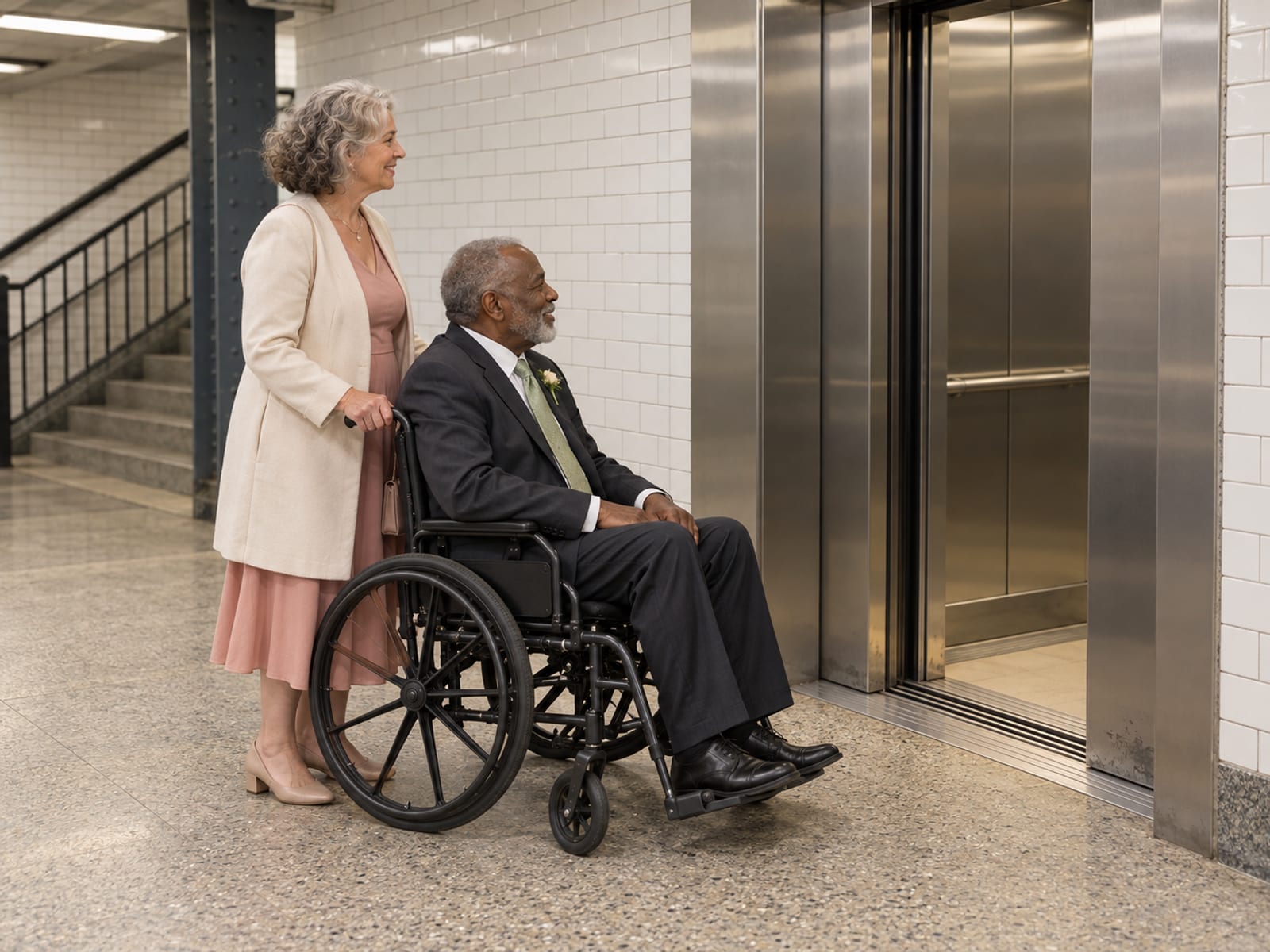
An elevator that works when you plan in spring may be out on the wedding weekend. Check the accessible route again in the week before the wedding and on the day itself, and give guests who rely on it a phone number to call. If an elevator is out, the MTA's guidance points riders to station signs, accessible trip planning and station staff for another way through.
For guests who should not use transit at all, plan a car or an accessible vehicle. Ask each operator how a wheelchair is loaded, and count wheelchairs, walkers and strollers separately from passengers.
Where a shuttle, limo or car can legally load, wait and stage near the venue
Curb access is the detail that most often goes wrong, so settle it with the venue and the operator together. NYC DOT's loading zone rules and its charter bus page set the limits:
- Pickup and drop-off zones are for quick loading only. A bus cannot park there.
- Vehicles cannot double-park, load from a travel lane, stop where "No Stopping Anytime" is posted, or block a subway, city bus or commuter-bus stop.
- The driver must stay with the bus while passengers get on or off.
- Buses may park only in authorized spaces. Bus meters generally run 7 a.m. to 7 p.m. daily except Sundays, at $20 an hour with a three-hour maximum.
- Bus parking in Lower Manhattan is especially limited, with a three-hour limit.
A shuttle company does not automatically have a legal place to stop. Under NYC DOT's Ferries & Buses rules, a shuttle, sightseeing, intercity or public-transportation bus making on-street passenger stops needs a Bus Stop Permit for each stop location. Ask the operator how it handles this for your hotel and venue curbs.
This shapes your schedule. A coach usually cannot sit outside a Manhattan venue through a five-hour reception, so it may drop guests off, leave for a staging location and return for the ride home. Limousines and private cars follow the same posted signs, and a venue's own driveway can have its own rules, so ask the venue where vehicles should pull in and for how long.
How congestion pricing affects wedding cars and buses entering Manhattan
The MTA's Congestion Relief Zone covers local streets and avenues in Manhattan at and below 60th Street. The FDR Drive, the West Side Highway/Route 9A and the Hugh L. Carey Tunnel connections to West Street are excluded, though getting between those roads and a venue can still mean driving on tolled local streets.
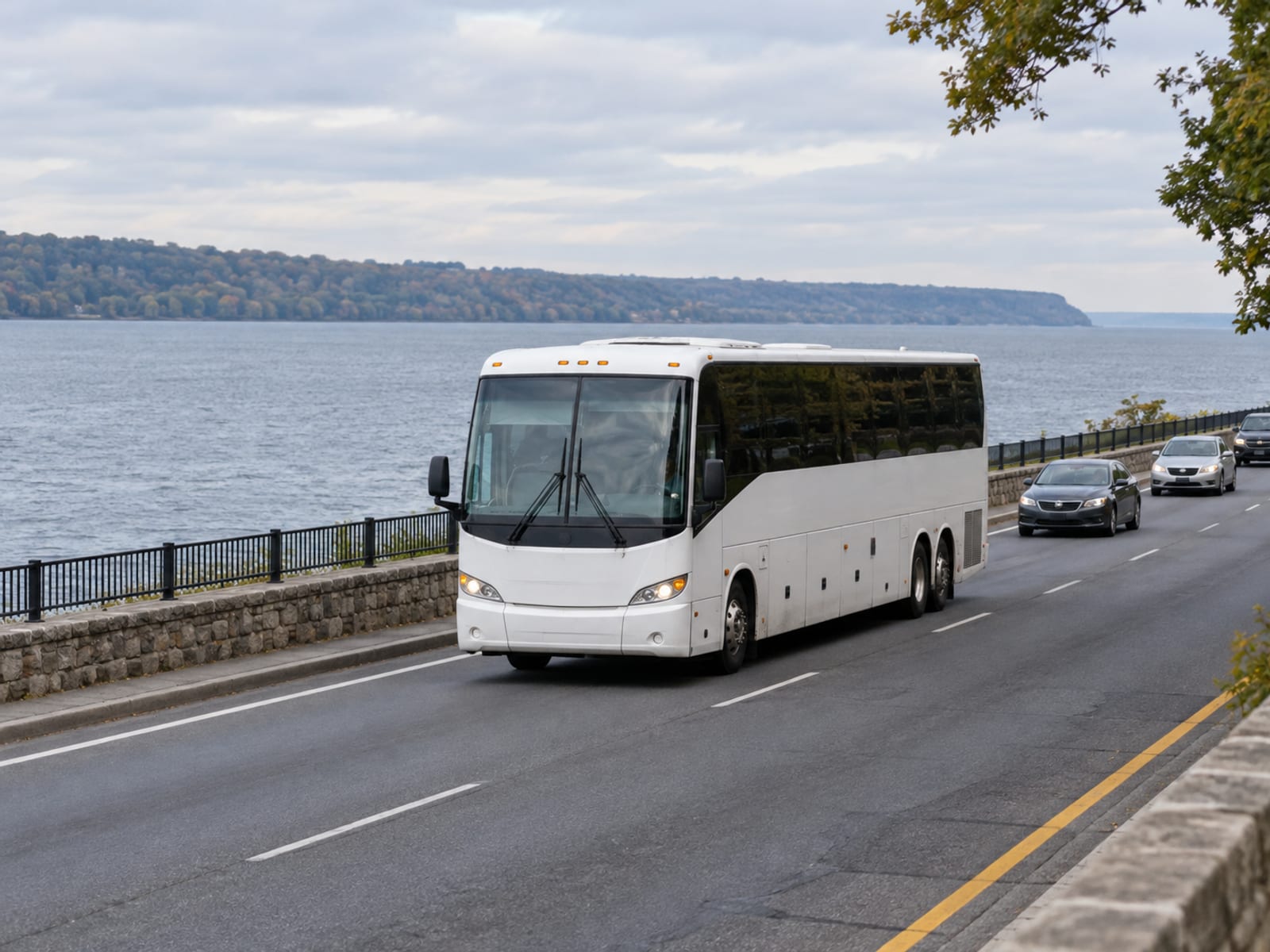
The toll depends on vehicle type, time of day, payment method and crossing credits. With a valid E-ZPass, the published peak tolls are:
- Passenger car or small commercial vehicle: $9 peak, $2.25 overnight
- Small truck and some buses: $14.40 peak, $3.60 overnight
- Large truck and tour bus: $21.60 peak, $5.40 overnight
Peak hours are 5 a.m. to 9 p.m. on weekdays and 9 a.m. to 9 p.m. on weekends, and overnight tolls are 75 percent lower. Taxis, green cabs and black cars add a $0.75 per-trip charge, and app-based rides add $1.50. A Saturday afternoon wedding falls inside the weekend peak, so ask each operator which vehicle category it pays under, how many entries your schedule involves, and whether the toll is already in the quote.
Tap or hover a row to highlight it.
| Vehicle | Peak | Overnight |
|---|---|---|
| VehiclePassenger car or small commercial vehicle | Peak$9 | Overnight$2.25 |
| VehicleSmall truck and some buses | Peak$14.40 | Overnight$3.60 |
| VehicleLarge truck and tour bus | Peak$21.60 | Overnight$5.40 |
Parking for guests who drive, and what can disrupt the route on the day
Guests driving in need specifics, not "there's parking nearby." NYC DOT lists municipal garages and lots with their own rates, hours and reservation details, and meter rates vary by zone and posted sign, with payment through ParkNYC where available. Private garages must post their rates, according to the city's Department of Consumer and Worker Protection. Ask the venue which garage its guests usually use, then name it in your directions with the address and hours.
Construction, parades, festivals, marathons, concerts, Open Streets and subway work close or slow routes in every borough. NYC311 updates its closure information weekly but notes that dates, times and routes can change.
A practical check in the weeks before the wedding:
- Look up closures on the NYC311 closure page.
- Read NYC DOT's weekend and weekday traffic advisories.
- Search the NYC event permit calendar for your date and boroughs.
- Check MTA planned service changes and the Trip Planner.
- Ask the venue and operator for a second curb or staging spot.
- Send guests any confirmed change by text, email or your wedding website.
- Allow time for guests to walk from a legal loading point to the door.
What to ask a transportation company, and how to write directions guests will follow
No single booking deadline applies across operators, and availability depends on your date, vehicle, route and season. Ask for quotes once you know the date, the guest count, the hotel area and both venues, and sooner for Saturdays, large groups, several vehicles or a venue outside the city. Get at least two written quotes and compare them line by line.
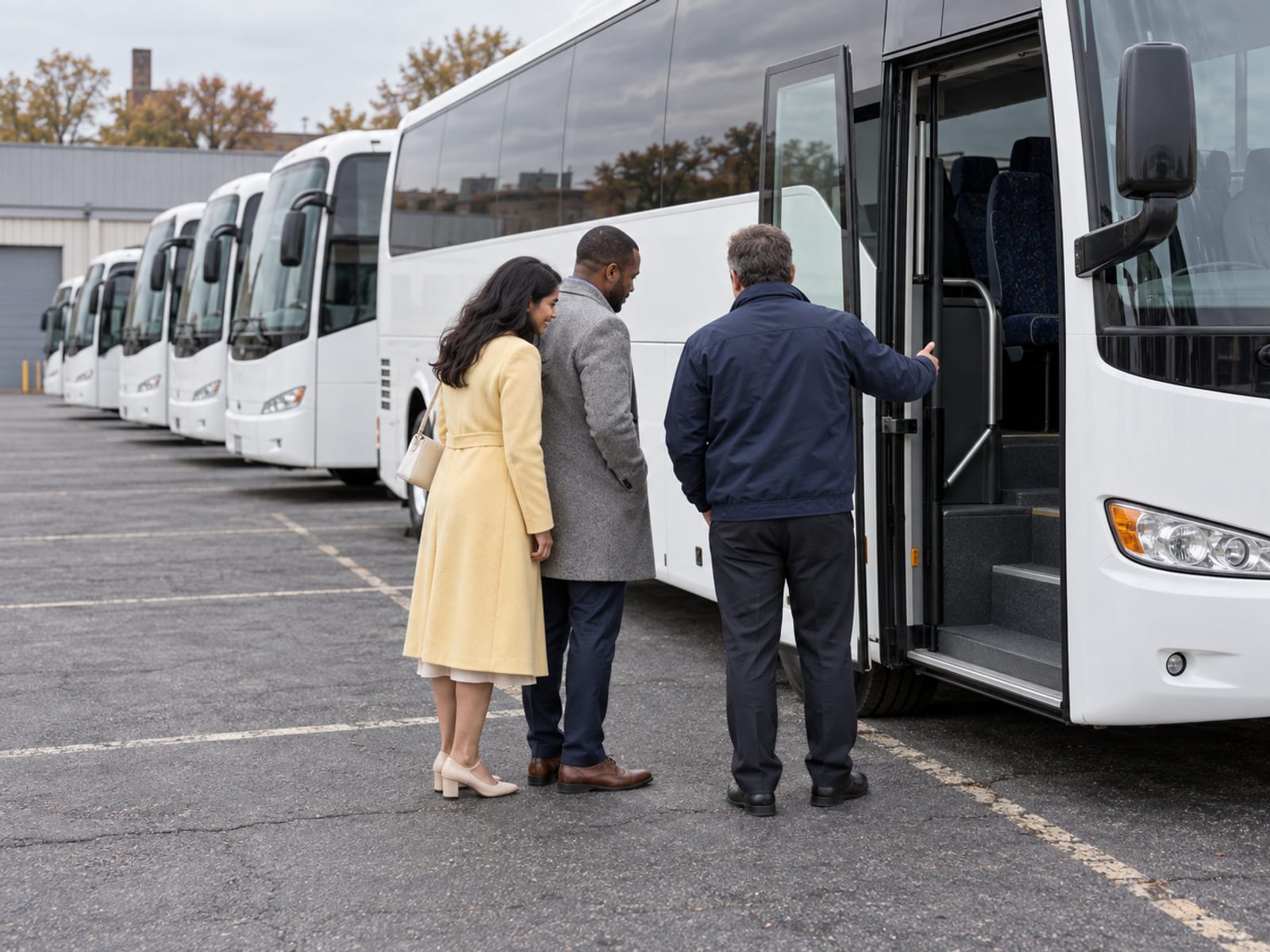
Questions to put to each operator:
- What is the minimum number of hours, and does the clock start at the garage?
- Are the driver, fuel, tolls, tax, parking, gratuity and wait time included?
- Is overtime billed by the hour or the half-hour?
- Is the quoted vehicle guaranteed, and how many seated passengers and bags does it hold?
- Is the vehicle accessible?
- Where will it legally load, and where will it wait or stage?
- Who is the day-of dispatcher, and how do you reach them?
- What happens if a street closure blocks the planned curb?
- What is the cancellation or rescheduling policy?
Then write directions a guest can follow on a phone while walking. Give the date, the exact address and the entrance, the hotel pickup address and curb, the pickup time and when to arrive, the vehicle or operator name, a contact number, and the return time and place. For transit, name the line, direction, station, the entrance to use, the walking time and any transfer, plus the accessible alternative and a note that elevator status can change. Add what to do if someone misses the shuttle.
A simple pattern: "Take the [line] to [station]. Use the [street or avenue] entrance. The ceremony entrance is [walking time] from the station. If you need a step-free route, check the MTA accessible trip option before leaving and call [contact] if the elevator is out." Send a Spanish version to guests who will read it more easily, keeping names like OMNY, MTA and Staten Island Ferry as they are. Printed direction cards with large type and a phone number, and a charged power bank for whoever is coordinating transportation, cover the moments when phones run low.
Quick check: fares, curbs and tolls
Answer every question to check.
Questions couples ask about getting guests around NYC
Do we need a wedding shuttle in NYC?
Not always. A shuttle is most useful when your hotels, ceremony, reception or after-party are far apart or hard to reach by transit, or when many guests are older, disabled, young or unfamiliar with the city. For a central venue near an accessible station, transit and individual rides may be enough.
Can a wedding bus wait outside the venue?
Not automatically. NYC DOT requires buses to park only in authorized spaces, and pickup and drop-off zones are for quick loading only. Plan a staging spot with the operator and the venue.
Does congestion pricing apply to wedding transportation?
It can, for any vehicle entering Manhattan at or below 60th Street on local streets. The MTA sets the toll by vehicle type, time, payment method and eligible credits, so ask your operator whether it is in the quote.
How do we check for closures on the wedding date?
Use NYC311's current and planned closure information, NYC DOT's traffic advisories and the NYC event permit search for your date and borough. Check again in the final week, since dates and routes can change.
Can guests pay for the subway with a phone?
Yes. OMNY accepts a contactless card, phone, wearable or OMNY card, and subway and local-bus transfers are free under OMNY.
Your next step
Once you have your guest count and your addresses, match your hotels to the route with Where Your Wedding Guests Should Stay in NYC, by Borough, then request written quotes from operators in the transportation directory. If the night continues after the reception, Wedding after-parties in New York City: venues, timing and costs covers the late leg, so plan that ride home at the same time as the ride in.
Terms in this guide
Tap a term to see what it means.
OMNY. The MTA's tap-to-pay system. Guests tap a contactless card, phone, wearable or OMNY card, transfers between the subway and local bus are free, and spending is capped at $35.00 a week with the same card or device.