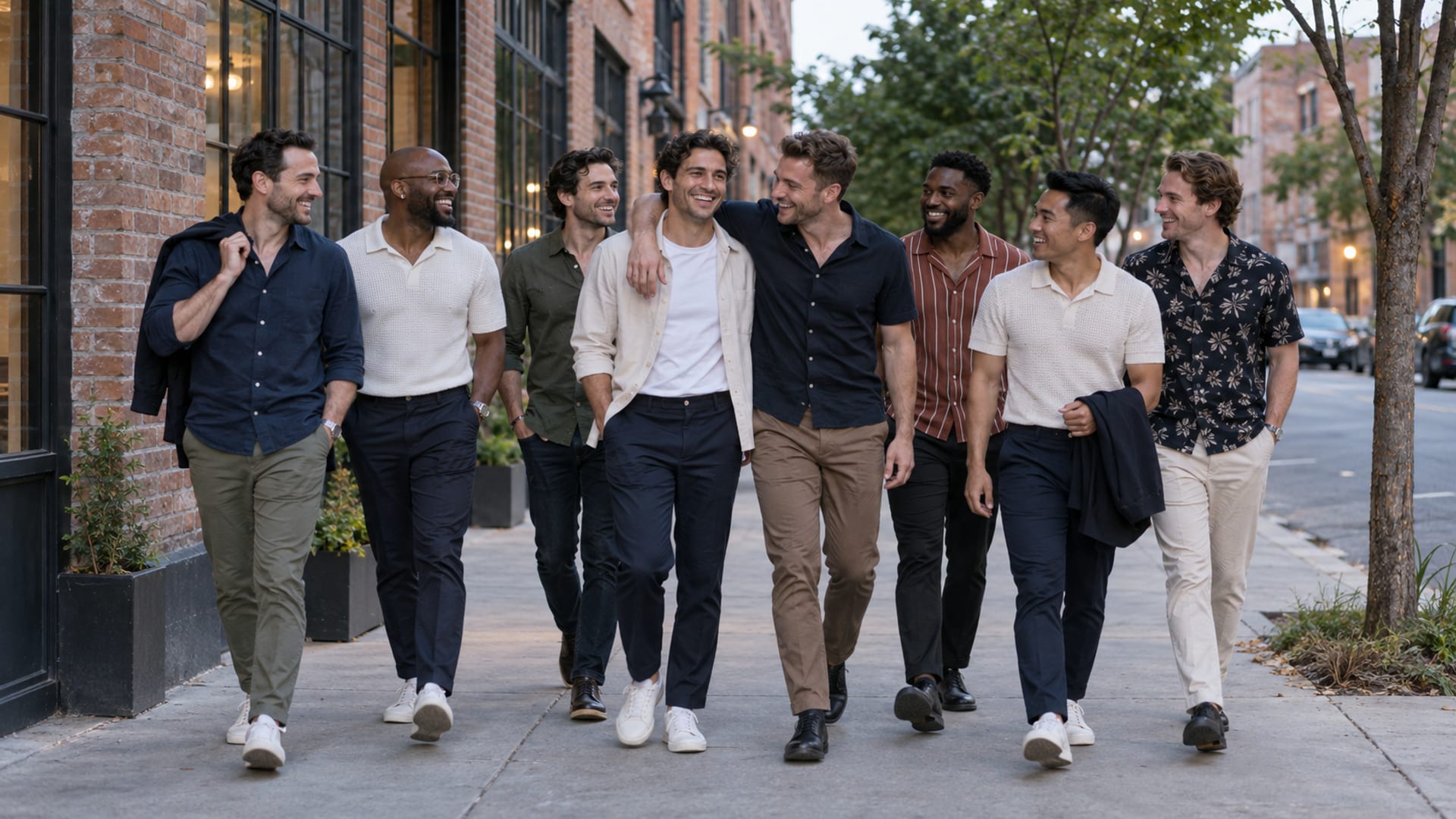
Plan one optional welcome event, one or two bookable group activities, and a short list of self-guided ideas near each hotel. In New York City that can mean welcome drinks or a pizza night, a food tour, a ferry ride, a museum, a neighborhood walk and a few free public places. Match each option to your group's ages, mobility, budget, dietary needs, hotel location and the time people actually have. Then publish the meeting points, start and end times, costs, how to get there and a rain or cancellation plan. Prices, schedules and city-event closures change, so recheck them in the last few weeks before the wedding.
Key takeaways
Tap a card to bring it forward.
- Keep it to one welcome event, one or two optional group activities, and self-guided ideas near each hotel.
- Mark clearly what the two of you are hosting and what guests choose and pay for themselves.
- A private food tour from Foods of NY Tours is published at $89 per person plus 20% gratuity, with group minimums.
- A pizza night for 20 to 25 people starts at $350 from NYC Thin Crust's published packages.
- The city's event finder only looks 30 days ahead, so check closures again close to the weekend.
- Put the whole plan on your wedding website and a printed card or QR code in the welcome bag.
What to plan for out-of-town guests
Guests who flew or drove in for your wedding will have some free hours, and most of them will want a little direction without a full schedule. A simple shape works well: one welcome event where people meet each other, one or two activities that guests can sign up for if they want, and a list of easy things to do near where they are staying.
The Knot and Zola both suggest keeping hosted events separate from optional suggestions on your wedding website, which lets guests plan their own time. Nobody has to attend everything, and saying so plainly takes pressure off guests who arrive late, travel with small children or would rather rest before the ceremony.
Before you choose anything, sort your guest list by what matters to the plan: how many children and older relatives are coming, who uses a wheelchair or can't walk far, who doesn't drink, what dietary needs you know about, which hotels people booked and when most of them arrive. That list decides more than the city does.
Choosing the welcome event
A welcome event doesn't have to be a formal dinner. The Knot describes formats that run from brunch to cocktails to a group activity, and the right one depends on when people land and what you want to spend.

Welcome drinks work well the evening before the wedding, when arrivals are spread across the day and people can drop in for an hour. Venue packages vary widely, so ask two or three places for a written quote for your head count, and ask what the quote includes before you compare them.
A pizza night is relaxed, easy on a mixed-age group and easy to price. NYC Thin Crust publishes a pizza package for 10 to 15 people at $202 and one for 20 to 25 people at $350; pizza-and-salad packages are $287 and $520 for the same group sizes (checked September 28, 2026). Appetizer trays, pastas and desserts need 24 hours' notice, and drop-off orders over $100 carry a 10% pre-tax gratuity. Nick's lists 12-inch pies at $21 to $23, 16-inch pies at $25 to $27, and salads at $45, pasta at $72 and mains at $78 for 5 to 6 people each. Ask about drop-off fees, staffing, tax and whether your space allows outside food.
Brunch suits a group that arrives the night before and leaves the day after, and it doubles as a gentle send-off. A harbor outing gives visitors a view of the skyline in one sitting. Operator fares change with the date and the boat, so take the current price and group policy from the operator's own booking page before you commit.
If the welcome event is in a public park, check the permit rule first. NYC Parks requires a special-event permit for an event with more than 20 attendees.
Group activities that work for mixed ages
The best group activities have a clear start and end, a sit-down break and an easy way to leave early.
A private food tour combines an outing with a meal, which saves you a separate dinner. Foods of NY Tours publishes standard private group pricing of $89 per person plus 20% gratuity, with a minimum of 12 people Monday through Thursday and 16 people Friday through Sunday (checked September 28, 2026). One guide covers up to 18 people, and larger groups are split. The company lists gluten-free and vegetarian options on some tours, so confirm the specific route before you book.
A ferry ride is one of the easiest outings for grandparents and children alike, because everyone sits and the view does the work. NYC DOT lists the free Staten Island Ferry running around the clock between South Ferry in Manhattan and St. George in Staten Island. The same page lists NYC Ferry, the Governors Island ferries, New York Waterway, NY Water Taxi, Seastreak, Statue Cruises and Circle Line as separate services, each with its own schedule and fares.
A museum visit gives you a rain-proof option. The city's Department of Cultural Affairs lists free, suggested-admission and free-hour institutions, and notes that policies vary by residence, age and program, and that special exhibitions may cost extra. Check the museum's own group policy and whether you need timed tickets.
A walking tour can work for a mixed group when you know the distance, the pace, where people can sit and where the restrooms are. Ask the guide for the route before booking.
Things guests can do near their hotel
Most guests will do something on their own, and a short list organized by neighborhood saves them from searching. Give each hotel area three or four ideas and let guests pick.

Midtown and Times Square: Times Square, Bryant Park, the New York Public Library's public spaces, the public areas of Rockefeller Center, the southern edge of Central Park and the High Line's accessible sections are all walkable. Crowds and construction change daily, so guests should check hours on the day.
Lower Manhattan: the free Staten Island Ferry gives a harbor view for the price of a walk to South Ferry. Battery Park, the Financial District, the approach to the Brooklyn Bridge and the outdoor 9/11 Memorial are nearby. The 9/11 Museum is separate and has its own ticket and free-hour policies.
Upper West and Upper East sides: Central Park, Riverside Park, the East River promenade, public libraries and several museums are close. The Met's pay-what-you-wish admission depends on eligibility, including New York State residency and student status, so tell out-of-state guests to check the full admission price.
Brooklyn: Brooklyn Bridge Park, the public spaces in DUMBO, Prospect Park and the Coney Island boardwalk make easy outings.
Queens: Socrates Sculpture Park, Flushing Meadows Corona Park, the Queens Museum and the Queens Botanical Garden are good choices, and several institutions there offer free or suggested admission or free hours.
The Bronx and Staten Island: the Bronx Museum, Wave Hill during free hours, Snug Harbor Cultural Center and Botanical Garden, and Fort Wadsworth appear on the city's free and suggested-admission list.
If guests are staying outside the city, in the Hudson Valley, on Long Island, in North Jersey or in the Catskills, give them the same short list for their own town.
What guests pay and what you host
Guests relax when they know what things cost before they arrive. On your website, put every event in one of two groups: hosted, meaning you are paying, and optional, meaning guests pay their own way.
For hosted events, budget for the full cost, not the headline price. The food tour's 20% gratuity sits on top of the $89 per person, the pizza packages add a gratuity on drop-off orders, and tax and fees can apply to both. For optional activities, list the price per person when you have one and link to the operator so guests can book themselves.
Tap or hover a row to highlight it.
| Option | Published price | Who usually pays |
|---|---|---|
| OptionPizza for 10 to 15 people (NYC Thin Crust) | Published price$202 | Who usually paysThe hosts |
| OptionPizza for 20 to 25 people (NYC Thin Crust) | Published price$350 | Who usually paysThe hosts |
| OptionPizza and salad for 20 to 25 people (NYC Thin Crust) | Published price$520 | Who usually paysThe hosts |
| OptionPrivate food tour (Foods of NY Tours) | Published price$89 per person plus 20% gratuity | Who usually paysThe hosts or each guest |
| OptionStaten Island Ferry | Published priceFree | Who usually paysNo one |
| OptionSubway or local bus | Published price$3.00 per ride | Who usually paysEach guest |
Transit is the cost almost every guest shares. The subway and local bus fare rose to $3.00 on January 4, 2026, according to the MTA. With OMNY, rides stop costing more once a guest reaches the weekly cap of $35 for subways and local buses, as long as they tap with the same card or phone each time. Many free options, from the Staten Island Ferry to park walks, cost guests nothing but the ride there.
Planning around traffic and city events
A single citywide event can add an hour to a trip across Midtown, so check the calendar before you lock in times.

The TCS New York City Marathon is scheduled for Sunday, November 1, 2026, on a course through all five boroughs. A wedding weekend near that date should plan around road and bridge closures, subway changes and tight hotel rooms.
United Nations General Assembly week is another pressure point in September. NYC DOT said Midtown speeds have historically fallen below four miles per hour that week, and the city's 2026 briefing described rolling pedestrian and vehicle closures, FDR Drive restrictions and ferry disruptions around the UN. NYC DOT also publishes Gridlock Alert days through the holiday season, when parades, shopping and altered attraction hours slow everything down.
The city's Find Events tool lets you search by date, borough and event type, but it only lists events up to 30 days ahead. Check it once when the 30-day window opens and again in the final week. Add the season to the plan as well: shade and water in summer, indoor backups and early sunsets in winter, and a rain option in spring and fall.
What belongs in a NYC welcome bag
A welcome bag is a gift, not a requirement, and The Knot notes there is no universal rule about who pays for it. Zola suggests practical items such as snacks, water, a local map and a welcome note.
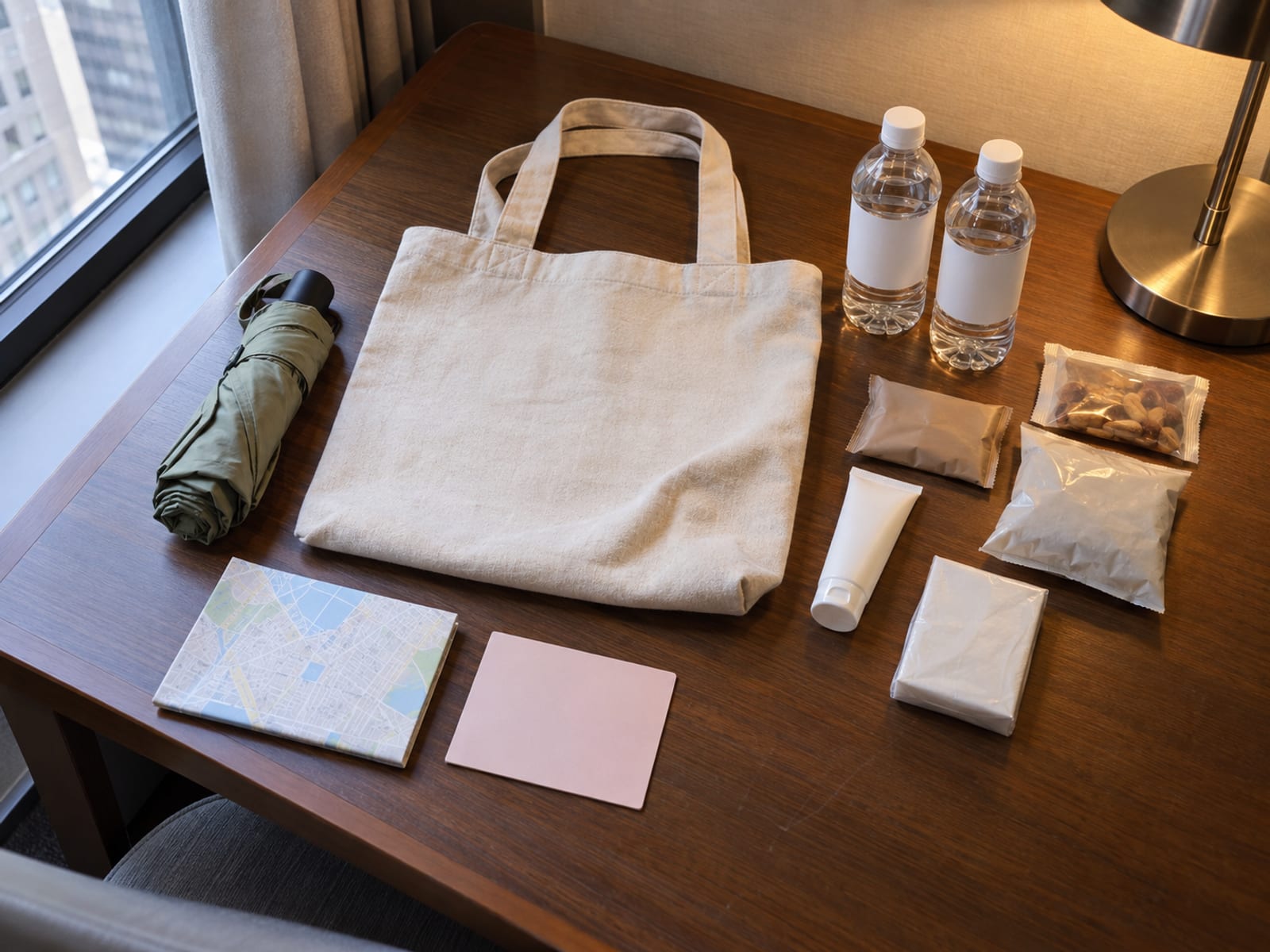
For a NYC weekend, useful contents include a short welcome note, the weekend schedule, the hotel address and an emergency contact, a neighborhood map, water, shelf-stable snacks with a few allergy-friendly options, and something for the weather, such as sunscreen, tissues or a small umbrella. Add a card explaining OMNY: guests can tap a contactless card, phone, smart device or OMNY Card, and should use the same one every time to count toward the weekly cap. If you add a reusable water bottle, a compact umbrella or a small power bank, look for something light enough to carry all day, and a USB-C connection on the charger.
Quick check: planning the weekend
Answer every question to check.
Questions to ask before booking a group activity
Before you pay a deposit, get these answers in writing:
- What is the current price, and is it per person, per group or a minimum spend?
- Are tax, gratuity, transportation or service fees extra?
- What are the minimum and maximum group sizes, and does a larger group split?
- Is the booking private or shared with other visitors?
- Where is the meeting point, when does it start and how long does it run?
- How far does the group walk, are there stairs, and where can people sit and use a restroom?
- Can the activity handle vegetarian, vegan, kosher, halal, gluten-free or allergy needs?
- Are children welcome, is alcohol included and is there a non-drinking option?
- What happens in rain, heat or cold, and what is the cancellation and refund policy?
- When is payment due, and can guests pay individually?
- Can guests leave early, and can the guide work in more than one language?
Questions about wedding weekends in NYC
Should guests have to attend every activity?
No. Label hosted events separately from optional suggestions and leave guests real free time. A guest who skips the food tour still feels welcome if the website makes clear it was optional.
How does OMNY fare capping work for a group?
The cap is personal to each card or device. OMNY says only the first tap on a card counts toward that card's cap, so if one guest taps for three people, the extra riders don't earn progress toward their own cap. The weekly cap is $67 for guests who also ride express buses.
Do we need a permit for a park picnic?
For more than 20 attendees, yes. NYC Parks recommends applying at least 21 days ahead and charges a $25 processing fee, with extra fees for some added elements. A permit can also help a smaller group that wants reserved space.
What if our group is larger than one food tour guide can take?
Foods of NY Tours covers up to 18 people per guide and divides larger groups. Ask whether the split groups can start from the same place and end together.
Is free museum admission the same for every guest?
No. The city's cultural affairs office says free and suggested-admission policies depend on residence, age, date and program. Special exhibitions may cost extra even on a free day.
Your next step
Once you have the welcome event and one or two activities chosen, match them to where your guests are sleeping. The guide to where your wedding guests should stay in NYC, by borough, helps with hotel blocks, and the guide to getting wedding guests around New York City covers shuttles, subways, cars and parking. For the night after the wedding, see the guide to wedding after-parties in New York City.