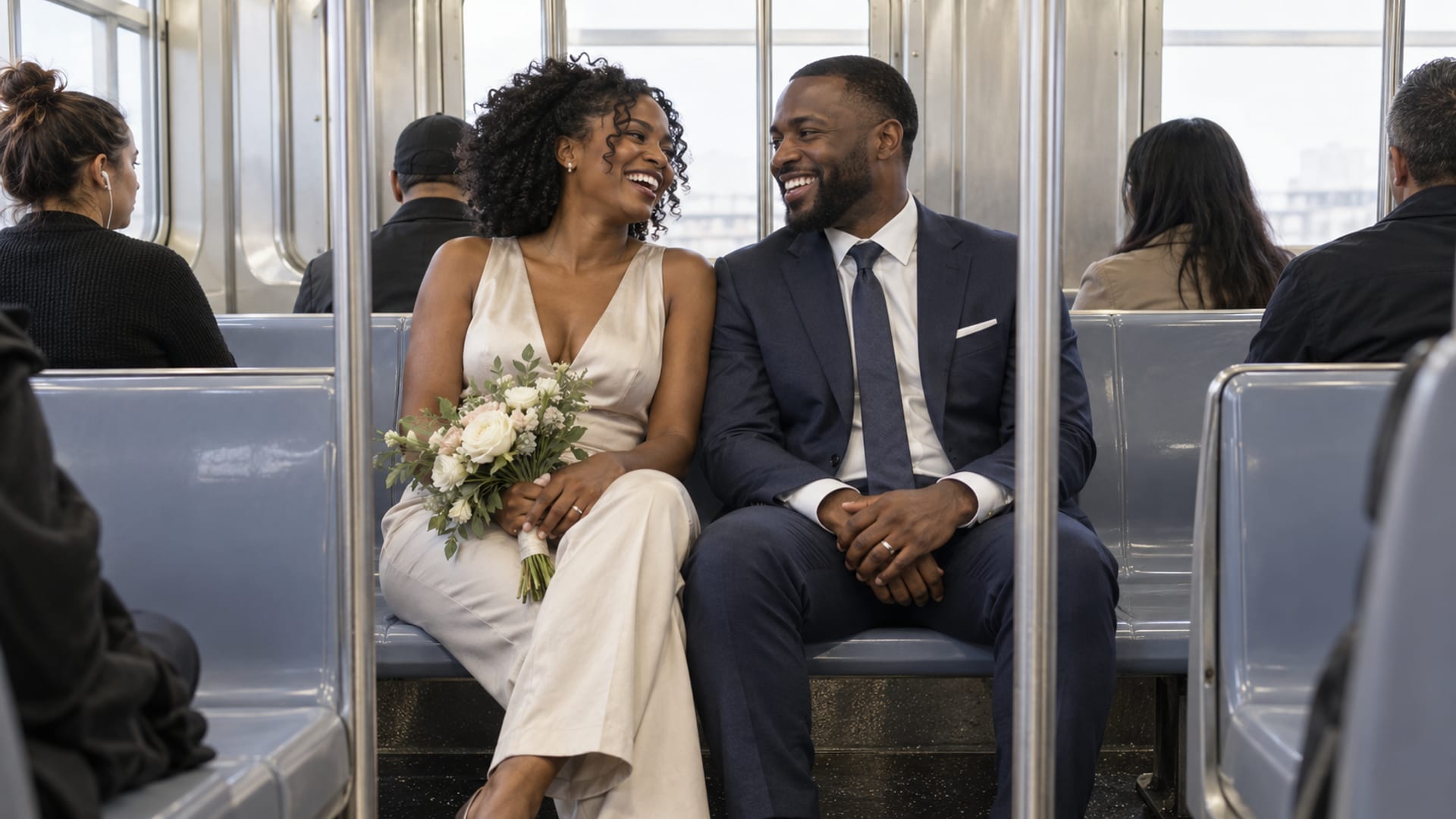
A Spanish and English wedding in New York City can run on a bilingual officiant, two officiants, bilingual readers or a planned interpreter. What matters legally is not repeating every sentence twice. New York requires the two of you to declare, before an authorized officiant and at least one witness, that you take each other as spouses.
If you plan to marry at the City Clerk, you need an appointment, a valid New York marriage license, a witness 18 or older and the $25 ceremony fee, according to NYC311. Ask the City Clerk directly about ceremony language and interpreter arrangements before you count on either.
For a private ceremony, choose the language plan first. Then book the officiant and vendors who can deliver it, and get each one's language, coverage and price in writing.
Key takeaways
Tap a card to bring it forward.
- The legal core is the solemn declaration before an authorized officiant and a witness; it does not need to be repeated sentence by sentence.
- For a City Clerk ceremony, ask the Clerk about Spanish and interpreter arrangements before you plan around them.
- An officiant working in NYC must be registered with the City Clerk; speaking Spanish does not replace that.
- Repeat the key moments in both languages, then split readings and stories between them to keep the ceremony a reasonable length.
- Every vendor price below is the vendor's own starting price on November 5, 2026; confirm the current figure and who exactly will attend.
What makes a bilingual NYC wedding work
Most couples planning in two languages want the same thing: both families follow the ceremony, the invitations and the reception, and nobody ends up as an audience instead of a guest. The simplest way there is to decide the language plan before you book anyone.
Start with a few questions. Which parts of the day must every guest understand? Which partner wants to speak vows in which language? Do grandparents need the ceremony spoken in Spanish, or will a printed program do? Your answers tell you whether you need one bilingual officiant, two officiants, readers or an interpreter, and they tell vendors what you are asking them to do.
Then match people to the plan. A vendor who says "we speak Spanish" may not handle contracts, written materials or every member of the team in both languages, so ask exactly who will do what.
What language a City Clerk ceremony can use
The City Clerk performs ceremonies in all five borough offices, by appointment, Monday through Friday. NYC311 lists the requirements: a valid New York State marriage license, at least one witness over 18, identification and the $25 fee. It also says no more than six attendees may be present, counting the two of you and the witness, and it gives an arrival window of 8:30 AM to 3:15 PM. Office policies change, so check the current announcements before you go.
The City Clerk also offers Spanish translations of the marriage license application and of the officiant registration form, along with other Spanish marriage resources. New York City agencies provide interpretation and translated documents in designated languages, Spanish among them, as the NYC Comptroller's language-access page explains. That is general policy, though, and it does not tell you how a marriage ceremony in a particular office will run.
So, before you build a plan around a City Clerk ceremony, ask the Clerk directly:
- Can the ceremony be conducted in Spanish?
- Is a City Clerk interpreter available?
- May you bring your own interpreter, and does that person need to meet any qualification or show identification?
- Can you review the ceremony script ahead of time?
If the answers do not fit your plan, a private ceremony with a bilingual officiant is the other route. A short civil ceremony followed by a larger bilingual celebration is also a common way to split the day.
What must be legally understood and said
New York Domestic Relations Law section 12 says no particular form or ceremony is required when an authorized clergy member, magistrate or one-day marriage officiant solemnizes the marriage. The two of you must solemnly declare, in front of the officiant and the witness or witnesses, that you take each other as spouses. At least one witness besides the officiant must be present.
The law does not require English wording. It does mean that both of you should understand the declaration in whichever language or languages are used. Personal vows, ring vows, readings and cultural rituals are welcome additions, but they should not stand in for the declaration. Ask your officiant to confirm where the declaration falls in the script and to say it in the language each of you follows best.
The officiant also has to complete the license correctly and return it. New York State Department of Health guidance says completed licenses go back within five days of the ceremony. For finding and registering an officiant, see our guide to hiring a wedding officiant in NYC.
One bilingual officiant, two officiants, a reader or an interpreter
Each option solves a different problem, and each has its own cost in time and money.
An officiant who speaks both languages is the most direct. One person delivers paired sections, keeps the order steady and handles the license. Two officiants can trade sections, which suits couples who want a native speaker of each language but adds a second person to coordinate and pay.
A single officiant working in one language, with bilingual readers, keeps the legal portion simple and lets family members take part. An interpreter works when guests need spoken translation of the whole ceremony; ask the venue whether sound equipment is allowed before you rent any.
Keep two lists as you compare. One holds legal requirements: an authorized officiant, registered with the City Clerk if the ceremony is in the five boroughs, and a witness. The other holds what vendors claim, such as fluency, dialect and years of experience. A vendor's claim is worth asking about, but it is not the same as a requirement.
Published starting prices on November 5, 2026 show how much the options differ:
Tap or hover a row to highlight it.
| Vendor | What it lists | Starting price |
|---|---|---|
| VendorBoda Civil New York | What it listsBilingual Spanish and English ceremony, Manhattan and the Bronx | Starting price$375 |
| VendorBoda Civil New York | What it listsCentral Park | Starting price$400 |
| VendorBoda Civil New York | What it listsQueens and Brooklyn | Starting price$400 and up |
| VendorBoda Civil New York | What it listsNew Jersey | Starting price$375 and up |
| VendorBoda Civil New York | What it listsLong Island | Starting price$450 and up |
| VendorBoda Civil New York | What it listsLicense signing without a ceremony | Starting price$200 |
| VendorWeddings By Fé | What it listsFull ceremony with script, vows, rings, pronouncement and license signing | Starting price$400 |
| VendorWeddings By Fé | What it listsVow or ring exchange ceremony | Starting price$300 |
| VendorWeddings By Fé | What it listsLicense signing only | Starting price$200 |
| VendorI Do Drive Thru USA | What it listsBilingual officiant and Spanish ceremony package | Starting priceFrom $500 |
| VendorTLC Entertainment | What it listsNew York licensed officiant, 2025 pricing | Starting price$700 to $1,200 |
These are the vendors' own figures, and travel, rehearsal, ceremony length, date and language coverage can change what you pay. Some vendors charge extra for bilingual service and others fold it into the base package, so ask what the price includes.
How to structure a Spanish and English ceremony
A workable plan repeats the key moments in both languages and divides everything else. Say the welcome, the declaration of intent, the vow cue, the ring exchange and the pronouncement in Spanish and English. Then give readings, stories, reflections and cultural rituals to speakers of one language or the other. This is planning guidance, not law, and a CeremonyLab guide describes a similar structure.
Keep the order the same each time. If Spanish comes first for one paired section, put Spanish first for all of them. It is easier for the officiant to deliver and easier for guests to follow than switching without warning.
For vows, let each of you speak in the language that feels natural. Translate a vow only where guests need to follow it, and offer a written translation in the program for the rest. Write one combined script with clear language labels, and have a fluent speaker of each language read it, especially names, family terms, religious language and regional vocabulary.
A bilingual program carries the weight that spoken translation cannot. Include:
- The order of the ceremony.
- Language labels for each section.
- The readings, with translations of key passages.
- Pronunciation notes for names and unfamiliar words.
- Short explanations of any cultural traditions.
If you print programs, look for readable type, clear language labels and enough space for both languages. For writing the vows and script themselves, our guide to writing your own wedding ceremony covers the steps.
Invitations and a wedding website in two languages
You have several formats to choose from. English and Spanish can sit side by side on one card, or each language can have its own card. One invitation can carry a QR code that leads to language-specific details, and a digital invitation can let each guest pick a language. Some couples send separate RSVP forms to different language groups. Another option is a short bilingual invitation with the key logistics repeated, and longer explanations on the website.
Translate the meaning of the invitation, not word by word. Keep names, dates, times, addresses, dress code, meal choices, transportation, the RSVP deadline and contact information identical in both versions.
Several wedding website platforms list Spanish support:
- WeddWeb lists 11 languages including Spanish, with a free plan and a $39 one-time premium price, as of November 5, 2026.
- Wedavo lists more than 20 languages including Spanish, with a free plan for up to 50 guests.
- The Wedy lists English and Spanish bilingual invitations and websites.
- Lauquim lists a fully bilingual Spanish and English website, planning panel and tutorials.
- Paper&Seal lists multilingual invitations with guest language selection; confirm the current features with the company.
A platform may translate buttons and menus but leave your own text to you. Check whether RSVP fields, meal choices, registry information and accommodation details also appear in both languages. Our guide to the wedding website, invitations and RSVPs covers the rest of the setup.
Choosing bilingual reception vendors and what to ask them
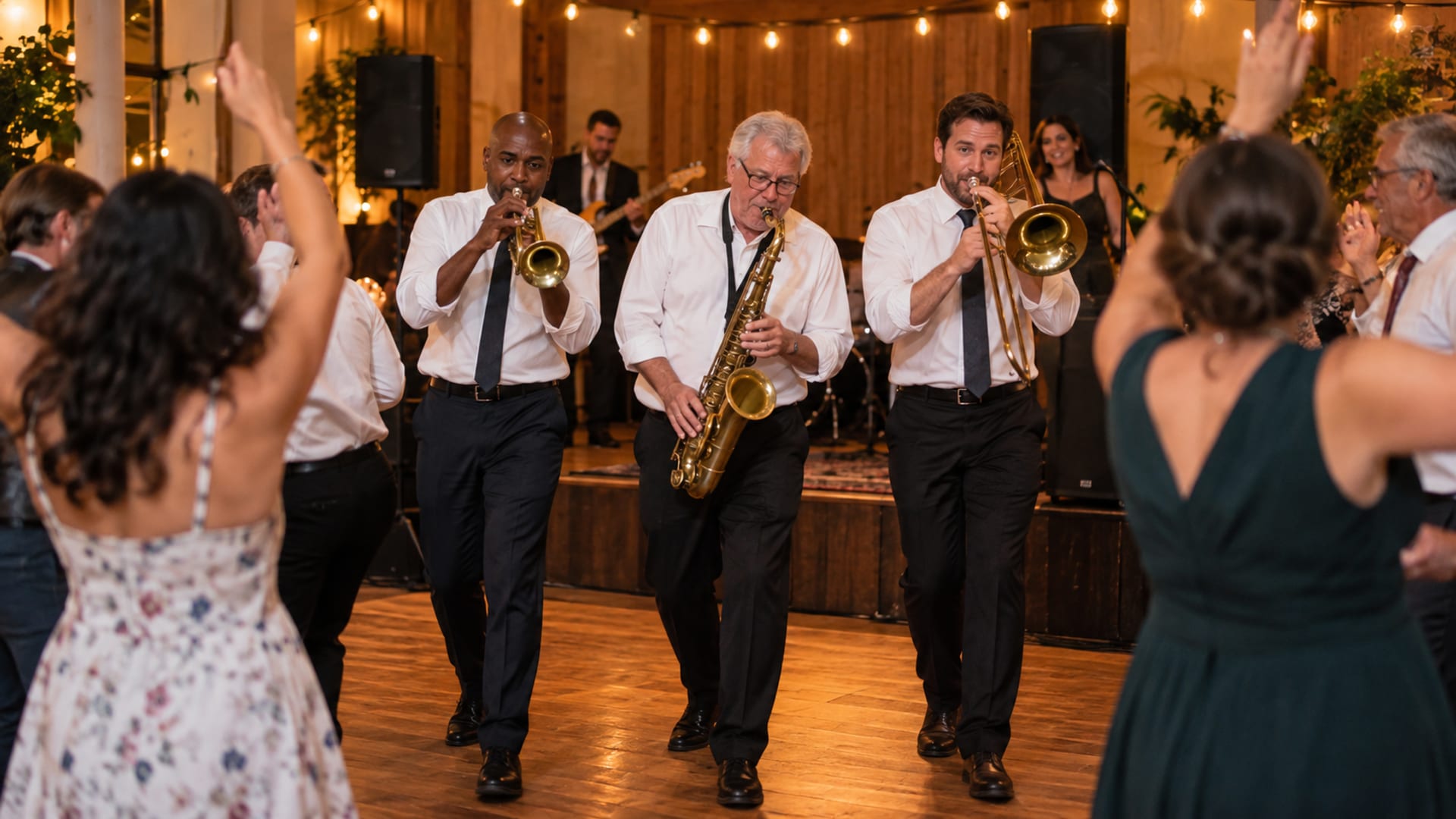
At the reception, a bilingual DJ or MC announces entrances, dinner, dances and formal moments in both languages. A photographer who speaks Spanish can direct family groupings and talk with relatives who do not speak English. A planner can carry the same role across the whole day.
Ask each vendor:
- Are all announcements bilingual, or only selected formalities?
- Does the bilingual service cover the ceremony, cocktail hour and reception?
- Is there a bilingual MC, or only a bilingual DJ?
- Will the same person handle music and announcements?
- Can you review pronunciation of names in advance?
- Will speeches be translated, and by whom?
- Does the contract name the bilingual person who will attend?
- Who is the named substitute if the lead becomes unavailable?
Starting prices the vendors listed on November 5, 2026:
Tap or hover a row to highlight it.
| Vendor | Service | Starting price |
|---|---|---|
| VendorKenny Fiesta | ServiceBilingual DJ and MC, reception | Starting price$3,200 |
| VendorKenny Fiesta | ServiceCeremony sound | Starting price$500 |
| VendorDJ El Jesse | ServiceBilingual DJ and MC, reception only | Starting price$3,200 |
| VendorUnique Class DJs | ServicePremium package with a bilingual MC | Starting priceFrom $2,000 |
| VendorTLC Entertainment | ServiceBilingual MC add-on, 2025 pricing | Starting price$350 |
East River Photographer lists English and Spanish services from Brooklyn, serving NYC, New Jersey and beyond. Request a quote that names the photographer attending and what bilingual communication includes. Keep each cost on its own line in your budget, because the officiant, DJ, MC, photographer and website are separate purchases.
What to confirm before you book
Before you sign with any vendor, put these in writing:

- Language and dialect, and the vendor's actual fluency.
- The exact person who will attend your wedding.
- Written materials such as scripts, timelines and contracts, and the languages they come in.
- Travel area and any travel fees.
- Overtime rates.
- Deposit and cancellation terms.
- Who completes and files the marriage license.
- Backup coverage if your vendor cannot make it.
Searching in both languages widens your options. Terms such as "oficiante bilingüe español inglés," "DJ bilingüe para bodas Nueva York" and "fotógrafo de bodas que habla español NYC" lead to vendors who may not appear in an English search.
If your ceremony brings together more than one tradition, read our guide to interfaith and intercultural weddings as well.
Quick check: a bilingual wedding
Answer every question to check.
Questions about bilingual weddings in NYC
Can a NYC wedding ceremony be in Spanish?
A private ceremony can be in Spanish or bilingual with an authorized officiant. For a City Clerk appointment, ask the Clerk about the language and interpreter arrangements before you book.
Does New York require English wedding vows?
No. New York law does not require a particular ceremony form. You and your partner must solemnly declare before an authorized officiant and at least one witness that you take each other as spouses.
Can personal vows replace the legal declaration?
They should not. Treat personal vows as an addition, and ask your officiant to confirm that the required declaration is in the ceremony.
Does a NYC officiant need to register?
Yes. An officiant performing a ceremony in New York City must register with the City Clerk, and NYC311 lists a $15 registration fee. Speaking Spanish does not replace registration.
Should every sentence be translated?
Not necessarily. Decide which parts need spoken translation, and let the bilingual program carry the rest.
Your next step
Write down your language plan in one paragraph: who speaks what, which moments are repeated and which are divided. Then send it to the City Clerk if you are considering a City Hall ceremony, or to two or three officiants if you are marrying elsewhere. A sturdy folder for the license, identification copies, vendor contracts and your labeled script keeps everything together on the day.
Terms in this guide
Tap a term to see what it means.
Solemn declaration. The statement, made in front of the officiant and at least one witness, that you take each other as spouses. Personal vows can be added but should not replace it.