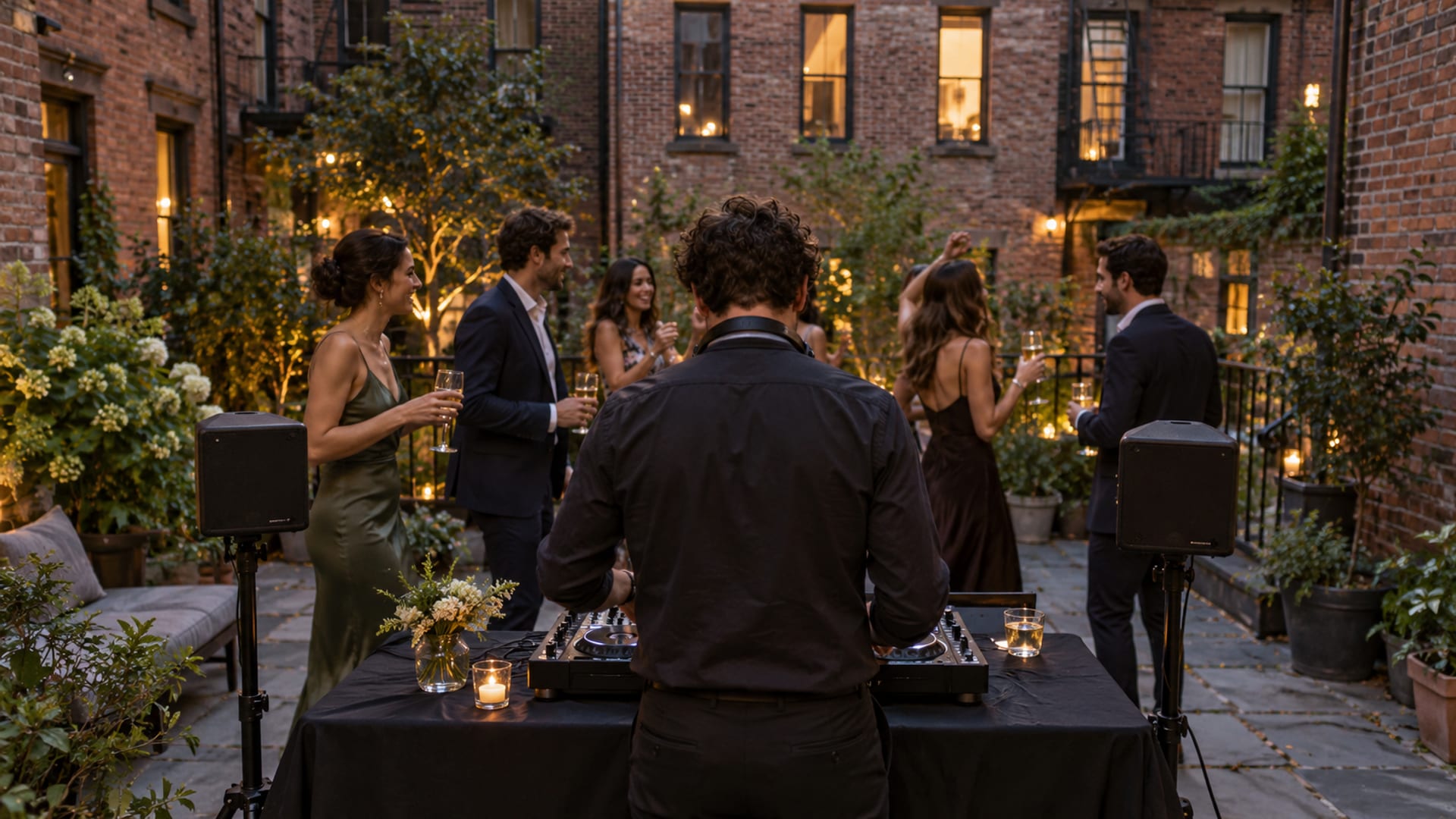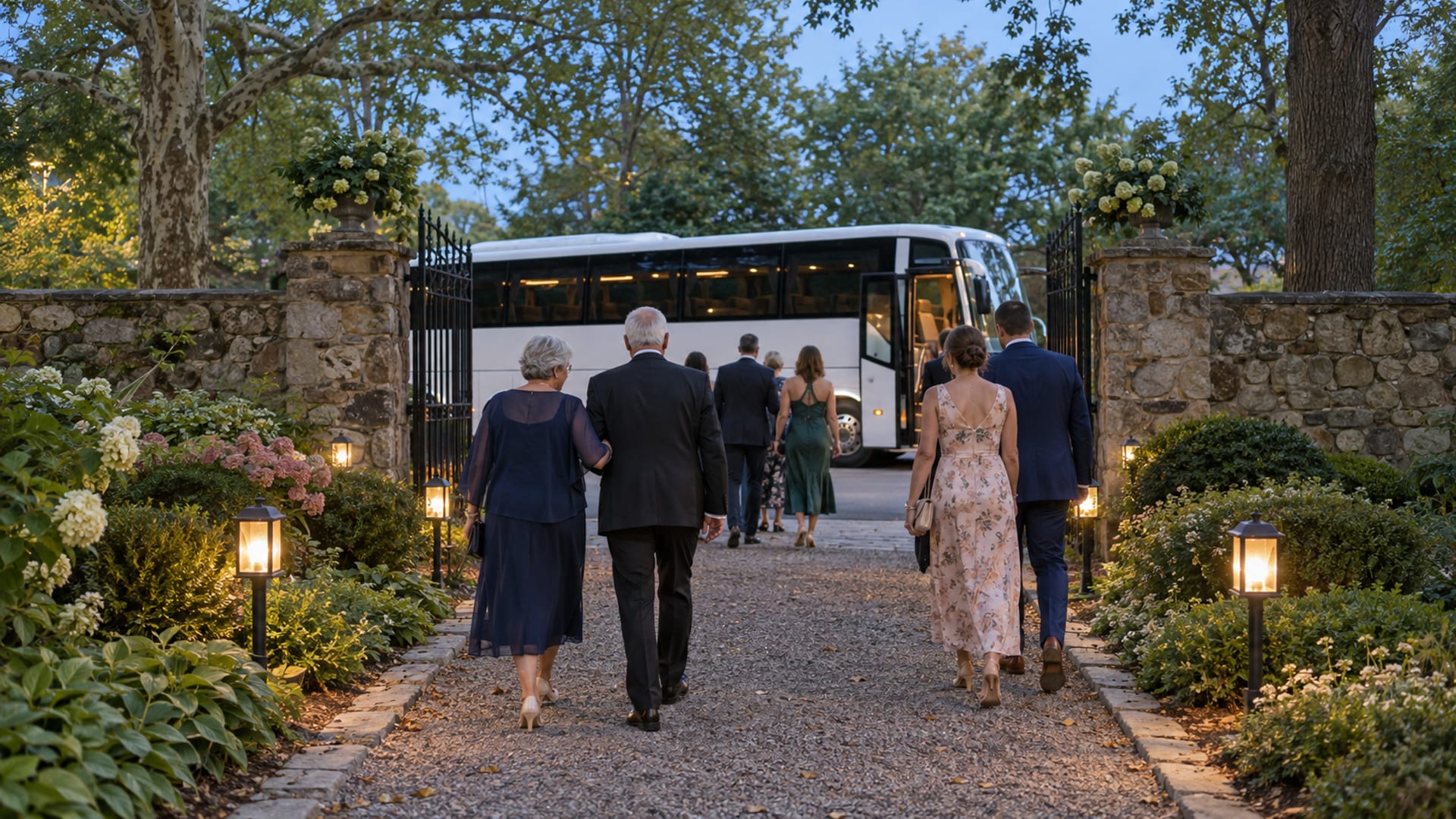
Start with three decisions: a budget, a guest-count range and a season. Then choose your date and venue, and after that book the vendors whose calendars fill first. For a full NYC wedding, about 12 months ahead is a comfortable place to begin, and the plan can be shortened if you stay flexible on date, venue and vendors. The license fits inside that order in one line: the ceremony generally cannot happen until 24 hours after your New York State license is issued, and the license is valid for 60 calendar days starting the day after it is issued, according to the New York State Department of Health.
Key takeaways
Tap a card to bring it forward.
- Set the budget, guest-count range and season first, because every later booking depends on them.
- Choose the date and venue next, then book the vendors whose calendars fill earliest.
- Order a made-to-order dress 8 to 12 months ahead, and leave time for fittings and alterations.
- Time the marriage license inside its 60-day window, and at least 24 hours before the ceremony.
- A six-month, six-week, City Hall or micro wedding is possible if you stay flexible and do the legal appointment early.
What to book first, and when
The order matters more than the exact month. Here is the sequence most NYC couples follow, with the rough timing for a full wedding.
- About 12 months out: set your budget, guest-count range, format and season. Research venues and choose your date.
- 10 to 9 months out: book the photographer, officiant, caterer, florist and band or DJ, plus a planner if you want one. Order the dress if it is made to order.
- 8 to 6 months out: book hair and makeup, cake, rentals and transportation. Start honeymoon planning.
- 5 to 4 months out: finalize the menu and decor direction, order invitations and schedule alterations.
- 3 to 2 months out: mail invitations, apply for the license, confirm permits and vendor payment schedules.
- 6 weeks out: track RSVPs, finalize seating and confirm the day-of timeline with everyone.
The month-by-month checklist later in the page fills in each step. If you have less than a year, skip ahead to the section on shrinking the plan.
What to decide right after the engagement
Four decisions shape everything else, so make them before you tour a single venue: your budget, a guest-count range, the format (a full reception, a restaurant dinner, a small gathering or a City Hall ceremony) and your preferred area and season. Zola's wedding planning checklist, updated May 14, 2026, puts these at the start of the list for good reason. Your guest count sets the venue size, the catering bill and the permit rules, and your budget sets how many of the other choices you get to make.
Give yourself a range rather than a single number. A count of 40 to 60 guests keeps more venues open than a fixed 52, and it leaves room for a cousin you forgot. If you want to celebrate the engagement with a party, it is an early, optional step, and our guide to planning an engagement party in New York City covers it. If the budget is the tight part, our guide to having a wedding in New York City on a budget goes deeper than this page does.
Choosing the date and the venue
Pick a range of dates, not one date, and let the venue's availability settle it. Saturdays in peak season go first. Friday, Sunday and weekday dates, and the colder months, usually give you more choice and often more room in the budget. The Knot reports an average engagement of about 15 months and says more than half of couples are engaged for more than a year, so a 12-month start is common rather than early.
Booking windows differ by business. Nine3One, for example, accepts wedding dates up to 24 months ahead and asks for a signed contract and a reservation fee. Bat Haus, a Williamsburg micro venue with a capacity of up to 50, lists 2027 dates as booking now. Ask each venue what it has open for your range of dates.
Before you sign, read the contract for the deposit, the cancellation terms, overtime charges, the capacity you actually need and the date the final payment is due. Ask whether the venue has a preferred-vendor list or limits which caterers you can use, since that changes who you can book and when.
Which vendors to book first, and which can wait
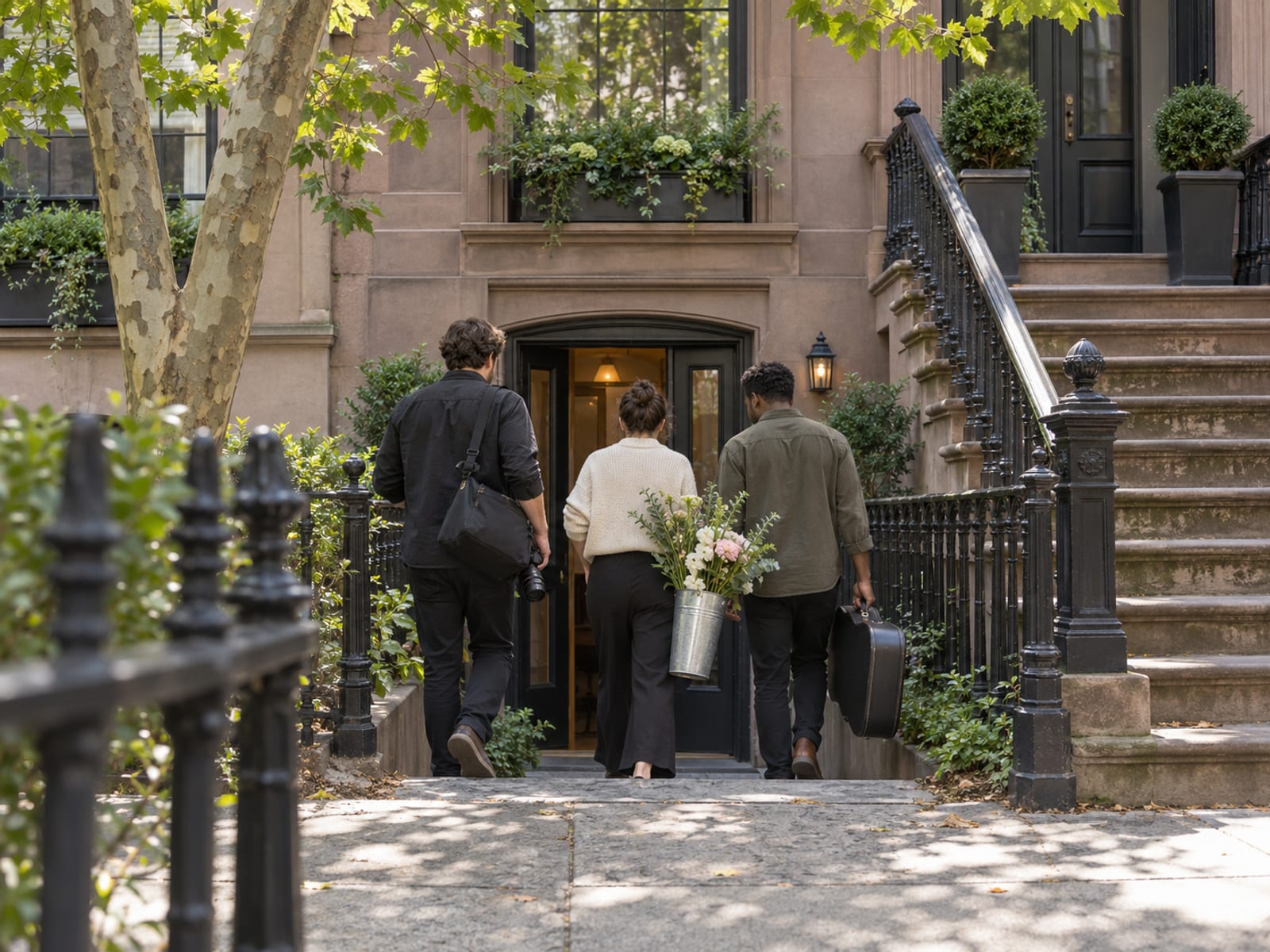
Book first the people who can only be in one place on your date: the photographer, the officiant, a planner if you are hiring one, the caterer, the florist and the band or DJ. Book later the videographer, hair and makeup, the cake, rentals and transportation.
Published lead times give you a sense of the range, and each business sets its own:
- A photographer, Matthew Sowa, recommends booking 8 to 12 months ahead.
- An officiant, Robyn Ashley Weddings, says most couples book 6 to 12 months out and that June, September and October Saturdays go quickly.
- A NYC band booking guide from Great Family Artists gives 12 to 18 months for a specific peak Saturday and 6 to 9 months for a Friday, Sunday or off-peak date.
- A floral studio, Rocky Floral, says many full-service clients book 6 to 12 months out, though its guidance is regional and not specific to New York City.
Caterers are the exception to any simple rule. What you can book depends on your venue, so ask the venue about its caterer rules and preferred-vendor list before you start collecting quotes. For the videographer, hair and makeup, cake and transportation, ask each business for its current availability when you start your search. Our guides to choosing a wedding photographer, hiring an officiant, wedding flowers, wedding catering and a DJ or live band in New York City each go into one of these in depth.
When to order your attire
If your dress is made to order, it is one of the earliest bookings, because production and alterations both take time. Belle Atelier suggests starting appointments 10 to 12 months ahead, ordering 9 to 10 months ahead, allowing 6 to 8 months for production and at least 12 weeks for alterations. Milla Nova says made-to-order gowns typically take 24 to 26 weeks, plus time for fittings, and suggests booking a fitting about six months before the wedding. Carol Hannah and Loulette Bride both recommend ordering 8 to 12 months ahead, and Carol Hannah notes that rush orders are sometimes possible, with fees. Belle Atelier says its rush fees can run from $500 to $5,000.
An off-the-rack or sample-sale dress may be available right away, but it still needs tailoring, so book alterations as soon as you buy. Our guide to wedding dress shopping in New York City covers where to go and how to shop; this page only tells you when to start.
The marriage license and the City Clerk appointment, in order
Fit the legal steps around your ceremony date, not the other way around. This is the sequence:

- Secure the ceremony date and venue first.
- Book the in-person appointment through Project Cupid. The NYC City Clerk says in-person license and ceremony services are by appointment only. Confirm current availability with the City Clerk.
- Pick the license appointment so the issue date falls within the 60-day window and at least 24 hours before the ceremony.
- Both of you apply in person. The State says the license is issued immediately, it can be used only within New York State, and no blood test or premarital exam is required.
- Bring ID and arrange at least one witness for the ceremony. Confirm the current ID rules with the City Clerk.
- Budget for the fees: the City Clerk's fees page lists $35 for the marriage license and $25 for a marriage ceremony at the Marriage Bureau.
Because the window is 60 days, getting the license many months early is a mistake that is easy to avoid. Schedule it for the two or three months before the wedding. For the full walkthrough, see our guides to the NYC marriage license and to a City Hall wedding in NYC, step by step.
The month-by-month checklist, from 12 months to six weeks
From 12 months out to six weeks
Tap or hover a step to follow the order.
About 12 months out
Set your budget, guest-count range, format and season. Research venues and choose your date.
10 to 9 months out
Book the photographer, officiant, caterer, florist and band or DJ, plus a planner if you want one. Order the dress if it is made to order.
8 to 6 months out
Book hair and makeup, cake, rentals and transportation. Start honeymoon planning.
5 to 4 months out
Finalize the menu and decor direction, order invitations and schedule alterations.
3 to 2 months out
Mail invitations, apply for the license, confirm permits and vendor payment schedules.
6 weeks out
Track RSVPs, finalize seating and confirm the day-of timeline with everyone.
12 months or more
- Set the budget and guest-count range, and choose the format and season.
- Research and book the venue, then set the date.
- Hire a planner if you want one, and start researching photographers, officiants, caterers and entertainment.
- Begin dress research, and start a guest-address list and wedding website.
10 to 9 months
- Book the photographer, videographer, officiant, florist, caterer and band or DJ.
- Order the dress if it is made to order, and choose wedding-party attire.
- Send save-the-dates when it suits your guests, and begin hotel and travel planning.
8 to 6 months
- Confirm the ceremony structure and any cultural or religious elements.
- Book hair and makeup, cake, rentals and transportation.
- Order rings, schedule engagement photos and review permits, venue insurance and preferred-vendor rules.
- Plan the honeymoon. Zola places honeymoon planning in this stretch, and The Knot's 2025 survey reporting says 52% of couples who took a honeymoon began planning 12 months ahead. Start researching once you know your date, budget and destination limits, and book major transport and lodging several months before you leave, earlier for international trips and peak seasons. Our guide to honeymoons and romantic weekends within two hours of New York City has ideas close to home.
5 to 4 months
- Finalize the menu and decor direction, and order invitations.
- Confirm the ceremony script and your officiant's requirements.
- Plan the rehearsal dinner, and send guests their travel information.
- Schedule dress alterations.
3 to 2 months
- Mail invitations, and apply for the license when the date fits the 60-day window.
- Finalize readings, vows and music.
- Confirm vendor arrival, setup and payment schedules, and complete any required permits.
- Prepare seating and accessibility information.
6 weeks
- Track RSVPs and finalize the seating plan and guests' dietary needs.
- Schedule final fittings.
- Confirm the day-of timeline with the venue, photographer, caterer, entertainment and transportation.
- Make an emergency contact list and a vendor packet, and confirm ID, witness and City Clerk arrangements.
How the plan shrinks for City Hall, micro, park and destination weddings
A City Hall wedding drops the private venue, the full catering operation, a large guest list, heavy decor and most of the vendor team. What stays is the legal sequence: choose a date or a range of dates, book the Project Cupid appointment, get the license inside its 60-day window, wait the 24 hours, and bring ID and at least one witness. Then add whatever you want around it, such as a photographer, flowers or a meal, and confirm the ceremony office, borough and arrival instructions with the City Clerk.
A micro wedding can move quickly if you choose a venue with simple packages. Bat Haus, for example, lists flat rental packages from $1,350 for up to 50 guests in Williamsburg, with a bring-your-own model. For a wedding planned in weeks, ask venues and vendors what they have open, accept a non-peak date, buy off the rack, keep the ceremony simple and book the legal appointment first.
A park ceremony adds a permit question. NYC Parks says a Central Park wedding of 20 or more people needs a permit, and it lists limits on amplified sound, alcohol, decorations and setup. Rules, dates and fees differ by park, so confirm yours with NYC Parks. Larger gatherings bring building rules too: NYC311 says a Place of Assembly Certificate of Operation is required where the certificate of occupancy allows 75 or more people indoors or 200 or more outdoors for social purposes. Confirm the occupancy limit for a rooftop or waterfront space with the venue and the Department of Buildings. Our guides to park ceremony permits, rooftop weddings, restaurant weddings, small and micro wedding venues and planning a destination wedding in New York City cover each format.
Quick check: your planning timeline
Answer every question to check.
What to ask before you book
Bring the same list to every venue and vendor so you can compare answers side by side:
- Is my date available, and how long will you hold it?
- What is the deposit, and when is each payment due, including the final one?
- What is the cancellation and refund policy?
- What are the overtime charges?
- What insurance do you carry, and what do I need to provide?
- Which permits are needed, and who applies for them?
- What is the capacity, and what are the rules for headcounts?
- Is the space accessible for guests who need step-free access?
- What is the rain plan?
- What does meal service include, and when do I give you the final count?
Write the answers down, and keep every contract, invoice and ID copy together in one folder.
Questions to ask every venue and vendor
Tap a card to bring it forward.
- Is my date available, and how long will you hold it?
- What is the deposit, and when is each payment due, including the final one?
- What is the cancellation and refund policy?
- What are the overtime charges?
- What insurance do you carry, and what do I need to provide?
- Which permits are needed, and who applies for them?
- What is the capacity, and what are the rules for headcounts?
- Is the space accessible for guests who need step-free access?
- What is the rain plan?
- What does meal service include, and when do I give you the final count?
Questions about planning timelines
How far ahead should you start planning a wedding?
About 12 months is a practical starting point for a full wedding. If you have less, you can still plan well by staying flexible on date, venue and vendors.
Can you plan a wedding in six months?
Yes, if you put the venue, the legal appointment, attire and the high-demand vendors first and stay flexible. Weekday, Sunday and off-peak dates make this much easier.
When should you order a wedding dress?
Bridal businesses in the city commonly suggest 8 to 12 months ahead for a made-to-order gown. Production can run 24 to 26 weeks, and alterations follow.
Do park weddings need permits?
It depends on the park, the headcount and your plans for sound, food and decor. Central Park's published guidance requires a permit for weddings of 20 or more attendees, so confirm the rules with NYC Parks for your location.
Your next step this week
This week, write down your budget, your guest-count range and two or three possible seasons, and put them in one note you both can see. Then, if a City Hall ceremony is in your plan, look at Project Cupid appointment availability on the NYC City Clerk site so your license date lines up with your ceremony. Our guides to the NYC marriage license and to a City Hall wedding in NYC cover the legal steps, and our vendor directory lists venues, officiants, photographers, planners, florists and more when you are ready to start booking.
Terms in this guide
Tap a term to see what it means.
Preferred-vendor list. A venue's list of vendors, which may limit which caterers you can use. Ask about it before you collect quotes.