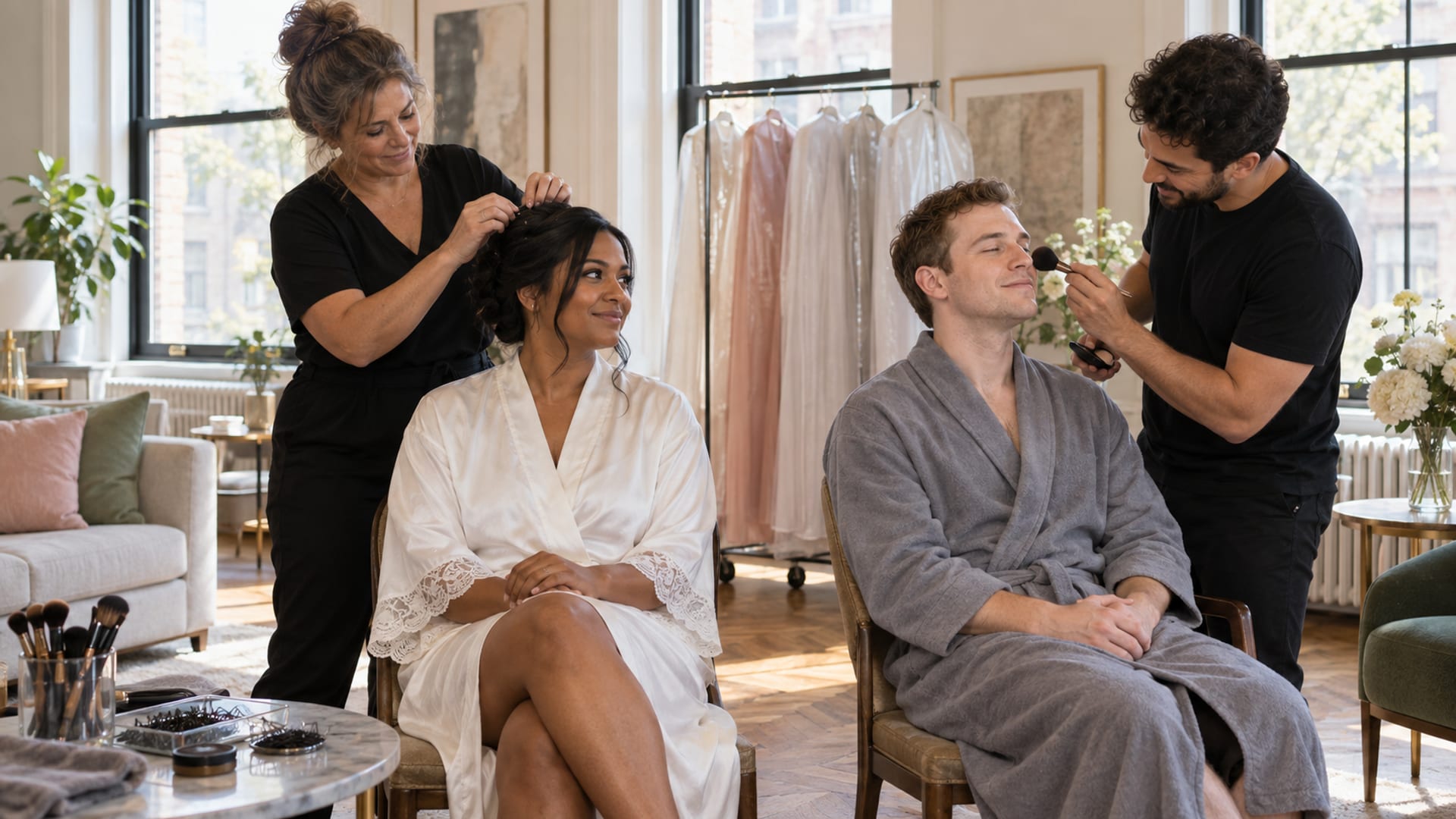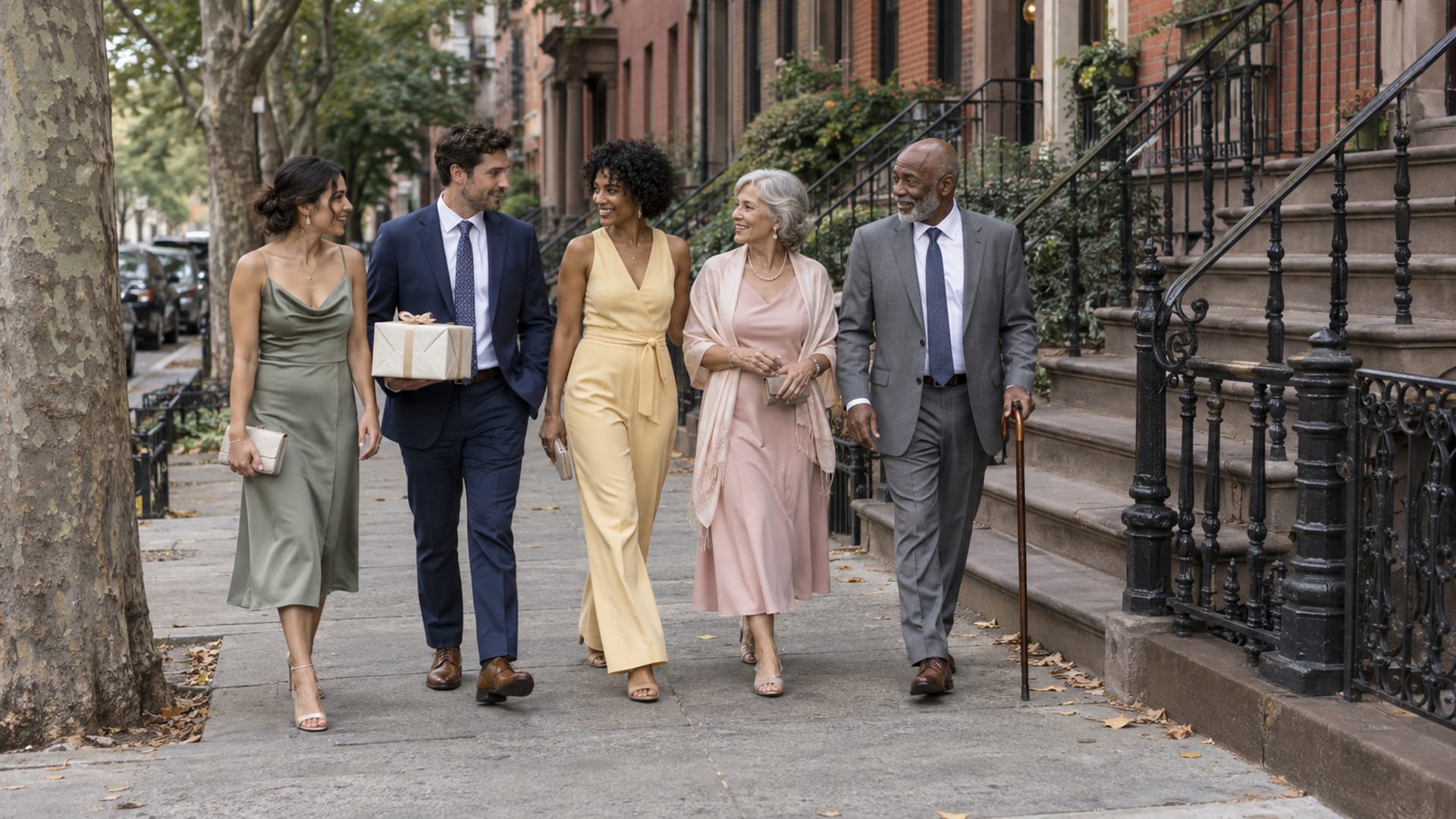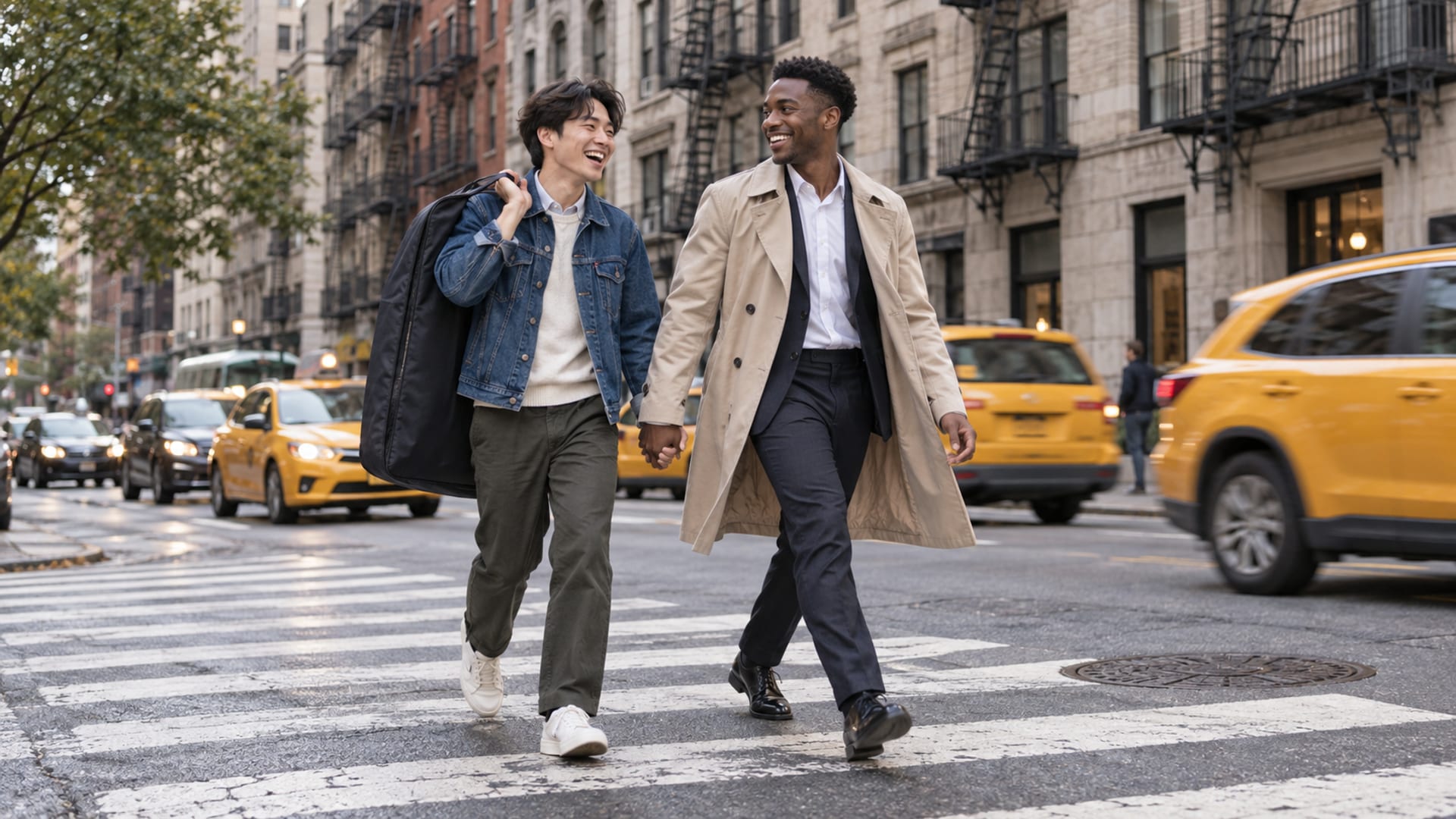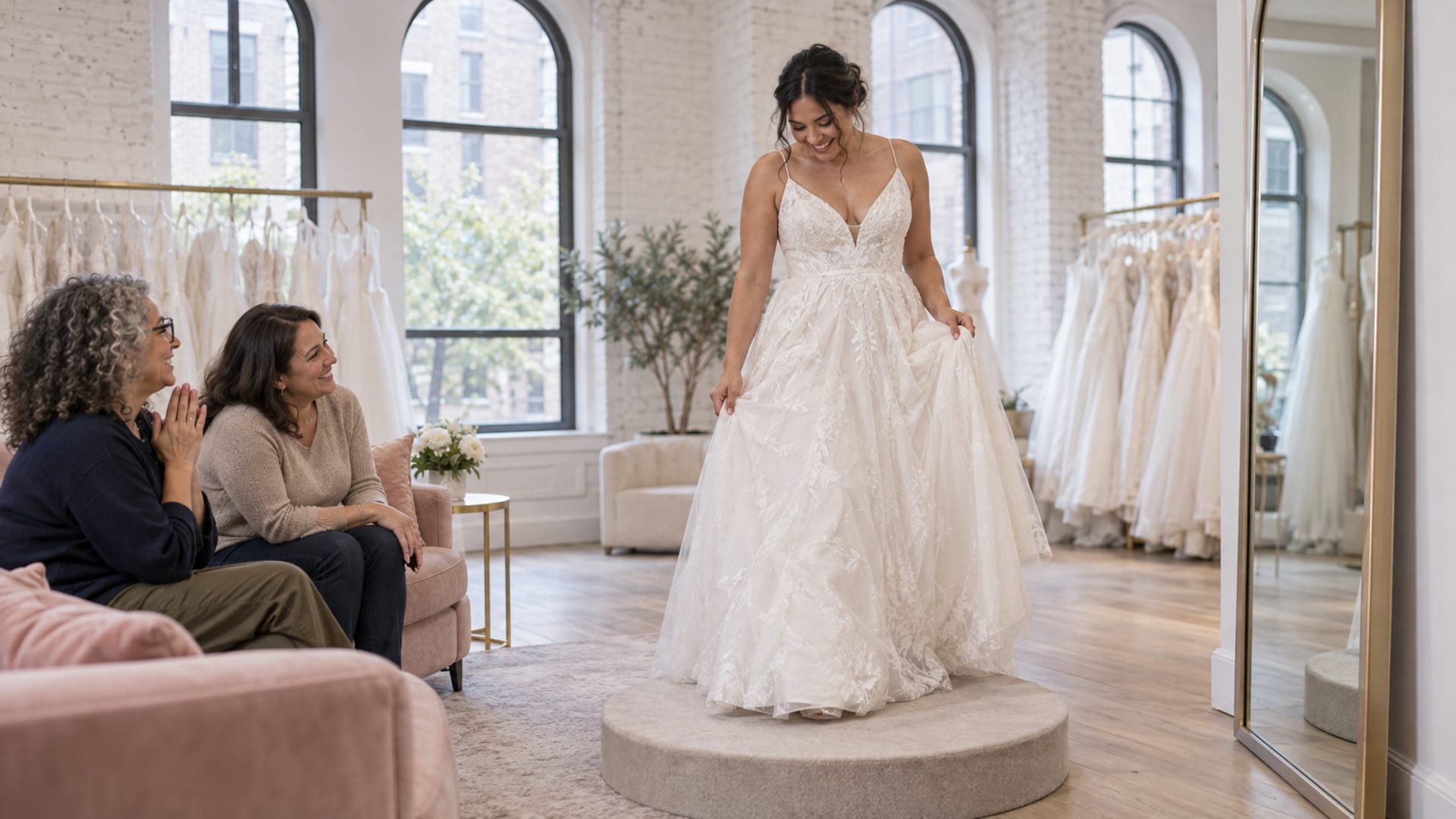
Choose a wedding photographer by comparing four things together: complete wedding galleries, how well the photographer handles your locations and light, the written contract and what it promises you'll receive, and how comfortable you feel with the person who will be beside you all day. Ask to see a full wedding like yours, confirm who will actually shoot, and ask what happens if a camera fails or the photographer gets sick. Then get delivery timing, image rights, insurance, cancellation and payment terms in writing. For a City Clerk ceremony or a park session, confirm the location's own rules with the NYC City Clerk or NYC Parks.
Key takeaways
Tap a card to bring it forward.
- Decide what you most want remembered before you compare styles or prices.
- Judge a photographer by a complete wedding gallery like yours, not a highlight feed.
- Put the named shooter, backup plans, delivery timing and payment terms in the contract.
- Owning digital files is not owning the copyright, so read the printing, sharing and marketing clauses.
- Parks, venues and the City Clerk each set their own rules; check the one that applies to your plan.
- A photographer who can't show a full gallery or name the shooter is a reason to keep looking.
What do you most want to remember?
Start with the photos you'll want to hold in twenty years, because that answer points you toward the right kind of photographer. Some couples care most about candid moments: a parent's face during the vows, friends laughing at the table, the two of you in the half second after the kiss. Others want a full set of family photos with every grandparent present, or polished portraits against city streets and skyline. Some want editorial images that look like a magazine spread, and some want the ceremony documented from start to finish or the energy of a packed dance floor.
Most weddings need a mix, but ranking these helps. A short City Hall ceremony may call for someone who works quickly and then walks you to a few nearby spots for portraits; a large family and a long reception call for organized group photos and strong low-light work. Write your top three down and hold every portfolio up against them.
Which photography style fits you?
Photographers describe their work with a handful of common terms. These are words the industry uses, not official categories, and they overlap. The Knot's style guide (updated July 12, 2023) covers the main ones:
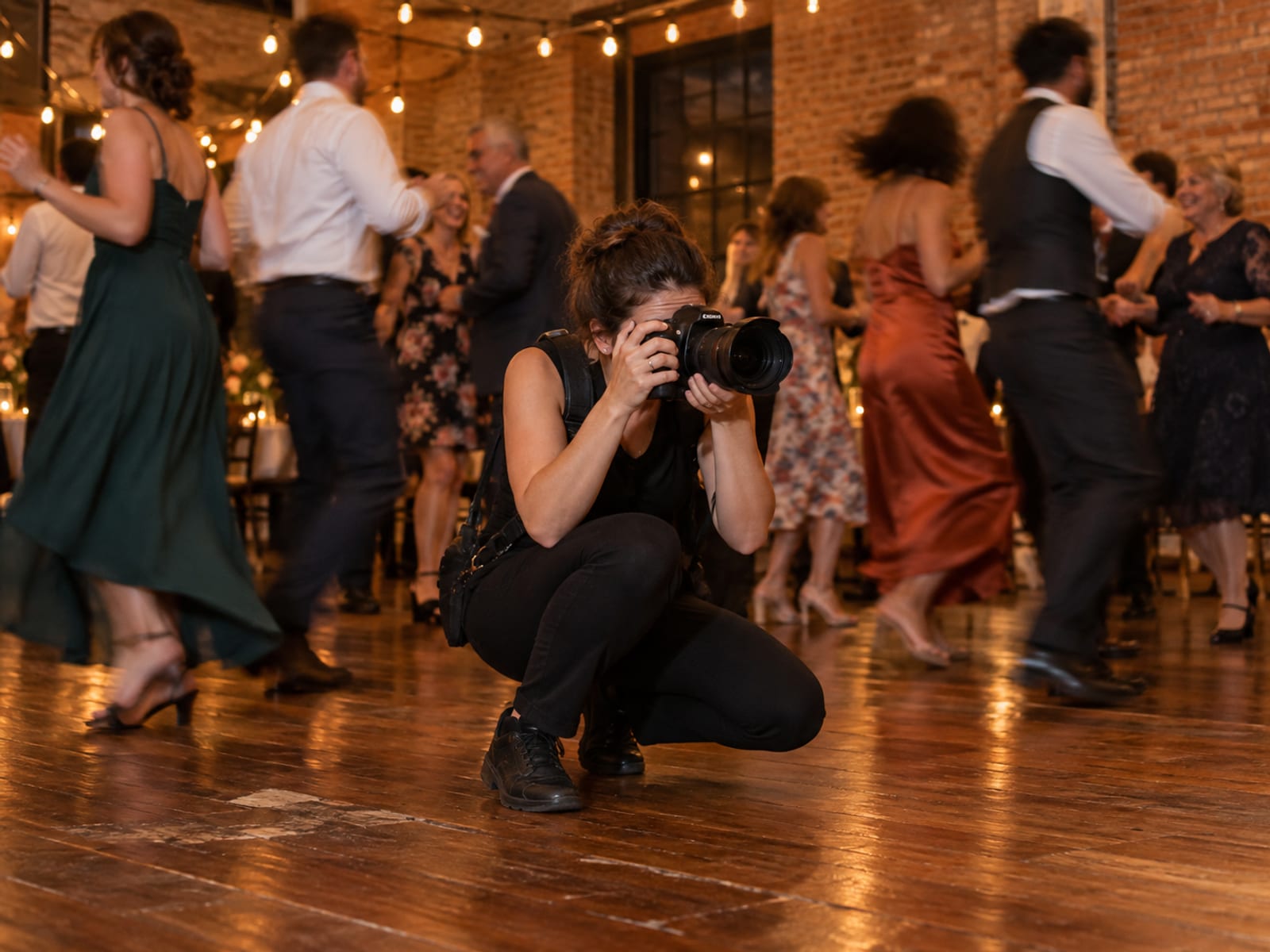
- Documentary or photojournalistic: candid coverage of moments as they happen, including reactions, movement and the in-between. Documentary doesn't always mean zero direction; the photographer may still pick backgrounds and arrange family groups, so ask how much posing to expect.
- Editorial: controlled, fashion-influenced images with deliberate posing, lighting and composition, often mixed with candid coverage.
- Fine art: usually described as soft, romantic, bright or painterly. The label can describe both how the photographer shoots and how they edit.
- Traditional or classic: formal family groups, posed portraits and straightforward ceremony coverage.
- Lifestyle: a middle ground between candid coverage and a directed portrait session.
- Flash: direct or off-camera flash for sharp, high-contrast, energetic images, especially at night and on the dance floor.
- Film: images shot on 35mm or medium-format film, often alongside digital. Film changes how images are captured and processed, so treat it as a deliverable to confirm, not something you assume from a warm color edit.
- Hybrid: documentary during the ceremony, editorial during portraits, flash at the reception. Ask how the approach changes across your day.
The Knot's 2026 trend coverage describes a move away from purely posed work toward editorial and documentary candid photography, along with continued interest in blurred-motion reception images. Still, the right style is the one that matches your list. Editing matters too, whether bright, moody, true to color or black and white, so make sure you like it across a whole wedding.
How to tell whether a portfolio matches your wedding
A website gallery or social feed shows a photographer's best frames and can leave out the dim interior, the rushed family photos and the last hour of the reception. The Knot recommends asking for at least one complete wedding gallery, because a full set shows how the story holds together and whether the quality stays consistent. It also suggests asking for real weddings if the portfolio might include styled shoots.
Ask for a full gallery that resembles your plans as closely as possible: a similar guest count, a similar venue type, the same time of day and, if you can, similar weather. When you look through it, check:
- Getting-ready photos, the ceremony, family groups and couple portraits
- Candid coverage of guests
- Indoor and low-light work, and the evening reception with and without flash
- Rain or winter images, if your date calls for them
- Cultural, religious, family or accessibility moments like the ones at your wedding
- Whether color and editing stay consistent from the first frame to the last
- Whether key moments are covered without pages of near-duplicates
- Whether the amount of direction in the portraits matches your comfort
If the photographer hasn't worked at your venue, ask how they plan to learn it: a scouting visit, the venue's own photos, or time set aside on the day. Good low light is a judgment call rather than a technical score, so look at the actual images from dark rooms and ask how they would handle yours.
What to ask before you compare packages
Two packages with similar prices can cover very different things, so line up the same questions for every photographer before you compare. The Knot's list of questions (updated March 19, 2024) is a good base. For an NYC wedding, cover these:
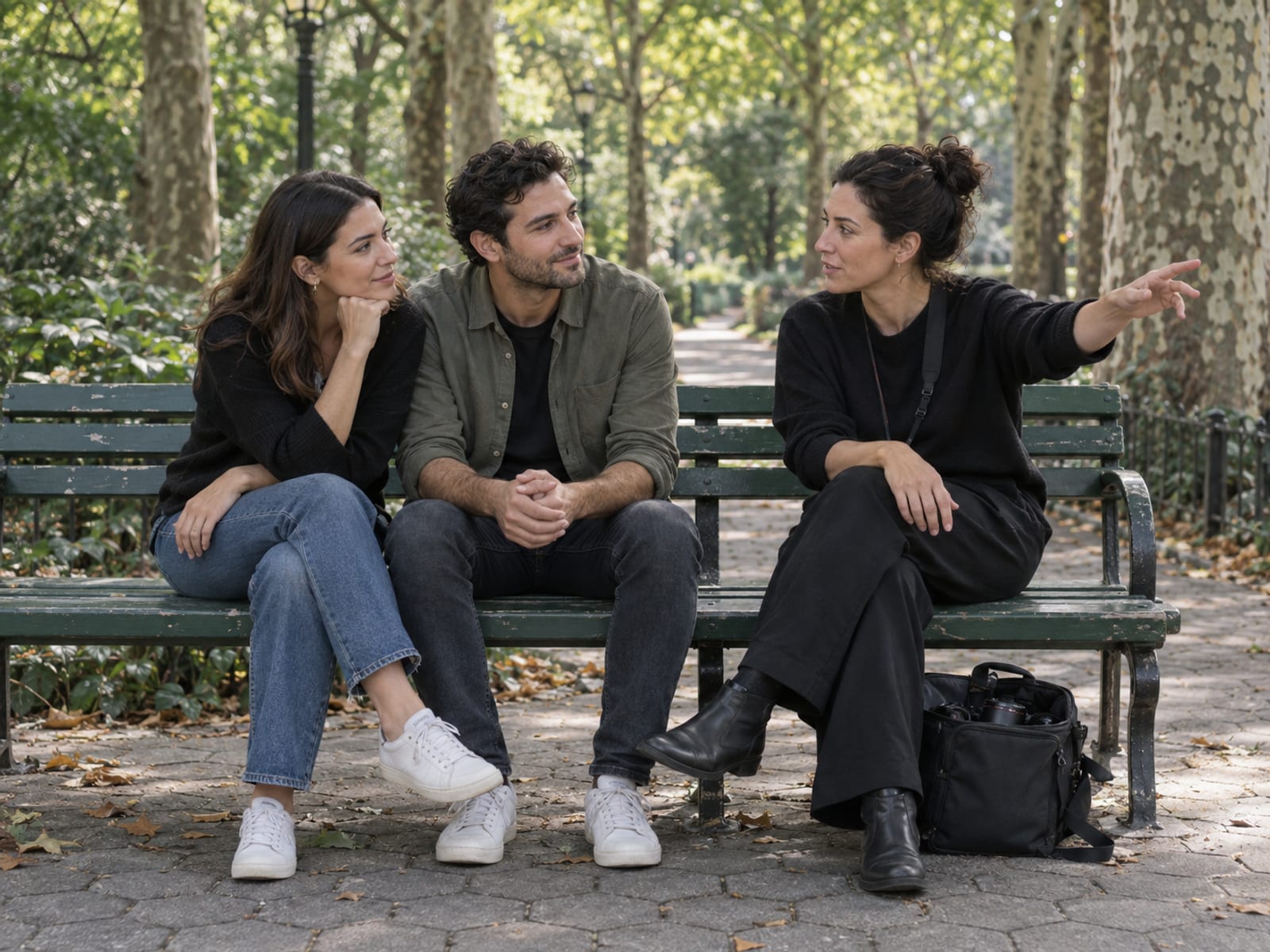
- Who will shoot: Will the person you're talking to photograph your wedding? If not, who will, and can you see that person's full galleries?
- Hours: How many hours are included, and what happens if the timeline runs late? The Knot notes that full-day coverage is often around 8 hours, with packages from roughly 6 to 10.
- Second photographer: Included, optional or not offered?
- Engagement session: Included or extra? If you want one, check that the engagement work matches the wedding work you liked.
- Travel and overtime: Are travel, parking, tolls and overtime billed separately?
- Albums and prints: Included, extra, or print-ready files only?
- Film: Is film included, how much, and does it change the delivery date?
- Previews and final delivery: Is there a preview gallery, and when does the full gallery arrive?
- Image count and editing: Roughly how many edited images are typical, and what does editing include? Are RAW files available?
For price ranges and what each tier usually includes, the separate guide on what a wedding photographer costs in New York City goes through the numbers. Here, the point is to compare like with like.
What the contract should say
A wedding contract turns a friendly conversation into promises you can hold someone to. Read the whole thing before paying anything, and make sure it covers:
- Your date, every location and the hours of coverage
- The scope: what is photographed and what you receive
- The named photographer, and the substitution process if that person can't attend
- What happens if the photographer is ill or injured
- What happens if equipment fails, what backup cameras they bring, and how files are copied and stored during and after the day
- Delivery timing for previews and the full gallery
- The retainer, the payment schedule and what's due when
- Cancellation and postponement terms, and what happens if you change locations
- Overtime, travel and any location-related charges
- Image rights and marketing use, covered in the next section
- Insurance, including whether they can provide a certificate to your venue
If a detail matters to you, it belongs in writing.
Who owns the photos, and what you can do with them
This is the clause couples most often skim. According to the U.S. Copyright Office, the photographer generally owns the copyright in wedding photos, even though you hired them, unless the rights are transferred in writing and signed by the copyright owner. The Copyright Office's photography guide explains that owning a copy of a photo, including a digital file, is different from owning the copyright.

That's usually fine, as long as the contract gives you the rights you need. Look for clear answers on:
- Whether you can print the images yourself, at any size and any lab
- Whether you can share them online and send them to family
- Whether you can edit or crop them
- Whether you can submit them to a publication or a wedding blog
- Whether the photographer can use your images in a portfolio, advertising or publications, and whether you can opt out
For a second personal copy of your gallery, a reputable external drive with enough capacity works well, though it doesn't replace the photographer's own storage obligations.
Permission at City Hall, in a park or at a venue
Each location sets its own rules, so confirm the ones that apply to your plan.
City Hall: The NYC City Clerk currently allows couples with a scheduled ceremony to bring up to four guests (checked September 28, 2026). Whether a hired photographer counts as a guest, and what photography is allowed in the ceremony room, is something to confirm with the Clerk before your appointment. For where to take portraits nearby afterward, see the guide to City Hall wedding photo spots in NYC.
NYC parks: NYC Parks says a small shoot using only handheld cameras or a tripod, with no exclusive space, props, stunts, parking or vehicle access, may not need its media approvals. Lighting rigs, drones, generators, crowd control or restricted areas can require them. If your park session turns into an event, the NYC Parks special-event page requires a permit for more than 20 attendees, an application at least 21 days ahead and a $25 non-refundable processing fee (checked September 28, 2026).
Partner-managed parks: Some parks, including Central Park, Brooklyn Bridge Park, Hudson River Park, the High Line and Bryant Park, have their own management or application steps. Confirm the current rules and lead time with that park's own office rather than assuming the citywide process applies. The guide to getting a park ceremony permit in NYC covers the ceremony side in detail.
Venues: Insurance rules depend on each venue's contract. Ask your venue whether it requires a certificate of insurance, specific wording naming the venue, a coverage amount or a deadline, then ask the photographer whether they can meet it.
A simple expanding document folder helps here: keep the contract, any permit, the insurance certificate and the venue rules together, and bring it to meetings and on the day. For an outdoor session, a resealable clear sleeve keeps paper permits and schedules dry.
Quick check: photos, rights and permits
Answer every question to check.
When to start asking
There's no official NYC deadline for booking a photographer. One photographer's own FAQ says couples have traditionally booked 12 to 18 months ahead for peak-season weddings, with three to six months becoming more common. Treat that as one business's guidance, not a rule, and use it as a practical range to check against the photographers you like.
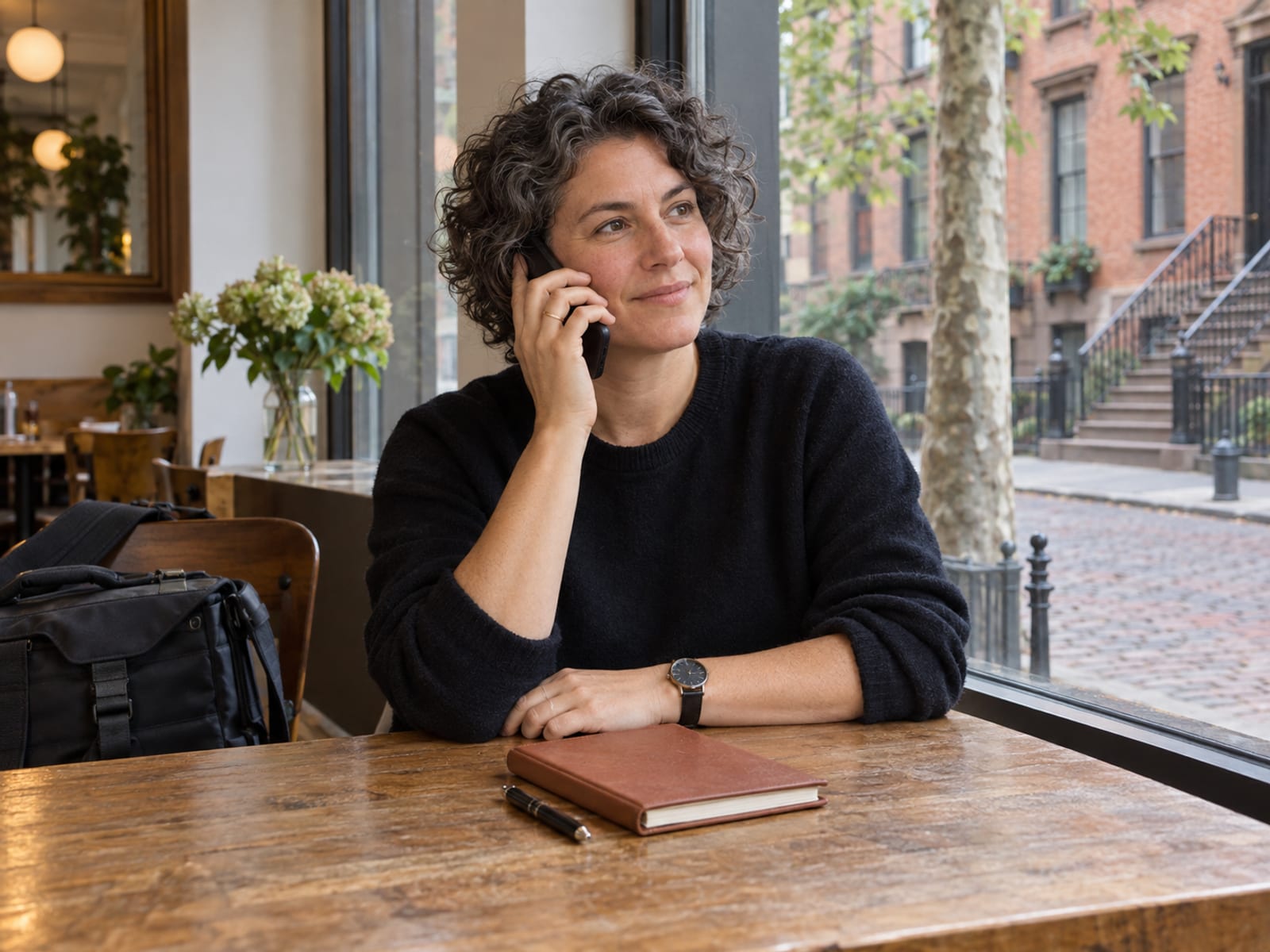
In practice, Saturdays in popular months fill first, so start early if you have one, and start earlier still if you've set your heart on a photographer in high demand. A weekday City Hall ceremony, a short elopement or an hourly session often has more short-notice options, though you'll still need to ask each photographer directly. Keep in mind that your City Clerk appointment and your photographer's availability are two separate bookings. Start your inquiries as soon as you know the date, even if you expect to book close to the ceremony.
When to walk away
Some warning signs mean you should pause and keep looking, even if you love the photos:
- No written contract, or a contract missing the date, locations, photographer, deliverables or payment terms
- No complete wedding gallery, or a portfolio made only of styled shoots and highlights
- A shooter who can't or won't be named
- No clear plan for illness, injury, equipment failure or file backup
- Vague or missing delivery timing
- Unclear image rights or marketing use
- Major fees that appear only after you ask
- Pressure to pay in full right away, or an offer that "expires" before you can read the contract
- Evasive answers about cancellation, postponement or venue insurance
- A guarantee of a particular emotional result or perfect weather
- A claim that buying the files transfers the copyright
- A permit or insurance rule described as universal, without naming the agency, venue or park it comes from
South Dakota's consumer protection office names the lack of a contract for a large photography job as a serious warning sign. Not every unusual policy is a problem, but slow, unclear answers before you book rarely improve after the deposit clears.
Questions couples often ask
These cover the practical points that come up once the main decision is in motion.
How many hours of coverage do we need?
It depends on your plan. A City Hall ceremony with a short portrait walk usually needs far less time than a full day with getting ready, a ceremony and a reception. The Knot puts typical full-day coverage around 8 hours, with packages from about 6 to 10, so map your timeline first and buy the hours it actually needs.
Should the same photographer do our engagement photos?
It can help, because you get used to working with them before the wedding. Check that their engagement galleries match the style of the wedding galleries you liked, and confirm whether the session is included or costs extra.
Is film worth adding?
Film has a distinct look, and some photographers shoot it alongside digital. Ask how many film frames you can expect, whether it's an add-on, and whether it changes your delivery date, then decide based on the full film galleries they show you.
Can we find a Spanish-speaking photographer?
Ask in your first message whether the photographer, and any second shooter, works in Spanish, since that person will be directing your family photos. Make sure the contract is in a language both of you read comfortably before you sign.
Your next step
Once you know what you want remembered and which style fits, make a shortlist from the photographers category in the directory, request a full gallery from each one, and send every photographer the same set of questions. If you're also hiring video, the guide to hiring a wedding videographer in New York City covers how to coordinate the two so they aren't working against each other on the day.
Terms in this guide
Tap a term to see what it means.
Documentary or photojournalistic. Candid coverage of moments as they happen, including reactions, movement and the in-between. The photographer may still pick backgrounds and arrange family groups.