For most NYC receptions, a DJ is the more flexible and lower-cost choice, and a live band adds visible performance but usually needs more space, power, setup time and budget. The practical answer turns on your venue's sound policy, its hard end time, its load-in access and stage area, your guest list, the music that matters most to the two of you, and whether the ceremony and cocktail hour need music too. Published prices show the gap: Dina Regine, an NYC DJ, lists $2,700 to $2,800 for a local five-to-six-hour Saturday wedding, and Wood Vibrations lists six-hour band packages from $5,125 for four musicians to $11,125 for eight (both read September 28, 2026). Get every venue requirement in writing before you sign with either.
Key takeaways
Tap a card to bring it forward.
- A DJ usually costs less and plays without breaks; a band brings live musicians and a stage presence, and needs more room, power and setup time.
- Nationally, couples married in 2025 spent an average of $1,800 on a DJ and $4,500 on a band, according to The Knot; NYC quotes run higher and vary by hours and lineup.
- Your venue decides a lot: its stage area, outlets, freight access, sound limit, technician rules and end time.
- The city's Noise Code limits sound against the ambient level; it is not a wedding curfew, so the venue contract sets your real end time.
- A mix works well: ceremony musicians plus a DJ, or a DJ with live saxophone, percussion or vocals.
- Book as soon as your date and venue are fixed; vendors suggest six to eighteen months ahead for peak Saturdays.
What a DJ usually brings to your reception
A wedding DJ covers the widest range of music with the least equipment. One person (sometimes with a technician) can move from a first dance to your parents' favorite songs to a set of Spanish-language or Caribbean music without anyone changing instruments. Because the music comes from recordings, it runs without set breaks.
Most DJs also act as the MC. That means they run the timeline, announce your entrance, call people up for toasts and handle the wireless microphones for speeches. If your families speak two languages, ask whether the DJ can make announcements in both or will work with a family member who does.
Ceremony and cocktail-hour music are often available as add-ons rather than part of the base price. Dina Regine's published NYC package, for example, lists $2,800 from May through October and $2,700 off-peak for a local five-to-six-hour Saturday wedding. That price includes day-of DJ service, planning consultations, a sound system, a wireless microphone and on-site technicians for setup and breakdown. Ceremony sound, cocktail-hour sound, extra rooms and additional speaker systems cost more (Dina Regine, read September 28, 2026).
What a live band usually brings
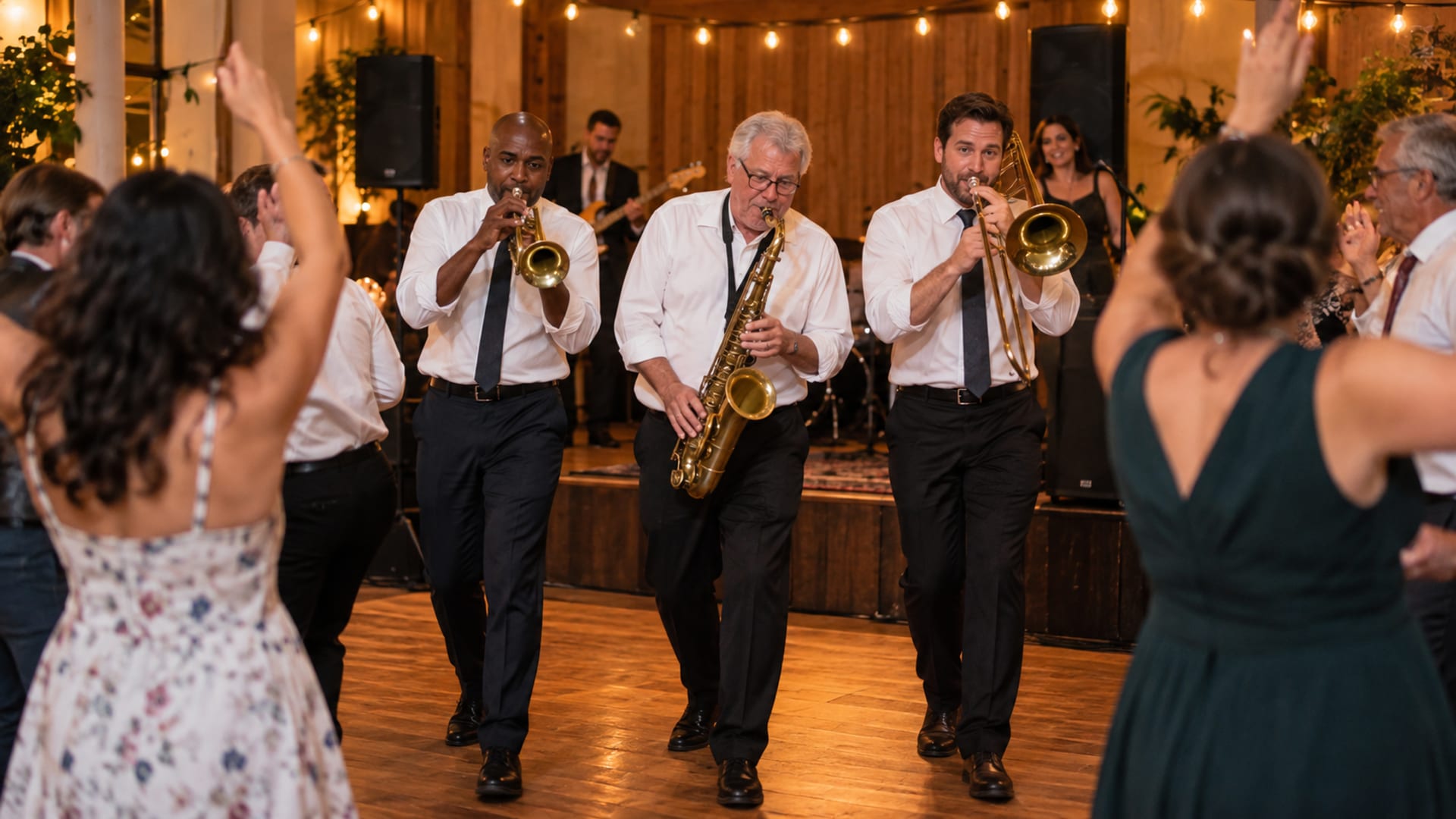
A band gives your guests something to watch as well as dance to, and a well-chosen lineup can play the songs your grandparents know and the ones your friends request in the same night. Live repertoire is limited to what the band has learned, though, so send your must-play list early and ask which songs they perform live.
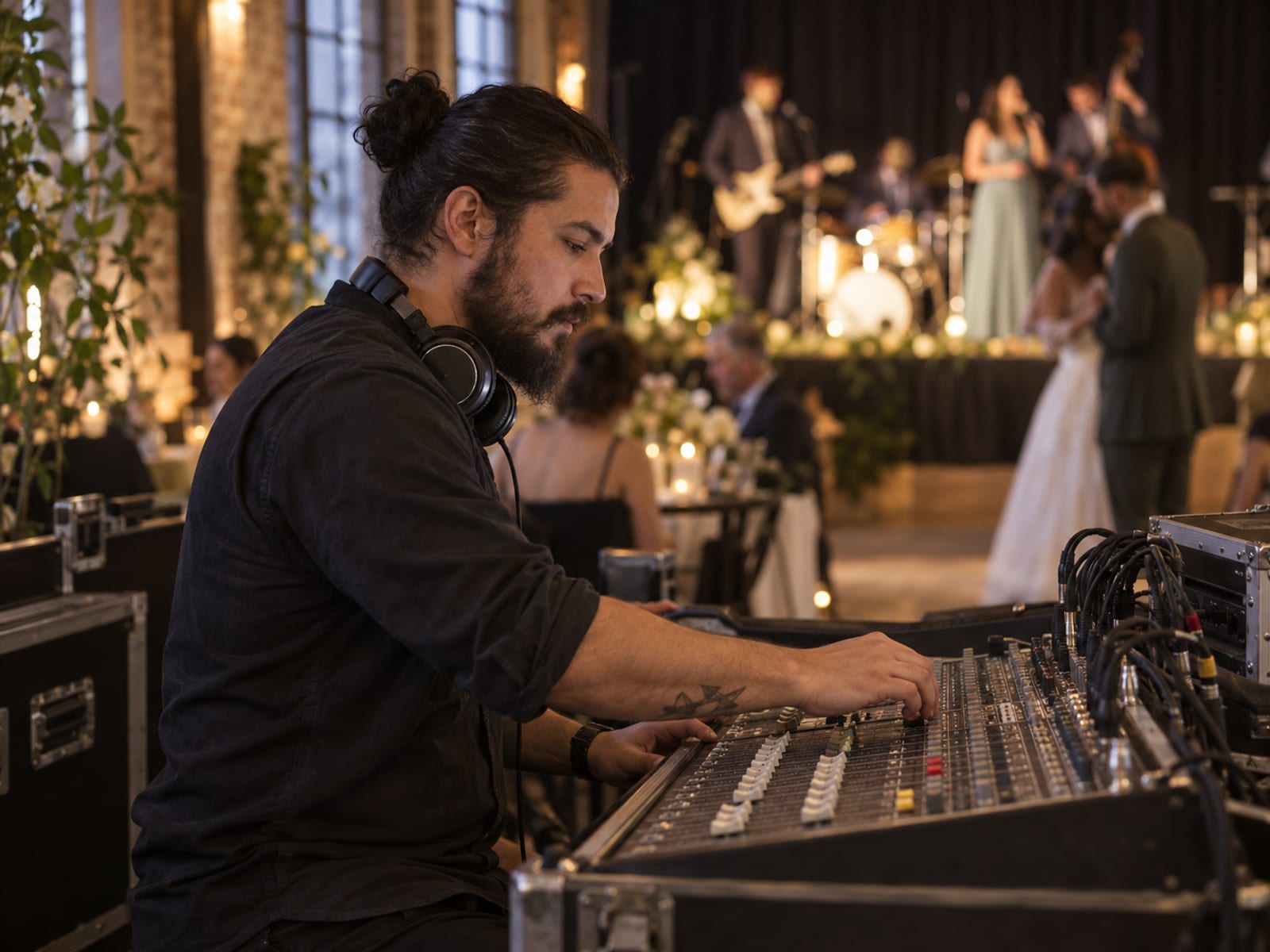
Bands play in sets with breaks. One NYC-area entertainment company says traditional bands usually take 10-to-15-minute breaks, which is why many bands now play a playlist or bring a DJ to cover them (Style Events, read September 28, 2026). Larger lineups also usually include a sound engineer who mixes the band live, and that person needs room and power too.
The Wood Vibrations listing shows how price climbs with band size and hours. Its 2026 standard rates for five musicians are $2,125 for up to one hour, $2,750 for up to two hours and $3,375 for up to three hours, with a full PA system, band lighting, planning calls, music during breaks and MC service included. For a full six-hour wedding, it lists $5,125 for a four-piece band, $6,125 for a five-piece and $11,125 for an eight-piece, the last one with an on-site sound engineer (Wood Vibrations, read September 28, 2026). Other NYC bands publish starting prices rather than packages: Lucy Music says reception music can start at $5,500 for a four-piece band, and Blue Avenue Groove lists a reception starting price of $8,000 for a six-piece band and says most of its NYC weddings land between $10,000 and $14,000 once band size, ceremony, cocktail hour and hours are added (both read September 28, 2026).
Hover or tap a bar to see its value.
- Four musicians$5,125
- Five musicians$6,125
- Eight musicians$11,125
Which one costs less
A DJ usually does. The Knot reports an average of $1,800 spent on a wedding DJ and $4,500 on a live band, from its study of 10,474 US couples married in 2025 (The Knot, read September 28, 2026). Those are national figures, and the NYC prices above sit well over them.
Individual quotes overlap, though, and the useful comparison is total cost for the same hours and the same coverage: reception only, or ceremony, cocktail hour and reception together. Ask each vendor for an itemized quote that separates performance time from setup time, lists every piece of equipment, and names any charge for overtime, travel, parking, tolls, lighting or extra microphones. For how music fits into the rest of your spending, the wedding cost guide for New York City covers the full budget.
Which option fits your venue
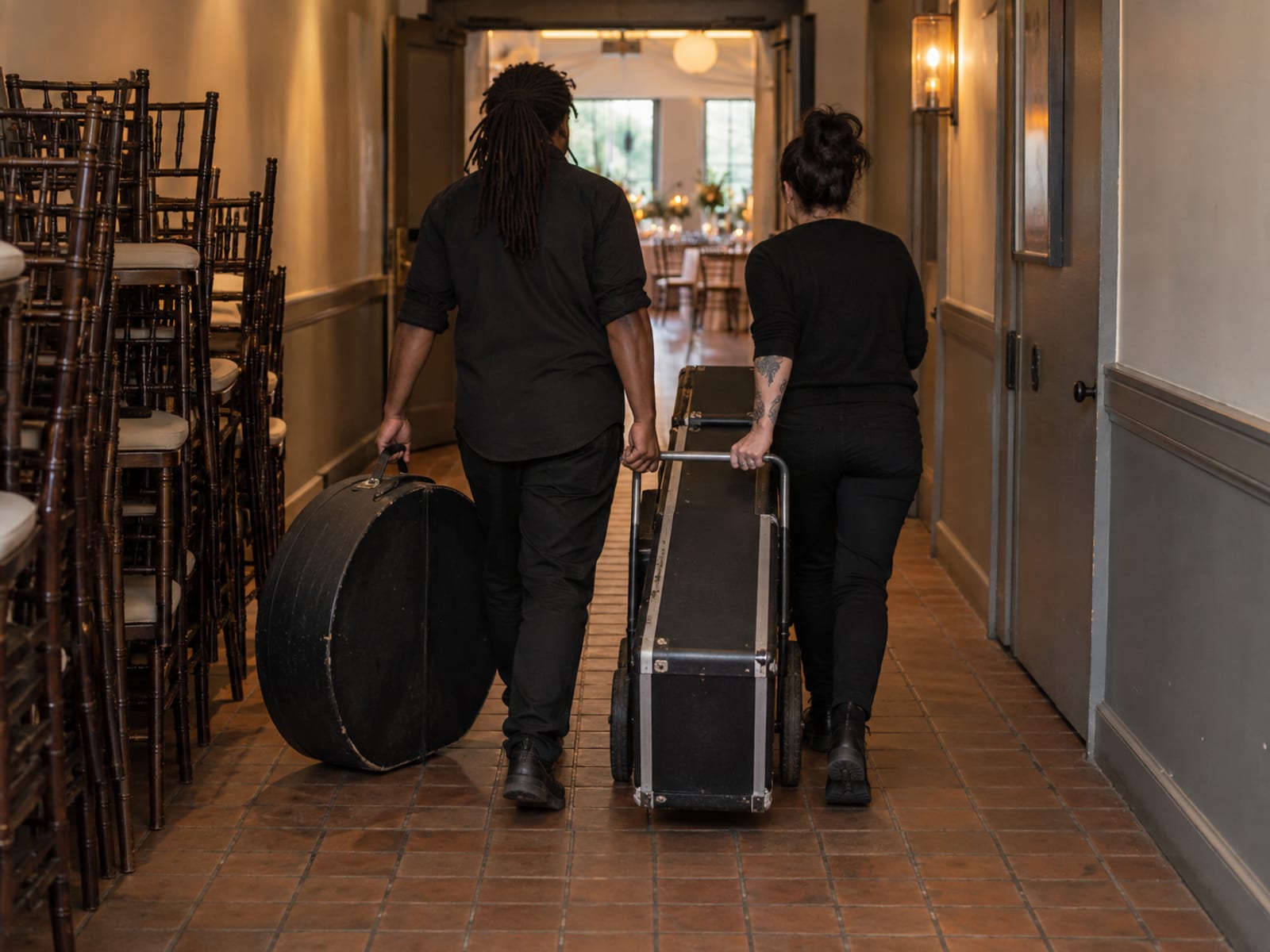
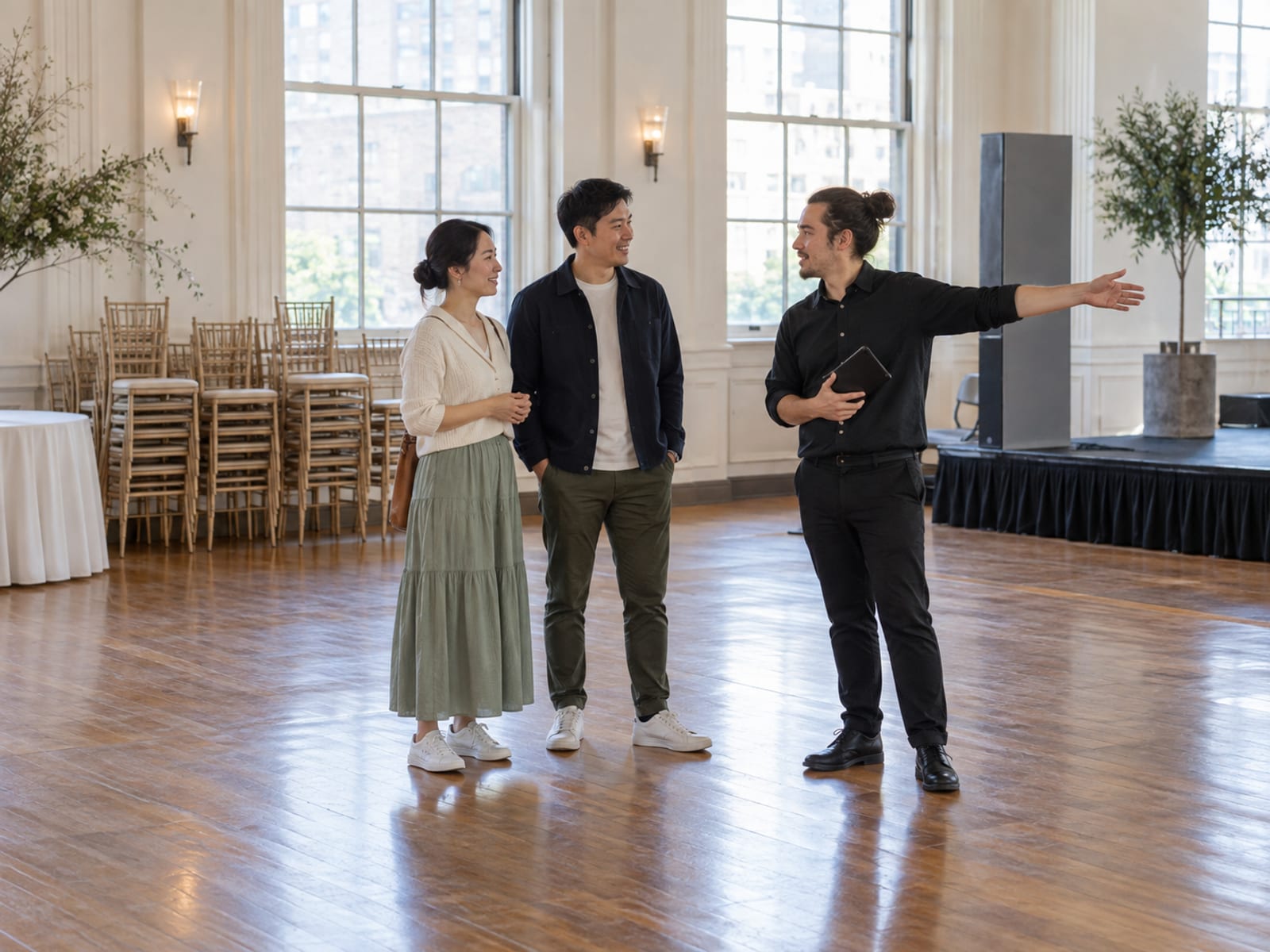
Before you fall for a ten-piece band, find out what your room can hold. A DJ needs a booth or table, speakers and subwoofers, safe cable runs, outlets and a spot that does not block guests walking to the bar. A band needs a larger footprint or stage for instruments, microphones, monitors and stands, more setup and sound-check time, enough electrical circuits, load-in access for heavy cases, and somewhere for musicians to store gear and eat.
Venues publish rules that change the answer:
- 501 Union in Brooklyn welcomes DJs and live music and has an integrated sound system with three stereo XLR access points and separate volume controls for the lounge, atrium and main space. It says an in-house audio technician may be required for live performances, at an added fee.
- Gather in Brooklyn allows DJs and bands, provided they follow its sound policy and NYC noise rules. Events must end before 10 p.m. Sunday through Thursday and before 11 p.m. Friday and Saturday unless an extension is approved.
- Loft39 asks vendors to bring their own dollies or hand trucks, lists standard 120V outlets, and makes vendors responsible for extension cords and power strips for larger sound or lighting rigs. It also requires a certificate of insurance naming LOFT39 LLC as additional insured, with minimums of $1 million per occurrence and $2 million aggregate.
- The Rooftop at Pier 17 lists 2,200 amps of power and direct freight-elevator access measuring 10 by 10 by 20 feet, with a 15,000-pound maximum load.
(All venue details read September 28, 2026.) Ask the band or DJ for their exact footprint, power needs and setup time, then send that to the venue with your floor plan. If you are marrying in a restaurant, loft or other compact space, the guide to small and micro wedding venues in New York City covers capacity, and a small room often points toward a DJ or a trimmed-down lineup.
The city's sound rule, and what changes on a rooftop or outdoors
New York City's Noise Code does not set a wedding curfew. Section 24-218 of the Administrative Code prohibits unreasonable noise and measures it against the ambient sound around it: from 10 p.m. to 7 a.m., steady sound is limited to less than 7 dB(A) above ambient, and from 7 a.m. to 10 p.m., less than 10 dB(A) above ambient (NYC Administrative Code §24-218, read September 28, 2026). The city's Department of Environmental Protection says commercial music covers both live performance and recorded audio, and it shares enforcement with the NYPD (NYC DEP, read September 28, 2026).
In practice, your venue's contract sets the real end time and volume, and it can be stricter than the city rule. Some venues use sound limiters, restrict bass, or treat indoor and outdoor spaces differently. Ask for the hard end time, the sound limit and where it is measured, all in writing, and share it with your DJ or band before they quote.
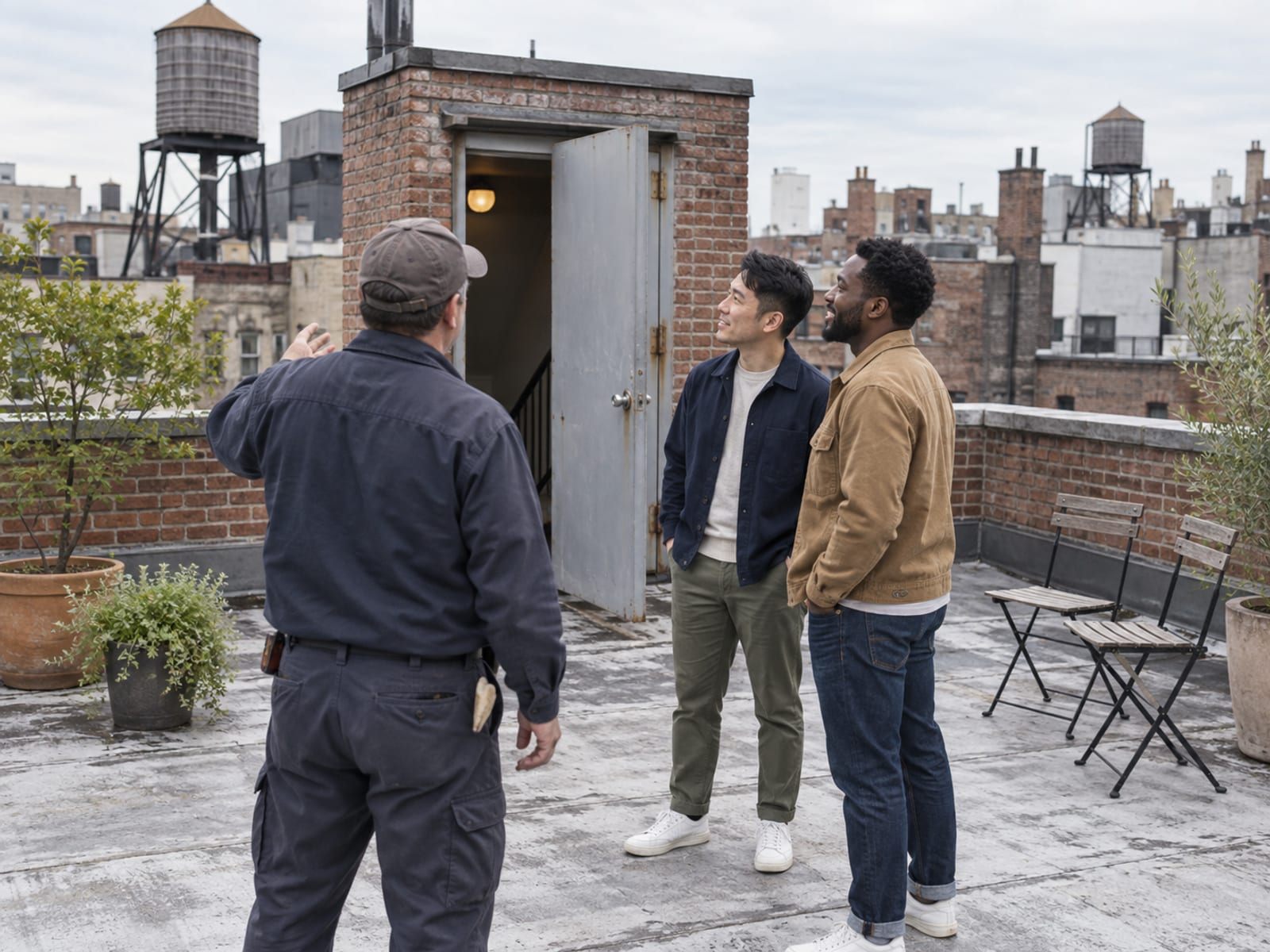
Outdoor music adds more questions. NYC311 says a sound device permit is required when an event uses a loudspeaker, megaphone or other sound device in the relevant permit process, with an application fee starting at $45 that varies by number of days (read September 28, 2026). Whether that applies to your wedding depends on the event and the space, so confirm with the venue and the city who files it and when. On a rooftop or terrace, also ask whether speakers are allowed outside, whether neighbors or a hotel sit close by, who supplies power, whether a generator is permitted, and where the music moves if it rains. The rooftop weddings guide covers weather plans, access and venue rules in more detail.
Quick check: music, money and sound rules
Answer every question to check.
Whether to combine a band and a DJ
You do not have to choose only one. Many couples book live musicians for the ceremony and a DJ for the party, or a DJ with a saxophonist, percussionist, violinist or singer playing over the tracks. DJ-led bands go further, mixing recorded music with several live musicians so the energy stays high without dead breaks.
Published prices exist for some combinations. Wood Vibrations' six-hour four-piece package at $5,125 already includes a ceremony duo, a speaker and playlist for cocktail hour, the reception band, a wireless microphone, band lighting, MC service and music during breaks, and the same listing offers a DJ add-on for $1,875 (Wood Vibrations, read September 28, 2026). Lucy Music says ceremony music can start at $1,400 for a string quartet, separate from its $5,500 starting price for a four-piece reception band (Lucy Music, read September 28, 2026).
Custom hybrids are quote-only. The Z Keys describes a DJ working with live saxophone, vocals, percussion or strings, and Style Events describes a DJ-led band with live violin, saxophone, percussion and vocalists (both read September 28, 2026); neither lists a price, so ask for a written quote for the exact lineup and hours you want.
What the contract must say
Ask the vendor to put these in writing:
- The date, venue, rooms and exact spots where music plays.
- Start and end times for performance, plus setup, sound-check and breakdown times.
- The overtime rate and who can approve it on the night.
- The named DJ or the number of musicians, and the substitution policy for illness or emergency.
- The equipment supplied: speakers, microphones, monitors, mixer, lighting and backup gear.
- Whether ceremony and cocktail-hour music are included, and who serves as MC.
- Set lengths, breaks and what plays during them.
- Your first dance, parent dances, processional, recessional, cultural dances and announcements.
- Must-play and do-not-play lists, and how guest requests are handled.
- Meals, parking, tolls, travel, lodging, taxes, gratuity and service charges.
- Any venue technician or labor fees, and the certificate of insurance the venue requires.
- A promise to follow the venue's sound limit.
- Cancellation, postponement and refund terms, plus the payment schedule and final balance.
- Permission for recording or livestreaming, if you want it.
Vendor meals and timing overlap with your caterer, so it helps to line up this contract with the one covered in the wedding catering guide for New York City.
When to book, and what to ask before signing
Book as soon as your date and venue are set, especially for a peak Saturday, a large band or a specific cultural repertoire. Vendor guidance varies: Expressway Music says prime Saturdays from spring through fall often book up about a year ahead, Blue Avenue Groove suggests contacting a band six to twelve months out, and Style Events recommends twelve to eighteen months for peak dates in May, June, September and October (all read September 28, 2026). These are the vendors' own recommendations, so check availability for your date rather than counting on a window.
Ask your venue:
- Are DJs and live bands both allowed, and in which rooms?
- What are the hard end time, the sound limit and the measurement point? Is there a limiter?
- How many outlets and circuits can the music use, and is there a stage or riser?
- When is load-in, is there a freight elevator, and are dollies required?
- Is an in-house audio technician required, and what does that cost?
- What insurance certificate do vendors need?
- For outdoor space, are speakers allowed outside, and who handles any sound permit?
Ask your DJ or band:
- Is the quote for performance hours or total time on site, and does setup count?
- What is included: ceremony, cocktail hour, MC, lighting, backup equipment?
- What is your footprint, power need and sound-check time?
- How long are your sets and breaks, and what plays during breaks?
- Can you play the cultural or Spanish-language music on our list, and make bilingual announcements?
- What does overtime cost, and what happens if the assigned performer cannot come?
- What are the cancellation terms, and is our date still open?
Questions couples ask about DJs and bands
These cover the points that come up most once you start collecting quotes.
Does a DJ usually cost less than a band?
Usually, yes. The Knot's study of couples married in 2025 found an average of $1,800 for a DJ and $4,500 for a band nationally (The Knot). NYC prices run higher, so compare itemized quotes for the same hours.
Can a band cover the ceremony and cocktail hour too?
Some packages include ceremony musicians, cocktail-hour music and the reception. Ask whether it is the same musicians and equipment, and whether those hours count toward the total.
How much space does a band need?
There is no set number. Ask the band for its footprint, stage or riser needs, instrument layout, power needs and sound-check time, and send that to your venue with the floor plan.
What time does the music have to stop?
Your venue contract decides. Gather, for example, requires events to end before 10 p.m. Sunday through Thursday and before 11 p.m. Friday and Saturday unless an extension is approved (Gather, read September 28, 2026).
Your next step
Once you know your venue's end time, sound limit and power, you are ready to request quotes. Start with the DJs and bands category in the directory, send each vendor your date, venue, guest count and the hours you need covered, and ask for an itemized quote you can compare side by side.
Terms in this guide
Tap a term to see what it means.
MC. The person, often the DJ, who runs the timeline, announces your entrance, calls people up for toasts and handles the microphones for speeches.