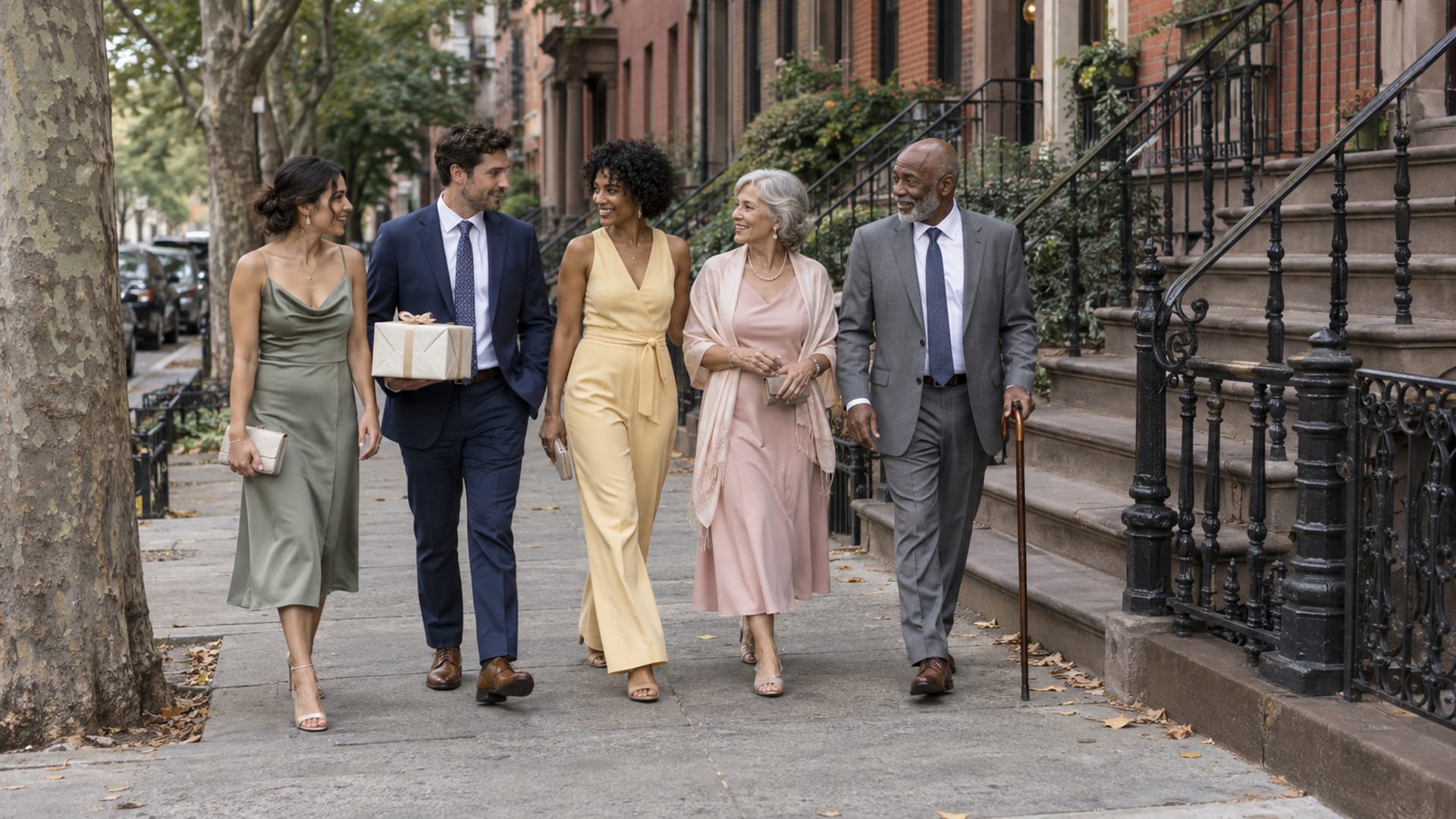
Start with the dress code printed on the invitation. Black tie generally means a tuxedo or formal eveningwear. Formal means an elevated suit, a gown, a cocktail dress or dressy separates. Cocktail means polished partywear, semi-formal sits between office clothing and formal, festive adds color and personality, and casual still means clean, intentional clothing. Then look at the ceremony venue, the time of day, the season and the forecast. On a rooftop, plan for wind and a temperature drop after sunset. At a religious ceremony, follow that specific venue's rules. And if the ceremony is at the City Clerk's office, there is no citywide guest dress code, so polished clothing that suits a working civic building is the safe choice.
Key takeaways
Tap a card to bring it forward.
- The invitation's dress code is your first answer; the venue, season and weather adjust it.
- Black-tie optional means a tuxedo or a dark suit, or a formal gown, cocktail dress or dressy separates.
- Rooftops call for a layer, secure accessories and steady shoes, whatever the dress code says.
- Religious venues set their own rules on shoulders, hems and head coverings, so confirm with that venue.
- A City Clerk ceremony has no guest dress code; polished, comfortable clothing works for the building and the celebration after.
- If you will walk or ride the subway, test your shoes on stairs before the day.
What the dress code on the invitation means
The words on the invitation are guidance from the couple, not a New York law, and the city does not have its own separate system. Debrett's treats the dress code on the invitation as the host's instruction to guests, and the Emily Post attire guide (read September 28, 2026) gives the clearest working definitions. Here is how each term translates into an outfit.
Black tie. A tuxedo with a formal shirt, bow tie and formal shoes, or a formal floor-length gown, a dressy cocktail dress, or your dressiest little black dress. It is an evening code, and it asks for real eveningwear rather than your best work suit.
Black-tie optional. A tuxedo is welcome, and a dark suit is fine. A formal gown, a cocktail dress or dressy separates all fit. If you own a tuxedo, this is a good night for it; if you don't, a well-pressed dark suit is exactly what the code allows.
Formal. Time of day matters here. For a daytime formal wedding, Emily Post points to a cocktail or dressy afternoon dress, or a dark suit. For an evening formal wedding, it's a long evening dress or a dressy cocktail dress, or a tuxedo or dark suit. Formal and black tie overlap, but they aren't the same: black tie is one specific evening standard, while formal flexes with the hour.
Cocktail. Polished partywear. Emily Post places cocktail dresses and dressy pantsuits here, and Bloomingdale's wedding guest guide describes knee-length, tea-length or midi dresses as typical. A sharp suit, a dressy jumpsuit or well-cut separates fit the same level.
Semi-formal. Dressier than office clothing, a step below formal. In the evening that means a cocktail dress, a dressy pantsuit or a dark suit.
Festive. Cocktail-party clothing with color, pattern or a seasonal touch. A jewel-toned dress, a velvet jacket or a bright tie all read as festive while staying at cocktail level.
Casual. Comfortable, but clean and put together: a sundress or skirt, khakis, a polo or sweater, loafers or sandals, and clean jeans or sneakers only where the couple has clearly signaled that level.
Across every code, pants, jumpsuits and well-cut separates are real options, not workarounds. Match the fabric and finish to the formality, and the silhouette is up to you.
Tap or hover a row to highlight it.
| Dress code | What it usually means |
|---|---|
| Dress codeBlack tie | What it usually meansA tuxedo with a formal shirt, bow tie and formal shoes, or a formal floor-length gown, a dressy cocktail dress or your dressiest little black dress |
| Dress codeBlack-tie optional | What it usually meansA tuxedo is welcome and a dark suit is fine; a formal gown, a cocktail dress or dressy separates all fit |
| Dress codeFormal | What it usually meansDaytime: a cocktail or dressy afternoon dress, or a dark suit. Evening: a long evening dress or a dressy cocktail dress, or a tuxedo or dark suit |
| Dress codeCocktail | What it usually meansPolished partywear: cocktail dresses, dressy pantsuits, a sharp suit, a dressy jumpsuit or well-cut separates |
| Dress codeSemi-formal | What it usually meansDressier than office clothing, a step below formal; in the evening, a cocktail dress, a dressy pantsuit or a dark suit |
| Dress codeFestive | What it usually meansCocktail-party clothing with color, pattern or a seasonal touch |
| Dress codeCasual | What it usually meansClean and put together: a sundress or skirt, khakis, a polo or sweater, loafers or sandals; clean jeans or sneakers only where the couple has signaled it |
How the venue changes your outfit
The invitation sets the level of formality; the venue tells you how to carry it off. A rooftop wedding is not automatically casual, and a loft is not automatically relaxed. If the invitation says black tie, it means black tie, even forty floors up.
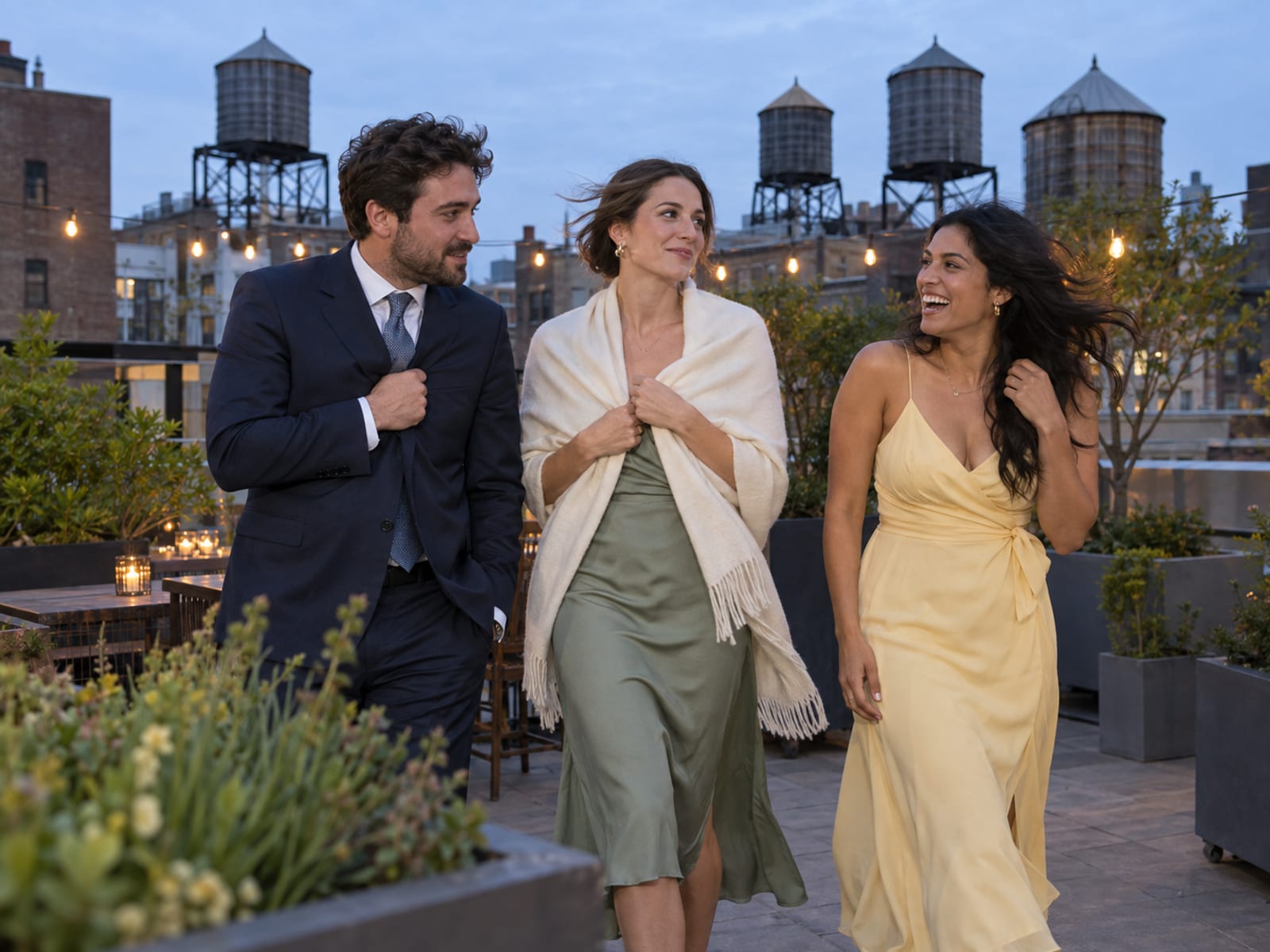
Rooftops. Wind, sun and the drop in temperature after sunset all change what works. Ask whether the space is open, covered or heated, and whether there's an indoor room nearby. Some rooftops are more sheltered than they sound: Rory's Rooftop describes a covered glass atrium, tents and indoor backup space, and Hudson VU describes an open-air terrace alongside indoor seating, heated spaces and weather protection. Either way, bring a layer that matches your outfit, secure your hair and any hat or scarf, and skip shoes that wobble on decking or pavers.
Lofts and industrial spaces. Expect concrete floors, stairs and sometimes limited coat storage. Ask whether there's an elevator, a coat check and heating or air conditioning, then choose shoes and a layer to match.
Ballrooms and restaurants. These are usually climate controlled and closest to what the dress code assumes. Some venues also keep their own rules: Hudson VU, for example, doesn't allow athletic wear, flip-flops, baseball caps or overly casual clothing (read September 28, 2026).
Outdoor spaces. Grass, gravel and cobblestones catch thin heels, and sun or a sudden shower can arrive in the same afternoon. Block heels, flats or dress shoes with a solid sole, plus a wrap or light jacket, cover most of it.
The City Clerk's office. Ceremonies take place in City Clerk borough offices by appointment, and the NYC311 ceremony rules (read September 28, 2026) cover the license, a witness over 18, identification and the $25 fee. There's nothing about what guests wear. It is a working government office, though, so polished clothing that also suits the lunch or party afterward is the practical choice. For the couple's side of this, see What to Wear to a City Hall Wedding in NYC, and for the day itself, A City Hall Wedding in NYC, Step by Step.
Synagogues, churches and other religious venues. Each congregation sets its own expectations, so treat one venue's policy as that venue's policy. Temple Beth-El, for example, asks for long pants, skirts or dresses at knee length or longer, covered shoulders and covered midriffs, and explains its kippah practice. If the ceremony is religious and the reception is elsewhere, a jacket, shawl or cover-up lets you meet the ceremony's standard and then relax for the party.
How the New York season changes what you wear
New York's seasons are distinct, and an evening event can feel very different from the afternoon. The National Weather Service Central Park normals, based on 1991 to 2020 data and updated January 1, 2026, give a reliable starting point:
Tap or hover a row to highlight it.
| Month | Average high | Average low |
|---|---|---|
| MonthJanuary | Average high39.5°F | Average low27.9°F |
| MonthFebruary | Average high42.2°F | Average low29.5°F |
| MonthMarch | Average high49.9°F | Average low35.8°F |
| MonthApril | Average high61.8°F | Average low45.5°F |
| MonthMay | Average high71.4°F | Average low55.0°F |
| MonthJune | Average high79.7°F | Average low64.4°F |
| MonthJuly | Average high84.9°F | Average low70.1°F |
| MonthAugust | Average high83.3°F | Average low68.9°F |
| MonthSeptember | Average high76.2°F | Average low62.3°F |
| MonthOctober | Average high64.5°F | Average low51.4°F |
| MonthNovember | Average high54.0°F | Average low42.0°F |
| MonthDecember | Average high44.3°F | Average low33.8°F |
These are long-term averages, so check the actual forecast in the days before.
Winter. With January lows under 30°F, you need a proper dress coat, a warm layer underneath, gloves and shoes that can handle wet or icy sidewalks. Many guests wear boots on the way and change at the venue. A Winter Wedding in New York City: Venues, Weather and What It Costs covers the season in more depth.
Spring. April can swing from the low 60s to the mid 40s in one day. A blazer, wrap or light dress coat that works with your outfit is the easiest answer.
Summer. July averages close to 85°F, and pavement and subway platforms feel warmer. Choose breathable fabrics like linen blends and lighter wools, keep layers light, and wear shoes you can stand in for hours.
Fall. September is mild, but October evenings fall to the low 50s. Bring a jacket or wrap for anything outdoors or on a roof.
Rooftops in any season. Plan for wind and a cooler evening than the street below. Rooftop Weddings in NYC: Permits, Cost and the Weather Plan explains how couples and venues handle weather, which tells you what to expect as a guest.
Dressing for sidewalks, stairs and the subway
Many New York weddings involve some walking, whether from the hotel to the ceremony, from the subway to the venue, or between a ceremony and a reception in different neighborhoods. A few choices make that easy.
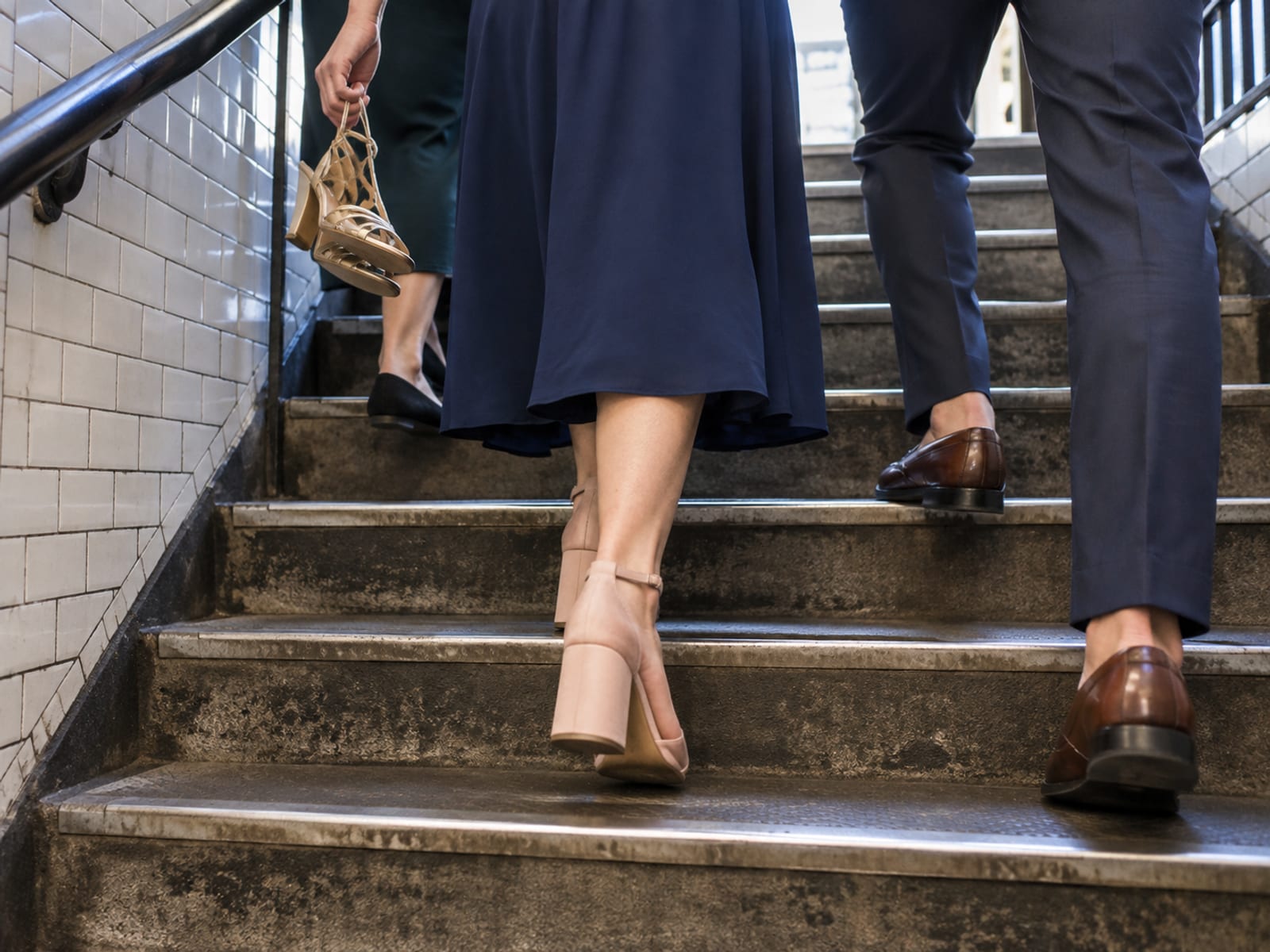
Shoes come first. Block heels, low heels, dressy flats, loafers and polished dress shoes with secure soles all hold up on sidewalks and subway stairs. Wear new shoes around the house a few times before the wedding, and consider cushioned insoles or blister protection in your bag. If your favorite pair isn't made for walking, carry it and change at the door.
Hems matter too. A floor-length gown needs to clear stairs and subway gaps, so have it hemmed to your walking shoes or plan a car for that stretch. A compact evening bag or a small crossbody you can keep closed and close to your body is easier on a crowded train than a large tote.
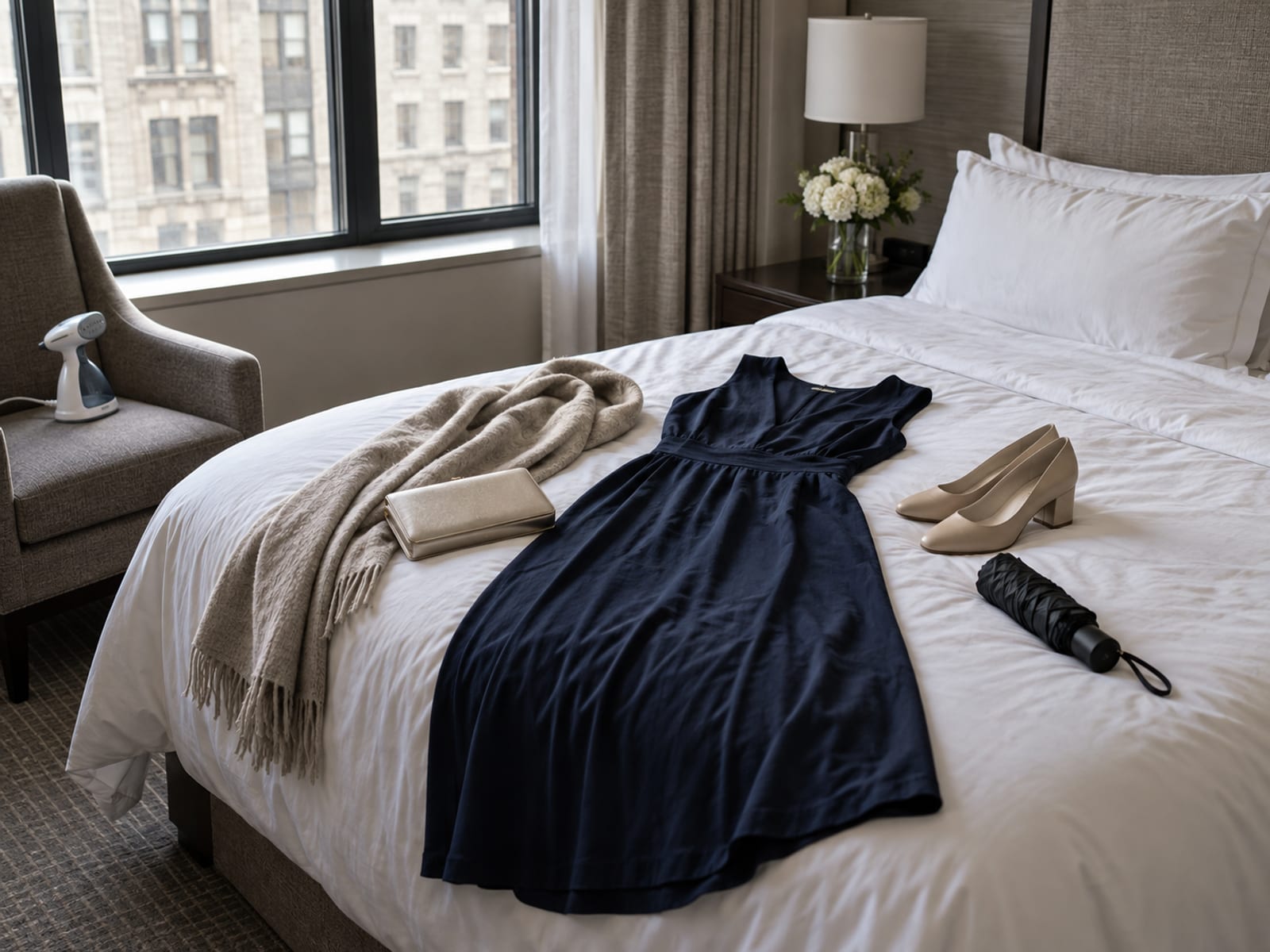
If you're getting ready at a hotel, ask about early check-in or late checkout, hanging space, a steamer and luggage storage. Carry formalwear in a breathable garment bag, and leave time to press it once it's out. Where Your Wedding Guests Should Stay in NYC, by Borough and Getting Wedding Guests Around New York City: Shuttles, Subways, Cars and Parking help with the logistics around the outfit.
What to ask before you choose an outfit
A short message to the couple, or a look at their wedding website, answers most of this. Asking is normal, and it saves you a guess.
- Does the dress code apply to both the ceremony and the reception?
- Is the ceremony religious, and does that venue ask for covered shoulders, longer hems or a head covering? Are head coverings provided?
- Is any part of the event outdoors or on a roof, and is there a covered or indoor backup?
- Is there a coat check, and does it take bags? Some venues charge; Manhattan Center lists $6 per item for eligible floor-ticket guests at its events, and The Onyx Room in Brooklyn advertises a dedicated coat check.
- Will you move between locations, and how: shuttle, car or subway?
- Is there anywhere to change between the ceremony and the party?
Once you have those answers, the checklist is simple: read the code, confirm both venues, plan shoes for stairs, pack a weather layer that fits the code, and leave time for fitting, pressing or rental delivery.
Where to rent or buy formalwear quickly in NYC
If you arrive without the right clothes, or the invitation asks for something you don't own, Manhattan makes it possible to sort out in a day or two. Prices and stock change, so call ahead and confirm fittings, pickup and return deadlines.
Tuxedo rental. Men's Wearhouse at 650 Avenue of the Americas lists tuxedo rentals from $199.99, along with alterations, wedding appointments and same-day rental on selected styles (read September 28, 2026). Ask how much time measurements and alterations need.
Dress rental. Rent the Runway offers one-time designer dress rentals with a backup size, a garment bag and free returns, with rental prices on its page starting around $84 for some dresses (read September 28, 2026). Delivery timing depends on the item and your date, so order early if you can.
Buying in person. Macy's Herald Square at 151 West 34th Street lists women's dresses and suits, men's suits and separates, dress shirts and neckwear, plus alterations and personal stylists. Other department stores and formalwear shops around the city work the same way: confirm same-day stock, fitting times and return terms before you go.
Whatever you rent or buy, keep the receipts and the return instructions with the garment bag. A small kit with a sewing kit, stain remover, fashion tape and clips handles most last-minute problems.
What to leave at home, and why
The main thing to avoid is ignoring the dress code. Showing up visibly more casual than the invitation asks is the mistake guests notice most, and so is treating black tie as license for a costume-level look that pulls attention.
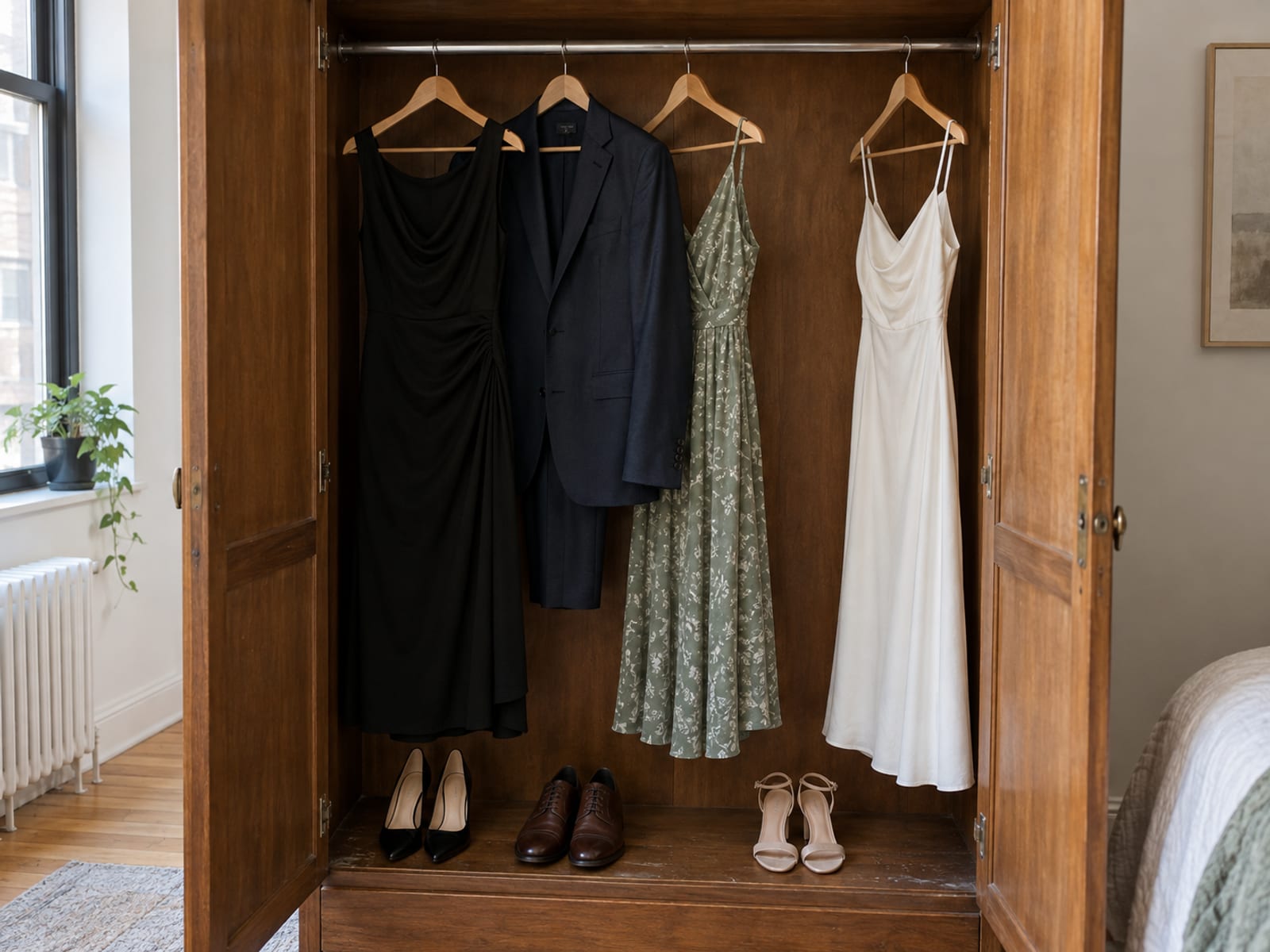
Black is fine. Emily Post includes the little black dress under black tie, and Debrett's notes that black tie neither requires nor rules out black. White is the color worth asking about: if the couple or the invitation has said anything about it, follow that, and if you're unsure, choose another color.
At a religious venue, follow its published rules on shoulders, midriffs, hem length and head coverings. At venues with their own policies, leave athletic wear, flip-flops and baseball caps at home. When the code and the setting call for restraint, very revealing clothing or anything impractical for a long, seated dinner is worth skipping, since you'll be wearing it for hours.
Quick check: reading the dress code
Answer every question to check.
Questions guests ask about NYC wedding attire
These short answers cover the questions that come up most after the invitation arrives.
Can I wear a dark suit to a black-tie optional wedding?
Yes. Black-tie optional means a tuxedo is welcome but a dark suit is acceptable. A formal gown, cocktail dress or dressy separates are equally correct.
Can I wear pants or a jumpsuit to a formal wedding?
Yes, when the fabric and finish match the formality. Emily Post includes dressy pantsuits and dressy separates in its formal and semi-formal guidance, so a well-cut jumpsuit or pantsuit fits alongside dresses and suits.
What should I wear to a rooftop wedding in October?
Follow the dress code and add a layer that works with it, since the Central Park average low in October is 51.4°F and a roof feels cooler with wind. Secure your hair and accessories, and choose shoes with a steady heel or none.
Are sneakers ever acceptable?
Only when the couple chooses a casual code and the venue allows them. Some venues, like Hudson VU, bar athletic wear, so check before you pack them.
What if the ceremony is at a synagogue and the reception is somewhere else?
Dress for the ceremony venue's rules, then adjust. A jacket, shawl or cover-up over a cocktail outfit lets you meet a modesty request in the morning and shed a layer for the party.
Your next step
Read the invitation again, write down the dress code and both venue addresses, and send the couple any questions from the list above. Then check the forecast a few days out and try the full outfit, shoes included, on a flight of stairs. If you still need a tuxedo, a dress, alterations or someone to do your hair, the Get Married in NYC vendor directory lists suit and tuxedo shops, bridal shops, hair and makeup artists and transportation across the city. If you're traveling in for the weekend, Planning a Wedding Weekend in NYC: Things to Do With Out-of-Town Guests and Getting Married in NYC as a Visitor or From Abroad help with the rest of the trip.