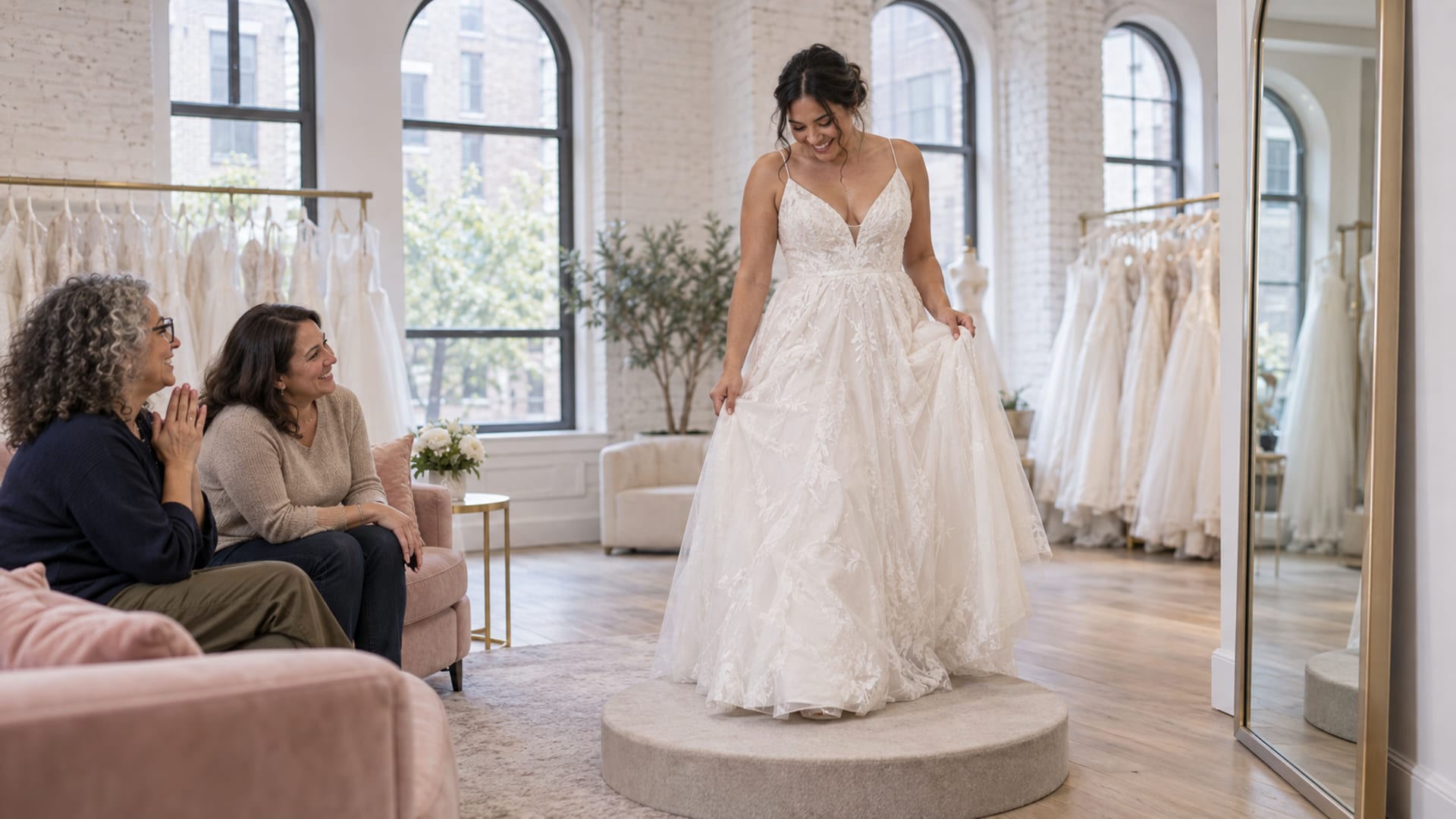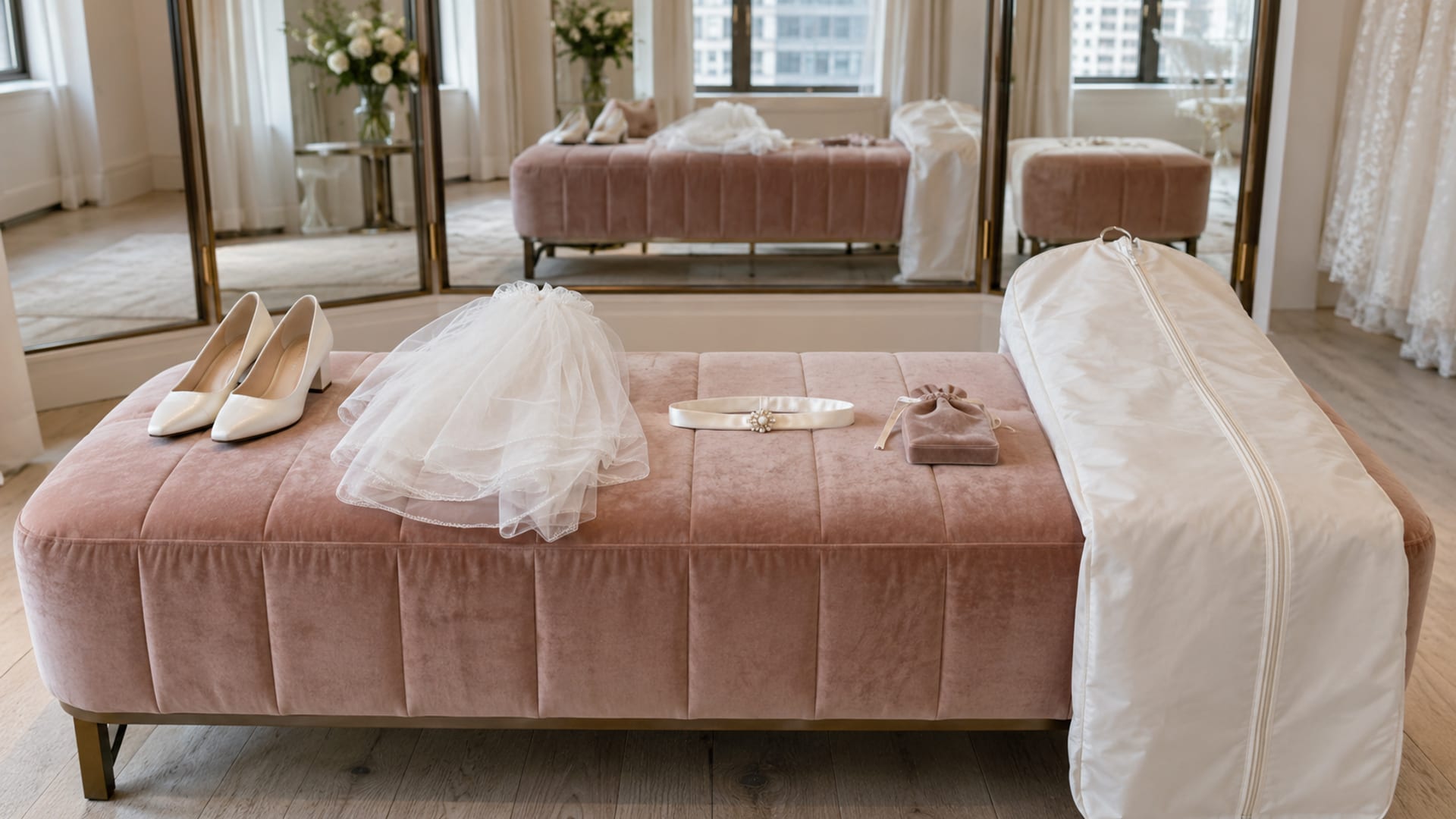
Alterations for a wedding dress or any other wedding outfit usually take more than one fitting, and they should start well before the last few weeks. Published New York examples run from six to eight weeks at Atelier Couture to 12 weeks at Belle Atelier, and Kleinfeld describes about three fittings over two to three months. Bring the shoes and undergarments you plan to wear on the day, and ask for an itemized quote that covers the hem, bustle, fit work, design changes, pressing, steaming, rush fees and pickup date.
Key takeaways
Tap a card to bring it forward.
- Start early: published New York timelines run from six to eight weeks up to 12 weeks, and complex outfits can take longer.
- Expect about three fittings, with the last one including bustle practice.
- Bring your wedding shoes (or the same heel height) and the undergarments or shapewear you will wear.
- Prices on this page are each shop's own starting prices, not a citywide rate; the final quote depends on fabric, construction and the work requested.
- Get the quote itemized and in writing after the shop inspects the outfit, before you pay a deposit.
- Plan how the finished outfit will be steamed, packed and carried to the venue.
The short answer: when to start, how many fittings, and what to bring
If your wedding is a few months away, you are in good shape to book a first appointment now. A typical path is one consultation or viewing, then two or three fittings, then a pickup. At each visit, wear or bring the shoes and the underlayers you have planned, because the hem and fit are set around them.
When you ask for a quote, ask for it line by line. A good itemized quote names each piece of work: the hem, the bustle, any change to the bodice, straps or sleeves, pressing and steaming, any rush fee, and the date you can pick the outfit up. That list is what lets you compare two shops fairly. The rest of this page walks through each part in the order it happens.
When to start alterations in NYC
Shops in the city publish different timelines, so the best starting point is the shop's own number. Atelier Couture in Williamsburg recommends starting six to eight weeks before the event. Belle Atelier asks for 12 weeks before the wedding. Kleinfeld describes a process of about two to three months, with the second fitting typically two to three weeks after the first. For general planning, Zola suggests a first fitting about three to four months out and a final fitting about two weeks before the wedding, with a week of buffer after that.
Those numbers move with the outfit. Beading, layered skirts, trains and structural changes take longer, and so does a busy season in a shop's workroom. Your first fitting also depends on when the outfit arrives, so if it is still on order, ask the shop how it schedules around a late delivery. For ordering timelines and where to buy, see our guide to wedding dress shopping in New York City.
How many fittings to expect
Plan on about three. Belle Atelier says most gowns need two to three fittings and describes its NYC process as about three visits: one consultation or gown viewing and two follow-up fittings. Atelier Couture describes an initial fitting where the garment is pinned and the work is planned, scheduled fittings after that, and a final fitting. Kleinfeld describes roughly three fittings, with a third fitting and pickup after the second.
The usual path, fitting by fitting
Tap or hover a step to follow the order.
Consultation
One consultation or gown viewing, where the garment is pinned and the work is planned.
Follow-up fittings
Two follow-up fittings to check the fit; Kleinfeld says the second fitting typically comes two to three weeks after the first.
Final fitting
Wear everything, check that you can sit, walk, dance and hug comfortably, and learn the bustle.
Pickup
Collect the finished outfit, and ask the shop how it was pressed, steamed and packed.
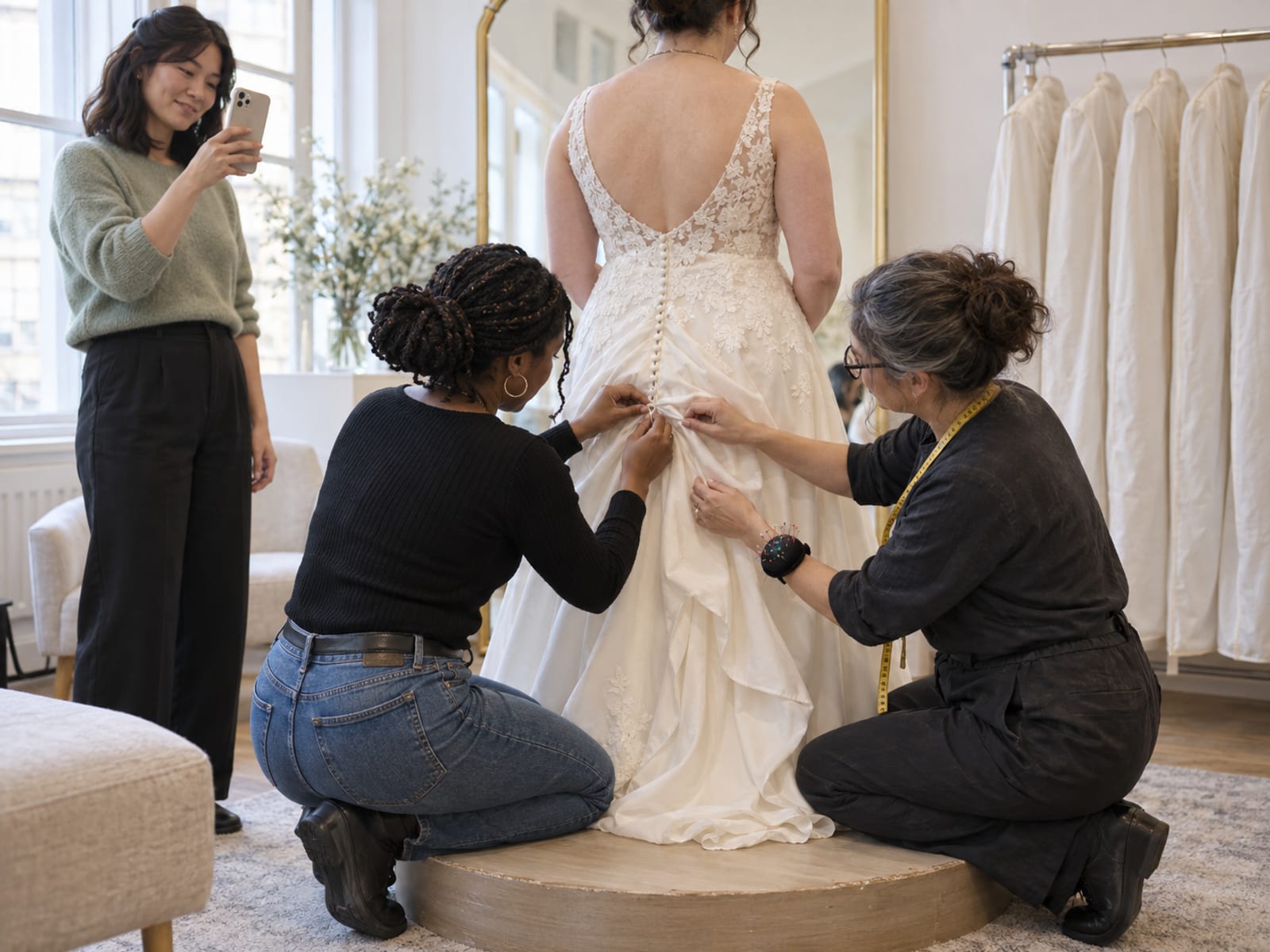
The final fitting is the one to treat as a dress rehearsal. Wear everything, check that you can sit, walk, dance and hug comfortably, and learn the bustle. Ask the person who will help you on the day to come along, and consider recording a short phone video of how the bustle works, since bustle systems differ from one outfit to the next. A complex outfit or a design change can add a fitting, so ask at the first visit whether the count could grow.
What to bring to every fitting
- Your wedding shoes, or shoes with the same heel height if the final pair has not arrived. Kleinfeld requires wedding shoes at fittings to complete the hem, and Belle Atelier asks for shoes as well.
- The undergarments or shapewear you plan to wear on the day. Belle Atelier asks for these, and the fit changes with them.
- Anything that changes the fit or proportions: a veil, belt, jewelry, overskirt, jacket, sleeves or another layer.
- A helper for the bustle, if the shop recommends it.
- The complete outfit for the final fitting.
Kleinfeld also advises settling accessories and undergarments by the second fitting, so decide on those early rather than at the last visit.
What to bring to every fitting
Tap a card to bring it forward.
- Your wedding shoes, or shoes with the same heel height
- The undergarments or shapewear you plan to wear on the day
- Anything that changes the fit or proportions: a veil, belt, jewelry, overskirt, jacket or sleeves
- A helper for the bustle, if the shop recommends it
- The complete outfit for the final fitting
What alterations cost in NYC
Prices depend on the shop, the fabric and the work. As of October 5, 2026, Atelier Couture publishes these starting prices on its bridal alterations page. They are that shop's own starting prices, not a citywide price, and the shop says final pricing depends on fabric, construction and complexity.
Tap or hover a row to highlight it.
| Service | Atelier Couture starting price |
|---|---|
| ServiceGown hem | Atelier Couture starting price$195 |
| ServiceLace or beaded hem | Atelier Couture starting price$350 |
| ServiceTrain removal or reshaping | Atelier Couture starting price$295 |
| ServiceBodice alterations | Atelier Couture starting price$245 |
| ServiceStrap adjustment | Atelier Couture starting price$95 |
| ServiceShoulder adjustment | Atelier Couture starting price$395 |
| ServiceStandard bustle | Atelier Couture starting price$95 |
| ServiceFrench or ballroom bustle | Atelier Couture starting price$225 |
| ServiceCups, panels or corset back | Atelier Couture starting price$75 |
| ServiceZipper replacement | Atelier Couture starting price$225 |
| ServiceSteaming or ironing | Atelier Couture starting price$10 |
Atelier Couture's home page lists steaming or ironing starting at $10.
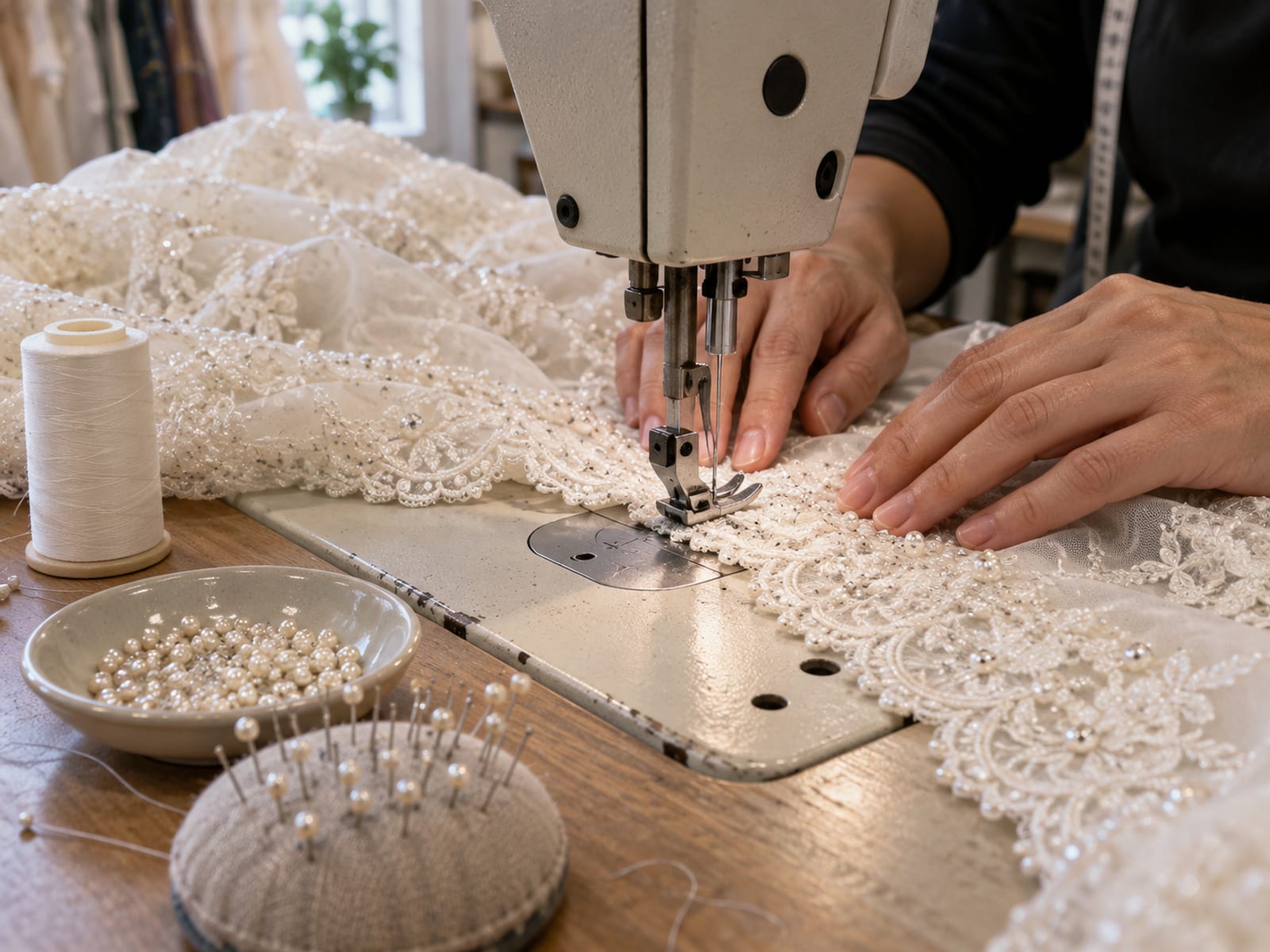
Belle Atelier prices differently, as an overall range for bridal alterations. Its workroom page gives $1,300 to $3,000 or more, and its NYC page gives $1,320 to $3,960 or more. Ask each shop for a written quote for taking in, adding sleeves and steaming your particular outfit after it has inspected the garment, because those prices depend on the garment itself.
What changes the quote most, and bridal shop or independent seamstress
A few things raise a quote faster than the rest. Beading and lace make hems and seams slower; layered skirts and long trains add hours; structural changes such as new sleeves, a corset back or reshaped necklines call for more skill; and rush timing can add a fee. Atelier Couture says rush work is subject to availability, and Belle Atelier says rush fittings may be accommodated for an additional fee, so a tight timeline is worth raising at the first call, not the third.
Then there is the choice of who does the work. A bridal shop with its own workroom keeps everything in one place. Belle Atelier, for example, runs an in-house workroom and holds fittings in its NYC showroom, and Kleinfeld has its own alterations department with a published fitting process. An independent seamstress or alterations studio may suit an outfit bought elsewhere. Questions to put to either one:
- Does the fitter already know this designer's construction?
- Will the shop accept an outfit bought somewhere else? Belle Atelier says it gives priority to its own brides and accepts outside gowns only depending on schedule and workload.
- Is pricing flat or itemized, and does it include pressing, steaming, the bustle and final packaging?
- Is a rush appointment possible?
- Who is responsible if more work turns out to be needed?
Zola also suggests comparing quotes and timelines from the in-house option and an outside one.
Second-hand, inherited, rented and non-traditional outfits
Each of these has its own first step.
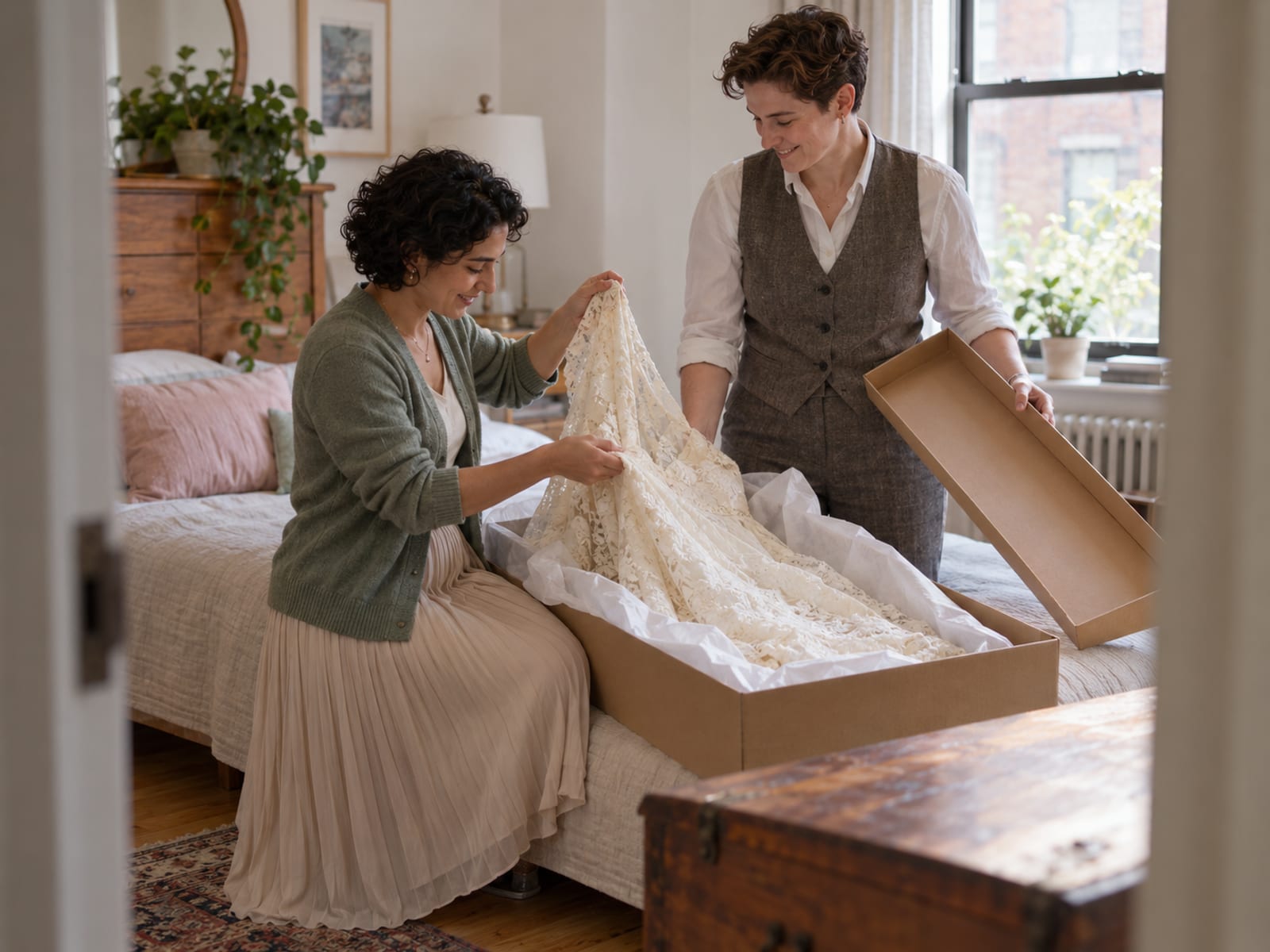
For a second-hand dress, ask the seamstress to inspect it before quoting. She or he will look for earlier alterations, how much seam allowance is left, stains, weak fabric and missing beads, and whether matching material is available.
For an inherited or heavily reworked dress, allow more time. Zola notes that modernizing a relative's dress can take several rounds of fittings and consultations, and suggests six months or longer for extensive changes.
For a rented outfit, confirm the rental company's rules on alterations before you book anyone. Cutting, adding lace or adding sleeves may not be allowed, so ask whether temporary hemming, clips or other reversible adjustments are permitted and who may do them.
For a suit, jumpsuit, short dress or City Hall outfit, ask whether the shop works on separates, structured pieces and colored fabrics. The same rules apply: shoes and layers at every fitting, a final fitting that includes the whole outfit, and enough time for any big change. For ideas on what to wear for a courthouse ceremony, see our guide to what to wear to a City Hall wedding in NYC.
Steaming, storing and carrying the finished outfit
Ask the shop how the finished outfit should be pressed and steamed for its fabric and trim. Kleinfeld says its finished gowns are professionally pressed, steamed, packed with tissue paper and placed in an opaque, breathable cloth garment bag. Keep yours in a breathable bag, avoid crushing it under luggage, and ask the shop whether it should stay hanging, how long it can stay packed and whether it needs a touch-up steam after the trip.
A few physical items help here: a full-length breathable garment bag with enough length for the train, a sturdy hanger with wide, padded shoulders, and acid-free tissue for folds if the shop recommends it. A small sewing kit with neutral thread, needles, safety pins, fashion tape and spare hooks is handy on the day. A portable steamer only makes sense if your fabric and trim allow it and the care instructions agree.
Plan the route and the vehicle before pickup. A long train or a structured gown takes more room than an ordinary garment bag, so a taxi or car seat plan is worth working out in advance. Then confirm with the venue where the outfit can hang safely and where you will get dressed. If the morning has hair and makeup in it too, see our guide to wedding hair and makeup in New York City for how to build the schedule.
What to ask before booking
Use this list on the phone or at the first appointment:
- Can I have an itemized quote after you inspect the outfit?
- How many fittings should I expect, and what is your lead time?
- When is payment due: at booking, at drop-off or at pickup?
- What is the rush fee, and is rush work available for my date?
- Do you accept an outfit bought somewhere else?
- Can you store the finished outfit, and what is the pickup date?
- What happens if a correction is needed after the final fitting?
- Who will teach the bustle, and can someone come with me?
Every one of these is that shop's own policy. For example, Atelier Couture publishes payment at drop-off, a standard turnaround of seven to 10 business days, rush-fee structures, and a policy that unclaimed items may be donated or otherwise disposed of after 90 days. Another shop will have its own terms, so ask each one.
Quick check: wedding dress alterations
Answer every question to check.
Questions about wedding dress alterations in NYC
These short answers cover the questions that come up most often.
When should wedding dress alterations start in NYC?
Published timelines vary. Atelier Couture recommends six to eight weeks before the event, Belle Atelier requires 12 weeks, and Kleinfeld describes a two-to-three-month process. Start sooner if the outfit is beaded, layered or being reworked.
Can sleeves or straps be added?
Some bridal ateliers do this work. Belle Atelier lists sleeves among its customizations, and Atelier Couture lists strap and shoulder adjustments with starting prices. Ask for a written quote for your outfit, since the price depends on the fabric and construction.
Is rush service guaranteed?
No. Atelier Couture says rush service is subject to availability, and Belle Atelier says rush fittings may be available for an additional fee. If your date is close, call early and ask about both the fee and the earliest opening.
Can a shop alter a dress bought elsewhere?
Some will. Belle Atelier says it occasionally accepts outside gowns, depending on schedule and workload. Ask before you book, and ask whether the price or the timeline changes for an outside outfit.
Your next step
Call one or two shops this week, ask whether they accept your outfit, and request an itemized quote after they inspect it. Then compare the quotes line by line, along with the fitting count and pickup date. To find shops near you, browse the bridal shops in our vendor directory.
Terms in this guide
Tap a term to see what it means.
Itemized quote. A quote that names each piece of work, such as the hem, bustle, fit work, pressing, steaming and any rush fee, plus the pickup date.