Start with three things: the venue, the food standard your guests need, and who controls the kitchen on the day. Ask the venue whether it permits an outside caterer. Ask the caterer which named agency certifies it, and whether a mashgiach (the kosher supervisor) or a halal supervisor will cover the event.
Then ask whether the kitchen, the utensils and the serving staff meet that standard. For allergies, collect the exact restriction on the RSVP and ask the caterer, in writing, how they prevent cross-contact.
One line belongs beside that first step: a delivered kosher or halal meal is not automatically the same as a fully supervised kosher or halal wedding. Confirm which one your guests expect before you sign.
Key takeaways
Tap a card to bring it forward.
- Name the food standard first, because it decides which venues and caterers can work.
- Ask whether the venue allows an outside caterer, a limited number of outside meals, or neither.
- A named certifying agency and a supervisor at the event are two separate questions.
- Vegetarian, vegan or gluten-free on a menu does not by itself mean allergy-safe.
- Collect each guest's restriction on the RSVP and send the caterer a dated, guest-by-guest list.
- Get supervision, kitchen, staffing and cleanup fees quoted in writing.
What kind of food accommodation does your wedding need?
Not every dietary need asks for the same thing, so sort yours before you talk to a venue. The common cases are fully supervised kosher catering, sealed kosher meals for a few guests, halal meat inside an otherwise standard menu, a certified halal menu, vegetarian or vegan meals, gluten-free meals, and allergy-safe meals.
Kosher also comes in more than one standard. Orthodox, Conservative and Sephardi families may expect different things, and so may halal guests. Ask the guest or their family which standard they follow, and which agency they trust, before you pick a caterer. OK Kosher and Halal Food Council USA both explain that the exact scope of a certification matters.
Allergy, celiac disease, religious observance and personal preference carry different consequences, so treat them as different lists. If your two families come from different traditions, the interfaith wedding guide covers how to plan for both.
Does the venue allow an outside kosher or halal caterer?
This is the question that can end a venue search early, so ask it first. Venues tend to fall into three groups: exclusive in-house catering, a limited number of outside meals, or fully permitted outside catering. Some venues add fees when an outside caterer comes in.
The table shows how six NYC venues describe their own policies, read on November 5, 2026. Policies and fees change, so get the current terms in writing before you book.
Tap or hover a row to highlight it.
| Venue | Area | Published policy |
|---|---|---|
| VenueInterContinental New York Barclay | AreaManhattan | Published policyNot a kosher facility, but can partner with an outside kosher caterer. Additional fees apply. |
| VenueBlackbarn NYC | AreaManhattan | Published policyFully outside-catered events are not permitted. A limited number of outside meals may be accommodated for strict kosher or halal requirements. |
| VenueSecond NYC | AreaManhattan | Published policyOutside catering is generally not permitted, but kosher catering is allowed. Other food and beverage stays in-house. |
| VenueRadegast Hall | AreaBrooklyn | Published policyOutside food and catering are not allowed. The venue says it can accommodate all dietary restrictions and some religious restrictions. |
| VenueLittle Owl Events | AreaManhattan | Published policyOutside caterers are not allowed. The venue partners with a local kosher restaurant for kosher meals and can accommodate dietary restrictions. |
| VenueCongregation Shearith Israel | AreaManhattan | Published policyThe caterer must be pre-approved by the mashgiah. Catered events with onsite food preparation or waitstaff incur a kitchen-use fee. |
Look at how different those answers are. A venue that allows only a few outside meals can work for a wedding where two or three guests keep kosher. It will not work for a wedding where every guest expects a fully supervised kosher meal. If a venue offers a partner caterer, ask which agency certifies that partner and what the certification covers.
Whatever the venue tells you, ask for the outside-meal limit, the fees and the rules about who may open, heat and serve the food written into the venue agreement. If your caterer is not on the venue's own list, ask for that policy in writing as well.
How does kosher supervision work at a wedding?
A kosher certificate on a caterer's website tells you about the caterer. It does not by itself tell you about your wedding. OK Kosher warns that supervision at an event can be lost when food is bought from kosher establishments but the event itself is not supervised.
The mashgiach is the person who makes the kosher controls real on the day. OK Kosher says an approved mashgiach should be on site during preparation and serving. That person inspects incoming ingredients, lights the cooking fires, controls access to the kitchen, and seals outgoing food.
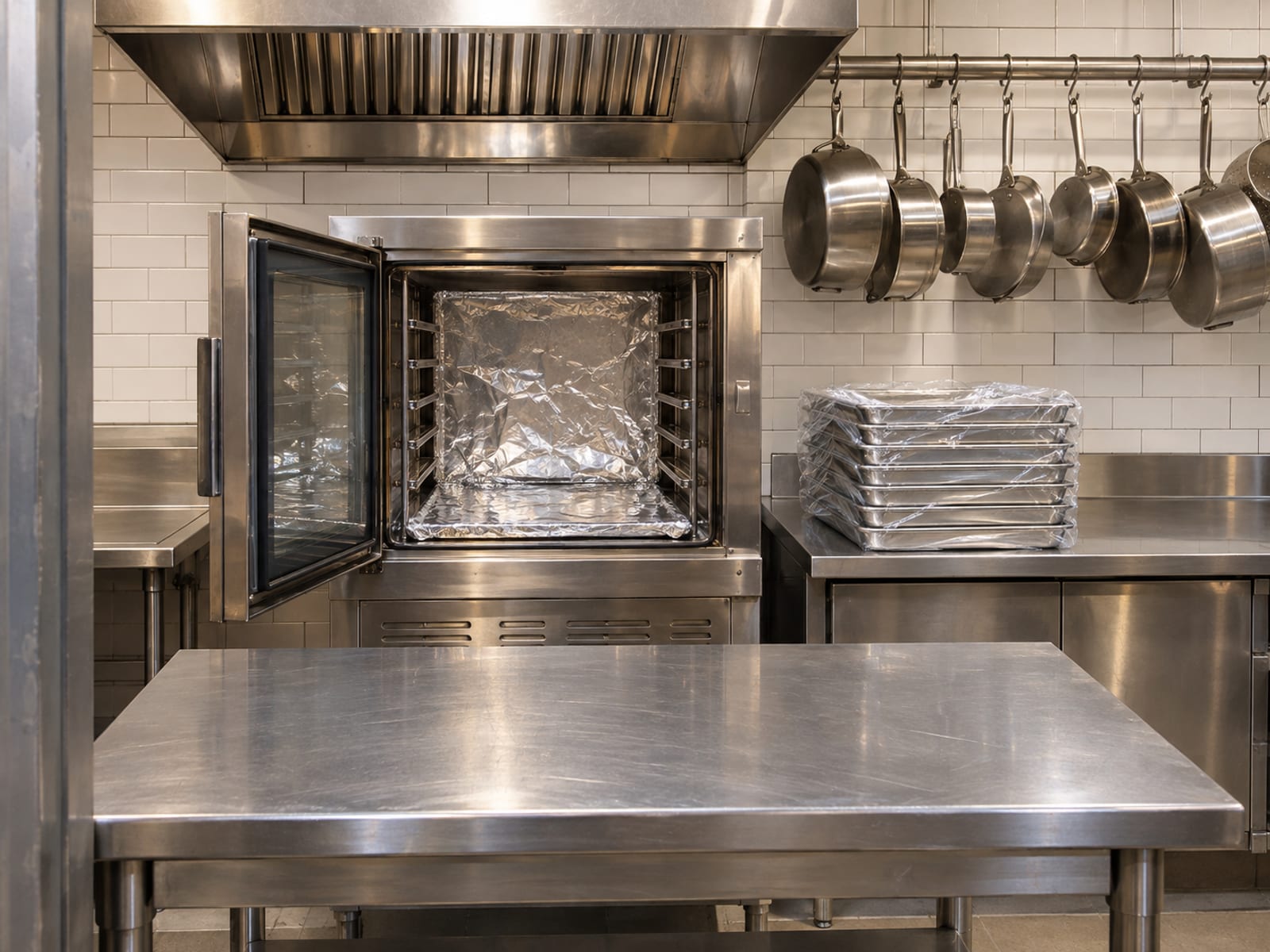
If your venue is not kosher, the kitchen may need kashering, which is a process of making it fit for kosher use. OU Kosher describes catered events at non-kosher hotels that can require kashering, separate or kosher utensils, covered work surfaces, restricted kitchen access and mashgiach supervision. OU also notes that a single catered affair can take hours of work and hundreds of utensils. Ask the venue early whether its kitchen can be kashered at all, because the answer affects both timing and cost.
Then pin down which kind of service you are buying. STAR-K separates a fully catered event from food service. In food service, the caterer delivers sealed kosher food, and a responsible Shomer Shabbos employee should open the seals and act as mashgiach through the event. In a fully catered event, the caterer's own staff and supervision run throughout.
Also check the symbol. OU Kosher advises identifying the rabbi or agency behind a symbol, because a plain K does not say who stands behind it. Wine, cake, desserts and coffee have their own rules, so ask about each one by name.
How does halal certification work for a wedding menu?
The first question is simple: which named body certifies the food? In New York, NYC Business explains that halal-food businesses must register with the State Department of Agriculture and Markets, and that businesses preparing halal food onsite must post their certification and file information about the certifier. It also states that registration does not mean the food is certified. A registration number is not an answer to your question; a certifier's name is.
Then ask what the certification covers. Halal Food Council USA describes certification for restaurants and caterers in terms of registered menus, ingredients, facilities and audits. A caterer might serve halal meat while using other ingredients, equipment or preparation practices that do not meet your guest's standard, so ask whether the full menu, the event kitchen and the event service are covered, and whether the certificate is current.
Caterers describe their halal arrangements in different ways. Turkish Catering NYC publishes a "Halal Certified" designation and wedding or event package menus with vegan and vegetarian choices. Healthy Heart Foods states that its catering is officially halal certified. The restaurant ilili says halal meat can be arranged for private events with three business days' notice. Shariah Board New York lists certified businesses with validity dates, which is a useful kind of record to ask a caterer for.
Kosher and halal guests can attend the same wedding. Ask the caterer how each meal would be prepared, labeled and served.
How do you plan for allergies, vegan and gluten-free guests?
For allergies, start with the list. The FDA names nine major food allergens: milk, egg, fish, crustacean shellfish, tree nuts, wheat, peanuts, soybeans and sesame. Ask your guests about these by name rather than asking only whether they have "allergies."
The key idea is cross-contact, which the FDA describes as the unintended introduction of an allergen into food. A dish with no peanuts in the recipe can still pick up peanut from a shared pan, board or serving spoon. That is why a menu line reading "vegetarian," "vegan" or "gluten-free" does not by itself mean safe for an allergy.
FDA labeling rules are written mainly for packaged food and food manufacturers, so a wedding caterer may not give you a package-style label. Ask for a written answer that covers ingredients, preparation areas, shared equipment, cleaning, storage, service and labeling. Also ask what happens if an ingredient changes before the wedding.
Blackbarn says its event manager works with couples on dietary needs, and Little Owl says it can accommodate dietary restrictions. Treat those as invitations to ask, then get the details in writing.
How do you collect dietary needs on the RSVP?
Ask each guest, not each household. Your RSVP or wedding website can collect attendance, meal selection, any religious food requirement such as kosher or halal, the specific allergen, whether cross-contact must be avoided, other restrictions such as vegetarian, vegan, gluten-free or dairy-free, and the guest's name with a table or seat. The Knot's help center explains that RSVP tools support custom short-answer questions for allergies and multiple-choice questions for meal options.

When replies are in, combine them into one dated list, guest by guest, and send it to the caterer before the final-count deadline. Ask the caterer to confirm how each special meal will be prepared, labeled, delivered and served, and what the deadline is if a guest reports an allergy after the RSVP closes. The RSVP and wedding website guide walks through building the form itself.
A simple shared spreadsheet or a clipboard with seating cards keeps the list private and easy to update. Keep restrictions off anything guests can see.
How should kosher, halal and allergy-safe food be labeled?
Labels help the staff and the guests, and they work best when they are plain and consistent. For each dish, give the dish name, the certification where it matters, the major allergens it contains, and the dietary category. For individual special meals, use a discreet identifier that the service staff understand, such as a table number or a small coded card, so no one's restriction is announced to the room.
Large, readable type matters, and so does a holder that suits hot or cold service. Look for waterproof buffet label holders with replaceable inserts. Labels do not replace what the caterer does in the kitchen, so keep the written controls from the allergy conversation in your file as well. A document folder with tabs is handy for certificates, menus and contracts.
Walk the service staff through the plan before the reception starts. Ask where special meals will be placed, who delivers them, and who is allowed to open sealed kosher meals.
What should you ask the venue, caterer and certifier before signing?
Use this checklist when you tour, and again when you read the contract. Fees for supervision, kashering, an outside caterer and extra staffing vary by business, so ask each one for a dated, itemized quote.
- Which kosher or halal standard do your guests require, and which agency do they trust?
- Does the venue allow an outside caterer, a limited number of outside meals, or neither?
- Does the venue have a kosher kitchen, or can its kitchen be kashered?
- Which named agency certifies the caterer, and is that certification current?
- Will a mashgiach or halal supervisor be on site from setup through cleanup?
- Who controls kitchen access, cooking equipment and sealed meals?
- What are the outside-caterer, kitchen-use, supervision, staffing, rental and cleanup fees?
- Can wine, cake, desserts and coffee meet the same standard?
- How will food be delivered, labeled and served?
- Does the caterer carry insurance, and does the venue require a certificate?
- What are the final-count and change deadlines?
Venue contracts can add other costs. Little Owl, for example, lists a 50% deposit and $50 wine corkage per 750 ml bottle, and Congregation Shearith Israel charges 15% of the room-rental rate for each additional hour of event time. Read those as examples of line items to look for, not as typical prices.
For the caterer's side of the conversation, see wedding catering in NYC. For a cake that meets the same standard, see wedding cakes in NYC.
Quick check: kosher, halal and dietary needs
Answer every question to check.
Questions about kosher, halal and dietary needs at an NYC wedding
These answers cover the questions couples ask most once the planning is under way.
Can a non-kosher NYC venue host a kosher wedding?
Yes, if the venue and the certifier approve the arrangement. The kitchen may need kashering, restricted access, separate equipment or a mashgiach.
Is sealed kosher food the same as a fully catered kosher event?
No. Sealed meals are food service, with someone at the event opening the seals. A fully catered event includes the caterer's staff and supervision throughout.
Does a halal meat option make the whole wedding halal?
Not necessarily. Ask which ingredients, preparation areas, equipment and menu items the certification covers.
Can a venue allow only a few outside kosher or halal meals?
Some do. Blackbarn, for example, says it can accommodate a limited number of outside meals for strict requirements. Put the exact limit and terms in the venue agreement.
Your next step
Pick one conversation to have this week. If your guest list includes kosher or halal guests, ask them, or their family, which standard they follow. Then ask your top venue the outside-caterer question before you ask about anything else. Once you have the answer, request a dated, itemized quote from a caterer and send your RSVP plan to your wedding website.
Terms in this guide
Tap a term to see what it means.
Mashgiach. The kosher supervisor. OK Kosher says an approved one should be on site during preparation and serving.