If you already have a caterer, baker, photographer, band or florist you love, the first thing to learn about any venue is how it treats outside vendors. A preferred vendor list is usually a set of recommended suppliers. An exclusive caterer is the one company the venue designates to provide food. Other venues welcome outside vendors but ask for approval, insurance, licensing or a fee. Before you sign, ask the venue for every required vendor category, every outside-vendor or catering buyout fee, cake-cutting charges, the insurance limits and deadline, and the load-in, kitchen, power and cleanup rules. Then compare the venue fee plus its required vendors with the full cost of bringing your own team.
Key takeaways
Tap a card to bring it forward.
- "Preferred" often means recommended, not required. Ask the venue to put in writing which it is.
- An exclusive caterer or bar is a different thing: the venue designates it, and exceptions are narrow.
- Outside-vendor fees are venue-specific. LOFT39 lists $2 per person for outside catering; Atmosfera lists $500 for an outside caterer.
- Vendors are often asked for a certificate of insurance (COI) before they can load in, sometimes weeks ahead.
- "Raw space" does not mean every vendor is allowed.
- Get the vendor rules in writing and attach them to your venue contract.
What preferred, approved, exclusive and open policies mean
The words venues use for vendor rules sound alike, but they lead to different bookings, so it helps to sort them first.
A preferred list names vendors the venue knows and works with often. Brooklyn Botanic Garden describes its preferred list as vendors who work frequently at the Garden, and it names a separate exclusive caterer. LOFT39 also separates its designated partners from its preferred vendors in other categories. A preferred vendor may get a smoother load-in or a waived fee, but you should ask whether using the list is optional, required or cheaper.
An approved policy lets you bring your own vendor once the venue signs off. Atmosfera welcomes outside vendors who follow its policies and asks for a full vendor list in advance.
An exclusive policy means the venue names the provider. At Brooklyn Botanic Garden, Union Square Events is the exclusive caterer.
An open policy lets you hire freely, usually still with insurance and licensing. Few venues are fully open in every category, so read the rule for each vendor type rather than the headline.
What a venue may require you to use, category by category
A venue can control a handful of categories and leave the rest to you. The categories to ask about are catering, bar, rentals, tenting, security, entertainment, photography, video, flowers, cake and planning.
Here is how a few NYC venues describe their rules:
- LOFT39 (Manhattan): party rentals, tenting and draping, and security use designated partners. Catering, entertainment, A/V, lighting and planning have preferred vendors, but outside vendors are allowed if they are fully licensed and insured.
- Brooklyn Botanic Garden: the caterer is exclusive, and audio-visual needs must be provided by an approved vendor.
- The Foundry (Queens): professional outside vendors are allowed in some categories, such as florals, DJs and musicians, while outside rentals, tent rental and catering are excluded.
- Atmosfera: outside vendors are welcome if they follow venue policies, and photographers, videographers and hair and makeup artists carry no outside-vendor fee.
- The Green Building (Brooklyn): beverage service is provided exclusively through its in-house bar program.
Photographers and videographers are often the easiest vendors to bring in, but confirm that for your own venue. If your photographer is the vendor you care about most, the photographer guide covers how to choose one and what to ask a studio.
What an outside vendor costs
Outside-vendor fees vary a lot from one venue to the next, so treat the numbers below as examples, not averages.
- LOFT39: an outside catering buyout is $2 per person. Because that is a per-person charge, a 100-guest event adds $200 on top of the caterer's own price.
- Atmosfera: an outside caterer is $500, or $250 with its Coordination Suite. A florist or decorator is $250 to $400. A DJ or live band is $250. A photobooth, vendor cart or installation is $250. Photographers, videographers and hair and makeup artists have no fee, and some fees are waived for certain vendors with the Coordination Suite.
- Atmosfera cake: an outside cake has no outside-vendor fee, but cake cutting and plating costs $95 for 30 guests, $150 for 60 guests and $200 for 100 guests.
- Brooklyn Botanic Garden: external catering is generally not allowed, apart from the kosher buyouts described below.
Corkage is a separate question. Ask every venue whether corkage applies, how it is calculated (per bottle, per guest or per event) and whether you can bring your own bartenders at all. Get the answer in writing rather than assuming it is free or charged.
If you plan to bring a baker, the wedding cake guide goes through delivery, storage and cutting.
What the outside-catering fee does and does not cover
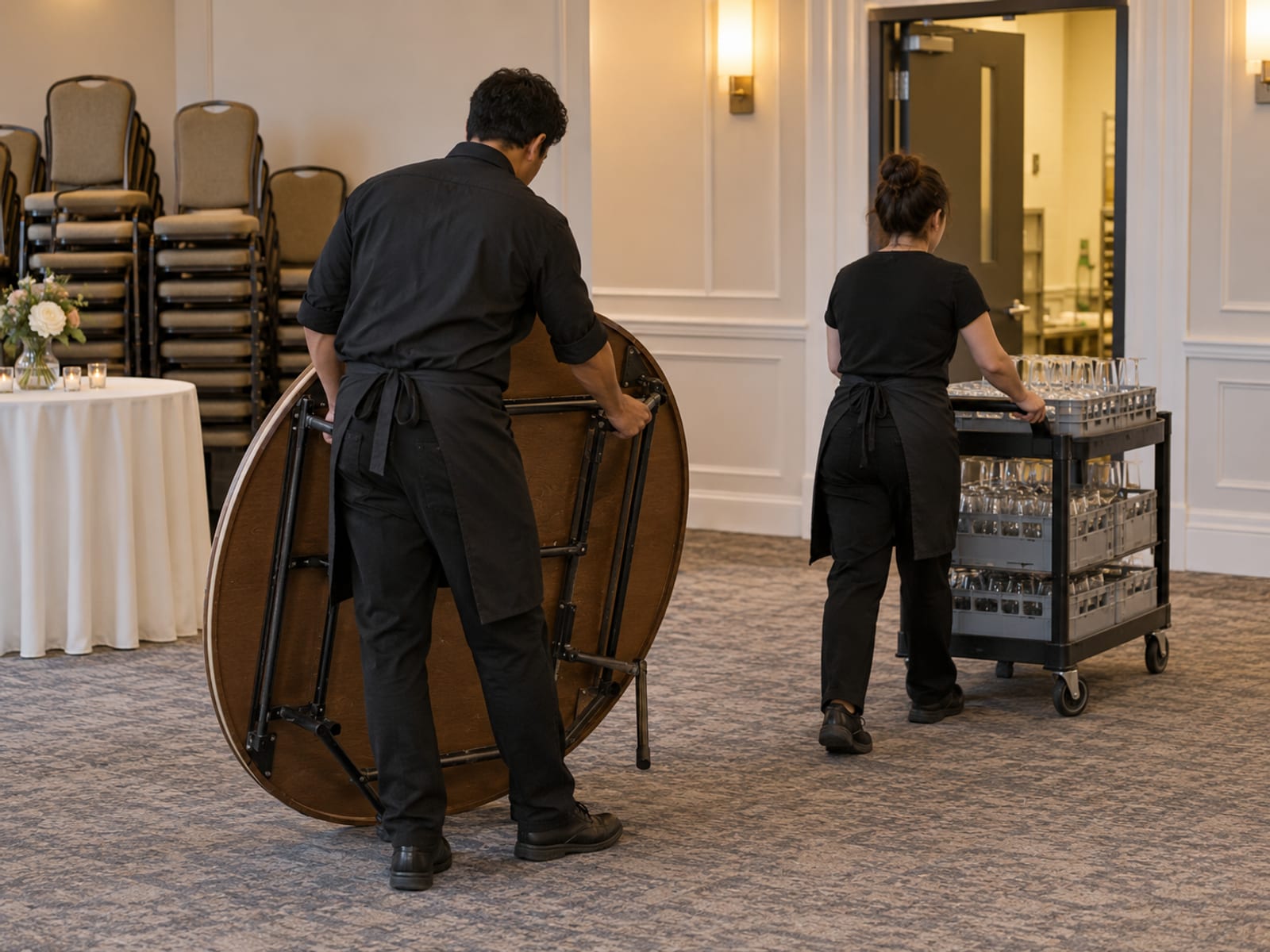
A buyout fee gives you permission to use another caterer. It may not cover anything else. Ask what is included and what your caterer must bring or pay for:
- Kitchen use, including whether the caterer may cook onsite and whether a commercial kitchen exists
- Servers, bussers and bartenders
- China, glassware, flatware, linens, tables and chairs
- Refrigeration and food setup space
- Trash removal and cleanup
At Atmosfera, licensed and insured outside caterers may prepare and serve onsite. At The Green Building, the venue's rules assign cleanup and post-event breakdown duties to you and your caterer. If the venue supplies nothing, those items land on the caterer's invoice and your total goes up. Ask whether the fee is per event or per guest, and whether it applies to drop-off food as well as full service.
The catering guide covers menus and caterer pricing in more depth.
Insurance and approvals vendors will be asked for
A certificate of insurance, or COI, is a document from a vendor's insurer showing coverage. Venues often ask that it name the venue as an "additional insured," which means the venue is covered under the vendor's policy for the event.
The published requirements differ:
- LOFT39: each vendor provides a COI naming LOFT39 LLC as additional insured, with at least $1 million per occurrence and $2 million aggregate. Outside caterers must also be full-service, licensed and insured. The venue estimates one-time event insurance at roughly $150 for a one-day, low-risk event; that is an insurance estimate, not a vendor fee.
- 48 Wall Street: outside vendors must submit an approved COI no later than three weeks before the event, and cannot access the property without one.
- Brooklyn Botanic Garden: you and every third-party vendor provide valid COIs before load-in and work on the premises.
- The Green Building: the client provides insurance covering vendors, with $1 million general aggregate and $1 million per occurrence, including property damage. A policy of about $175 can be bought up to 24 hours before the event.
Vendor approval is a deadline problem as well as a paperwork one. Ask when the venue needs your vendor list, when COIs are due, whether a first-time vendor must visit the site, and whether the venue can reject a vendor after the contract is signed. The Foundry does not list COI amounts or approval deadlines, so ask it directly.
When the venue's caterer or bar cannot be replaced
Sometimes the answer is no, and it helps to hear that before you fall for a venue. At Brooklyn Botanic Garden, Union Square Events is the exclusive caterer. The one narrow exception is for events that require kosher catering, where a buyout is allowed through the Garden's specified kosher partners, Foremost and Simply Divine.

Bars can be exclusive too. The Green Building says beverage service is provided only through its in-house bar program, so buying your own alcohol would not mean you can bring your own bartenders.
If a religious, cultural or dietary need matters to you, such as kosher, halal, Latin American, South Asian or vegan catering, ask about exceptions before you book. Some venues publish a narrow one, and others will only consider it if you ask. Ask for the exception in writing, and ask what it costs.
How raw spaces and lofts differ
A raw space or loft gives you the room and leaves more of the event to you: caterer, tables, chairs, linens, china, glassware, bar equipment, staffing, lighting, sound, power, rentals, tenting, setup, breakdown, trash, cleanup, insurance and kitchen or refrigeration arrangements. That can mean more choice, and it can also mean more line items.
It does not mean every vendor is open. The Foundry calls itself a raw space and welcomes outside vendors for florals, DJs and musicians, but it excludes outside rentals, tent rental and catering. The Green Building provides beverage service only through its in-house bar and requires post-event breakdown procedures.
So, if you are comparing a raw space with a full-service venue, add up the caterer, rentals, staff, insurance and cleanup before you decide which one costs less. The raw space wedding guide walks through that comparison.
Load-in, load-out and food permits
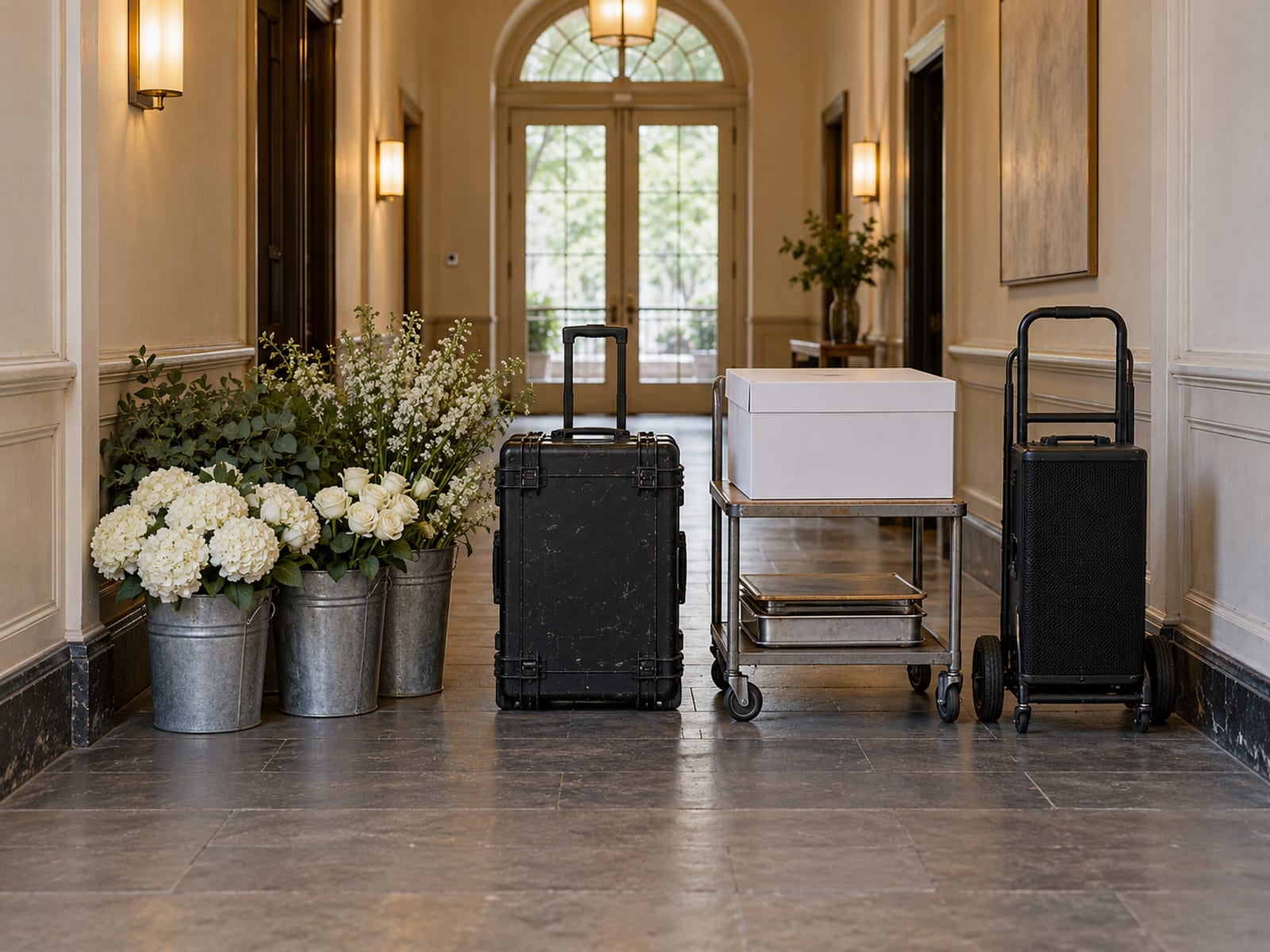
Even a welcome vendor has to get in the door. Ask about:

- Load-in and load-out windows, and whether a vendor may arrive before your rental period starts
- Elevator or loading dock access, and the doorway and elevator dimensions
- Kitchen equipment, power and refrigeration
- Whether equipment can stay overnight
- Who removes trash and rentals
- Equipment or decor that is prohibited, such as open flame, generators or certain sound gear
For food, the permit an outside caterer needs depends on how it operates. NYC Health lists separate permits for food service establishments, temporary food service establishments, mobile food vendors and shared kitchens. NYC311 says a Temporary Food Service Establishment Permit is required to serve food or drinks from a fixed booth or stand at a special event, with a $70 annual fee. A permitted food-service business may not need a separate temporary permit for every event. Ask your caterer which permit it holds, and confirm the current application deadline with NYC Health or NYC311.
Questions to get in writing before you sign
Put these to the venue and keep the answers with your contract:
- Which vendor categories are exclusive, designated, preferred or open?
- Does "preferred" mean recommended, required, approved or cheaper?
- What is the outside-vendor or catering buyout fee, and is it per event or per guest?
- Does the fee apply after tax and service charges?
- Does a coordination package waive any fee?
- What do cake cutting, plating and cake storage cost?
- Can we bring alcohol, and is corkage charged? Can we use our own bartenders?
- What COI limits and additional-insured names are required, and when are they due?
- Is a vendor agreement or first-visit site tour required?
- What are the load-in and load-out windows, and what kitchen, power, refrigeration and elevator access exists?
- Who supplies tables, chairs, linens, china, glassware and staff?
- Who handles setup, breakdown, trash and cleanup?
- What happens if a vendor is late, damages the space or breaks a sound rule?
- Does the contract state the vendor rules as quoted, even if the policy changes later?
A simple document folder with dividers keeps the contract, vendor policy, COIs and permits in one place for load-in day.
Quick check: outside vendors
Answer every question to check.
Questions about outside wedding vendors
A few answers that readers often need once the basics are clear.
Does a preferred vendor list mean I have to use those vendors?
Not automatically. LOFT39 says outside vendors are allowed for several categories if they are licensed and insured. Ask the venue whether its list is optional, and get the answer in writing.
Can I bring my own wedding cake?
Some venues allow it. Atmosfera charges no outside-vendor fee for a cake, but cake cutting and plating are priced separately. Ask about storage as well.
Does a raw space allow every vendor?
No. The Foundry describes itself as a raw space but excludes outside rentals, tent rental and catering. Check each category before you assume.
What happens if my vendor's COI arrives after the deadline?
At 48 Wall Street, vendors cannot enter the property without an approved COI, so a missing certificate can stop load-in. Ask your venue what its deadline is and send documents early.
Your next step
Pick the two or three vendors you most want to keep, and send each venue on your list the same short email asking about those categories, the fees, the COI requirements and the deadlines. Compare the answers side by side, then ask the venue to attach the written vendor rules to your contract before you pay a deposit. To keep going, use the wedding catering guide for menus, and the photographer guide if that vendor is the one you most want to keep.
Terms in this guide
Tap a term to see what it means.
Preferred. A list of vendors the venue knows and works with often; ask whether using the list is optional, required or cheaper.