A bridal shower in New York City is usually a daytime or early-evening gathering for the couple's close friends and family, with food, drinks, gifts, conversation and, if the honoree wants them, a few games or activities. Start by setting four things: the guest count, the total budget, the neighborhood and the format. Then compare restaurants with private rooms, tea rooms, event spaces, homes and outdoor spots. Before you sign anything, ask every venue about minimum spend, room fees, deposits, tax, gratuity, outside cake, alcohol, accessibility, cancellation and the deadline for your final headcount, because those details decide what the shower really costs.
Key takeaways
Tap a card to bring it forward.
- Set the guest count, budget, date window, neighborhood and format before you contact a single venue.
- A food price is rarely the whole bill: room rental, minimums, deposits, tax, gratuity and cake fees can all be separate.
- Anyone other than the couple can host, including relatives, and bridesmaids are not required to host.
- Emily Post puts the ideal timing at two months to two weeks before the wedding, and shower guests should normally be wedding guests too.
- A shower in a NYC park needs a permit if more than 20 people attend, and the application goes in at least 21 days ahead.
What to settle before you book anything
The fastest way to turn a loose idea into a bookable event is to answer a few questions with the couple first. How many people are you realistically inviting? Is the shower for the bride only, or for both of you, meaning a coed or couples' shower? What is the total amount the hosts are willing to spend, counting everything? Which part of the city is easiest for most guests to reach? And what kind of gathering feels right: a brunch, an afternoon tea, a cocktail hour, a relaxed afternoon at someone's apartment?
The date matters too. Emily Post describes the ideal window as two months to two weeks before the wedding, once the couple has firm wedding plans. Within that window, pick two or three possible dates rather than one, since private rooms on weekend afternoons go first and some venues only host private parties on certain days.
With those answers in hand, every venue conversation gets shorter. You can ask whether a room holds your number, whether it fits your budget once fees are added, and whether it is open on your dates, instead of starting from scratch each time.
Which format fits your group
A shower does not need to look like a small wedding. The format you choose shapes the venue, the cost and the mood, so match it to the people coming.
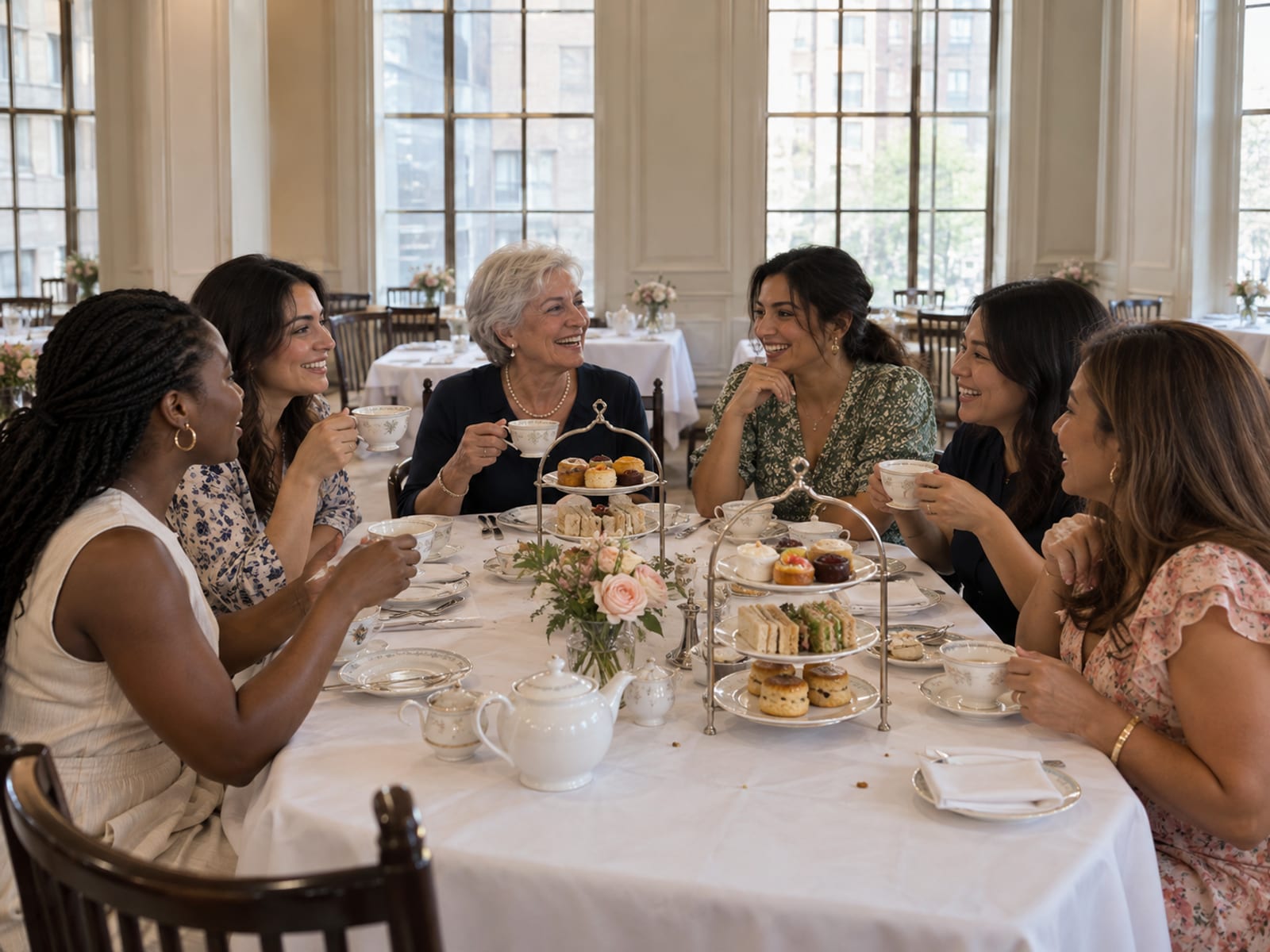
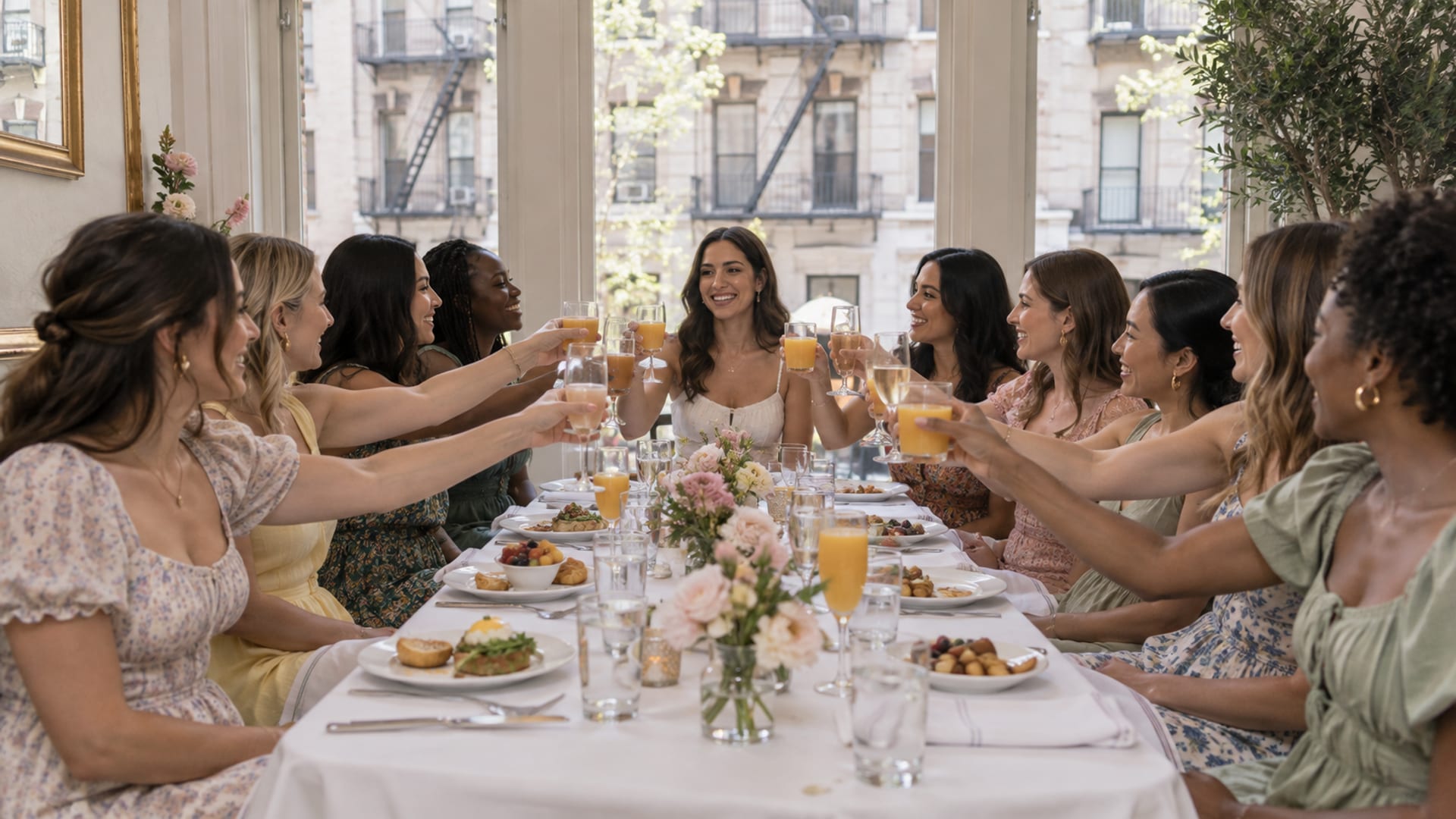
A brunch or lunch suits mixed generations and guests traveling the same day, since it ends in daylight. An afternoon tea is quieter and naturally sized for smaller groups, with a set menu that keeps planning simple. A cocktail gathering in the early evening works for a group of friends and costs more once alcohol is flowing. A home shower gives you the most control over decor, food and games, at the price of setup and cleanup. A couples' or coed shower is a fully accepted format, according to both Emily Post and The Knot, and it tends to lean toward brunch or cocktails rather than tea. An outdoor shower in a park or garden can be lovely in good weather, but it brings permit questions, covered below.
Smaller, more personal gatherings built around the couple's interests, family traditions or favorite food are a common direction right now, as The Knot reports. That is a trend, not a rule; the honoree's own preferences should set the tone.
NYC venue types to compare
Most NYC showers land in one of five kinds of space. Each has its own trade-offs on privacy, price and flexibility.
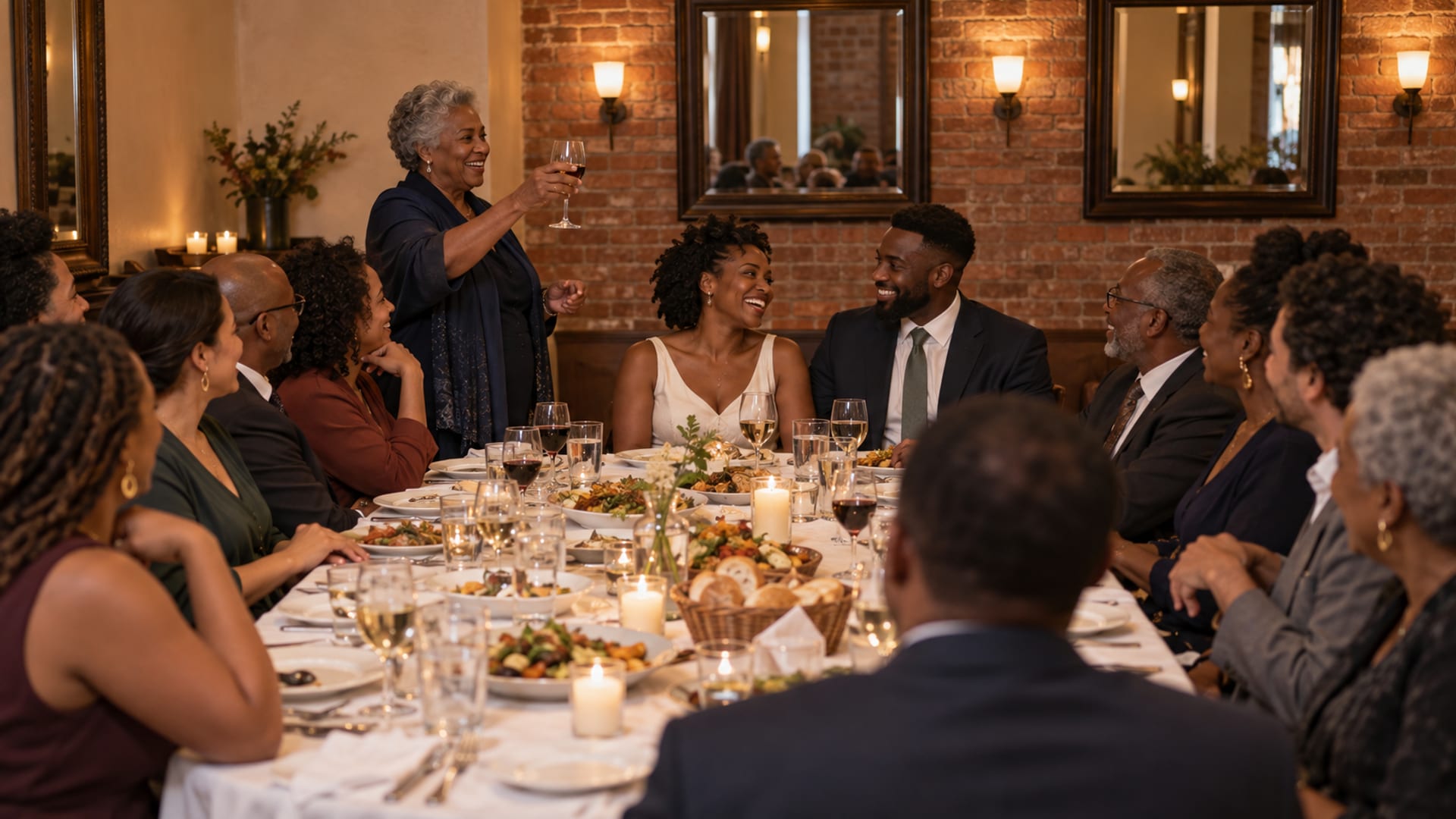
Restaurants with private rooms. Many restaurants offer a private dining room, a semi-private section or a full buyout, with plated or buffet service. Rosemary's Midtown and The Palm Court at The Plaza both list bridal showers among their private events. Neither publishes a full package price, so expect to request a custom quote. When you do, ask whether the room is truly private or shares a wall, a door or a sound system with the main dining room.
Tea rooms. Tea rooms are built for daytime groups and often publish clear terms. Brooklyn High Low runs two-hour private tea parties in Park Slope and Prospect Heights, with room for up to 20 guests in its Parlour and up to 27 in the Prospect Heights tea room or covered garden; ask them for the current package price. Silver Tips Tea posts its full pricing, which is laid out in the cost section below.
Historic tea salons. Lady Mendl's in Gramercy Park lists bridal showers and private events among its uses. Its published hours are Tuesday through Friday from 1 to 4 p.m. and Saturday and Sunday from noon to 5 p.m. It does not post a package price or capacity, so contact the salon for a quote.
Private event spaces and homes. A rented event space or a family member's home lets you choose the caterer, the decor and the activities. In exchange, you handle the details a restaurant would: occupancy limits, insurance, food service, rentals, cleanup, noise and any building rules. There is no standard NYC price here; it depends entirely on the space and your quote.
Parks and outdoor spaces. A park can feel like the simplest option, but it is not automatically the cheapest. Tents, sound, vendors and structures can bring extra requirements and fees from NYC Parks.
What a bridal shower costs in NYC
There is no single official figure for what a NYC shower costs, so the most useful approach is to add up every line of a real quote. The main pieces are food, beverages, room rental, any minimum spend, the deposit, tax, gratuity, the cake, decor and flowers, rentals, and transportation for the honoree or guests.
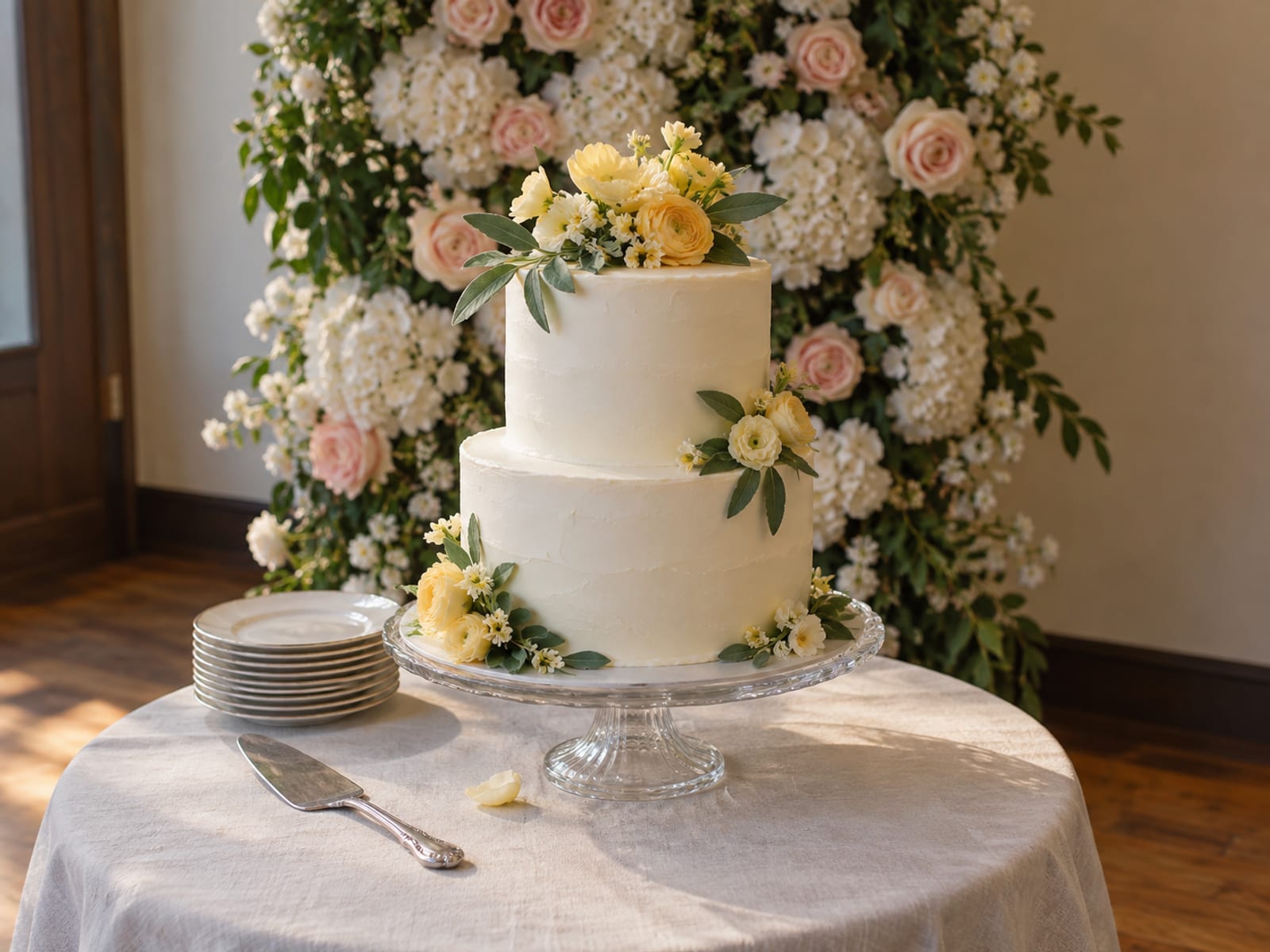
For broad estimates, The Knot, in an article updated May 17, 2023, puts a small event with cocktails and champagne at $1,000 and up, and a larger group or sit-down brunch with free-flowing alcohol at $2,000 to $4,000. It adds that a custom cake, decor and backdrop can run $800 or more on top. A separate Knot article from June 24, 2025 gives a general range of $50 to $150 or more per person. Neither is NYC-specific, so treat them as a starting frame rather than a budget.
A venue's own published terms are more concrete. This is how Silver Tips Tea prices its private parties, as shown on its page on September 28, 2026:
Tap or hover a row to highlight it.
| Item | Partial private room | Full private room |
|---|---|---|
| ItemMaximum guests | Partial private room22 | Full private room36 |
| ItemMinimum charged for | Partial private room14 people | Full private room25 people |
| ItemPrice per person, tax and gratuity included | Partial private room$26 | Full private room$26 |
| ItemRoom rental, two hours | Partial private room$100 | Full private room$200 |
| ItemTotal minimum charge | Partial private room$464 | Full private room$850 |
| ItemDeposit, non-refundable | Partial private room$100 | Full private room$100 |
The same page adds a few rules that affect your budget and your plan: the final headcount is due 48 hours before the event, outside food is not allowed, a second cake carries a $10 cake-cutting fee, and the host brings, opens and serves any champagne or wine. Full-room parties run on Saturdays from 4 to 6 p.m., roughly April through early October, subject to availability. Prices change, so confirm the current figures with the venue before you book.
Notice what that example shows. The per-person price is only one of four numbers; the room fee, the minimum and the deposit shape the total just as much. When a restaurant quotes a minimum spend, ask whether it covers food and drinks only or the entire bill, and whether tax and gratuity are added on top of it.
A realistic budget also leaves room for invitations, flowers, favors, prizes if you plan games, rentals for a home event, and any service fees not already included.
Who hosts and pays
According to Emily Post, anyone other than the engaged couple may host a shower: friends, relatives, the bridal party, or several people together who share the cost. Bridesmaids and the maid of honor often do it, but they are not required to. The older worry that a family-hosted shower looked like asking for gifts has faded, and family members now frequently host.
The Knot describes the maid of honor and bridal party as the most common hosts, with the parents and other relatives often helping to host or pay. The one person who should not host a gift-centered shower is the honoree, as The Knot puts it.
The traditional model is simple: the hosts pay, and guests attend as guests, not as ticket holders. If several co-hosts are splitting the bill, agree on each person's share in writing before anyone pays a deposit or sends an invitation. Keep any contribution voluntary and clear from the start, so no one is surprised by a bill after saying yes.
The couple can still help shape the date, guest list, venue and registry details without paying for or hosting the event.
When to hold it and who to invite
The two-month to two-week window gives you room to work around the couple's schedule, guests' travel and the wedding's final stretch. Settle the date with the couple before you put a deposit down anywhere, since they know what else is already on their calendar.

On the guest list, Emily Post's guidance is that shower guests should normally also be invited to the wedding. The exception is an office shower, where coworkers celebrate without expecting a wedding invitation. If there will be more than one shower, coordinate the lists so the same people are not invited again and again; a guest invited to several showers generally only needs to bring a gift to the first.
Before invitations go out, check these points with the couple:
- Whether the shower is bride-only or coed.
- Whether children or plus-ones are included.
- Whether a separate office or family shower is planned.
- Whether a registry link can go on the invitation.
- Whether the honoree wants gifts opened in front of everyone.
For a bilingual guest list, invitations and directions in both English and Spanish help everyone arrive at the right place at the right time.
What happens at a shower
Most showers follow a loose, easy sequence. Guests arrive and are welcomed, then settle in with brunch, lunch, tea, cocktails or lighter bites; The Knot notes that finger foods work fine in place of a full meal. There is time for conversation and introductions, which helps when the guest list mixes friends and relatives who have not met.
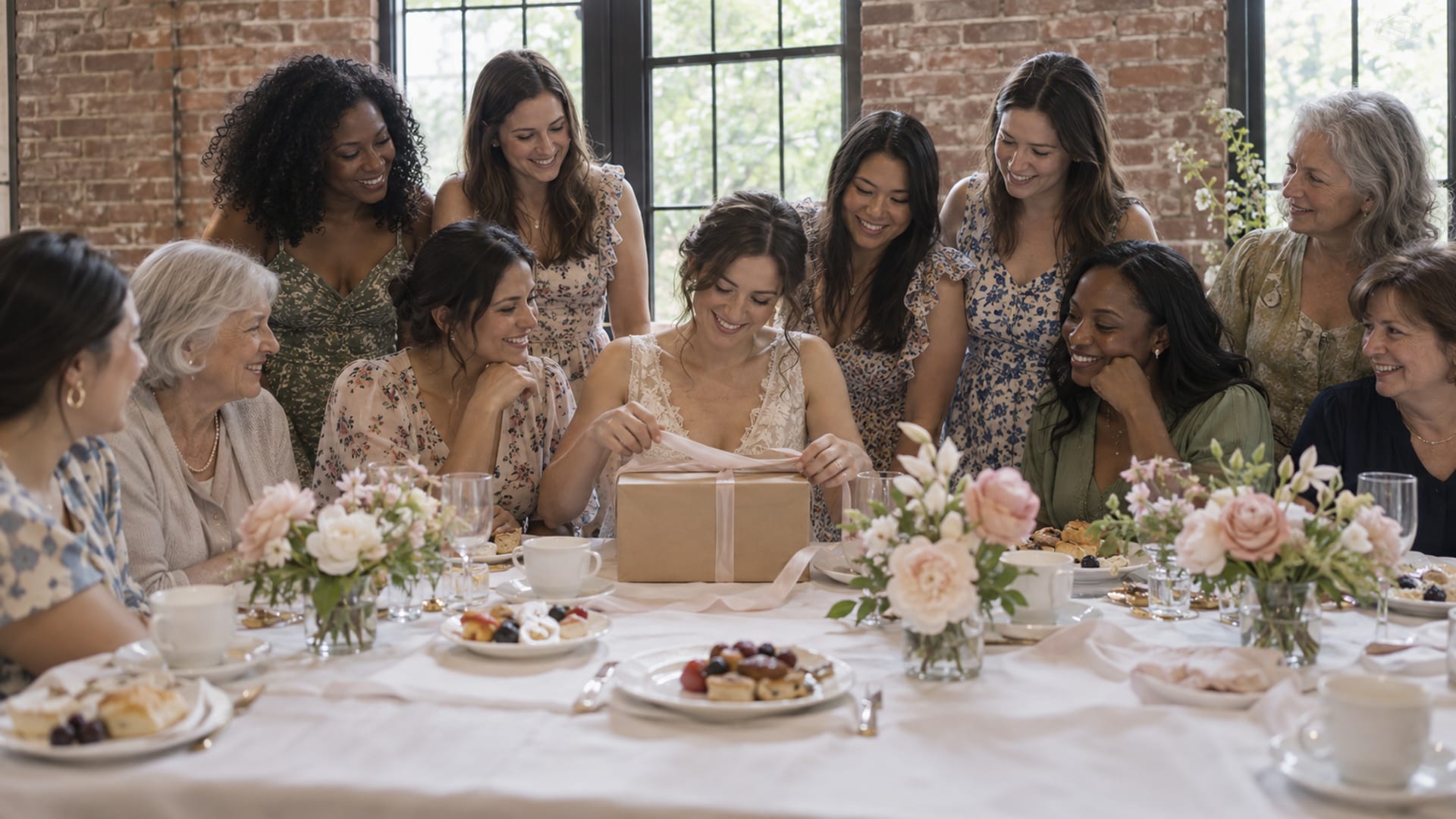
From there, the hosts might run a game or two, such as the Newlywed Game, collect advice cards for the couple, and give a short toast. Cake or dessert follows, then gift opening and a word of thanks or small favors.
How a shower usually flows
Tap or hover a step to follow the order.
Arrival
Guests arrive and are welcomed.
The meal
Brunch, lunch, tea, cocktails or lighter bites; finger foods work fine in place of a full meal.
Conversation
Time for introductions, which helps when friends and relatives have not met.
Games, advice cards and a toast
Optional, and best matched to what the honoree enjoys.
Cake or dessert
Served before the gifts.
Gifts and thanks
Gift opening, then a word of thanks or small favors.
None of it is mandatory. Games are optional, and many hosts now lean toward advice cards, memory books and conversation over games that put the honoree on the spot. Ask what the honoree actually enjoys. As for gifts, The Knot says guests typically bring one unless the invitation says otherwise, and gift cards and money have become more common alongside registry gifts.
If you plan to record gifts for thank-you notes, sturdy gift bags, labels and a simple list of who gave what make the end of the party much smoother.
Guests from outside NYC, and outdoor permits
When some guests are coming from other cities or countries, the venue's location matters as much as its decor. Choose a neighborhood with direct subway access or an easy taxi ride, and avoid a spot that requires several transfers. On the invitation, give the full address, the nearest subway stations, walking directions and an end time, so travelers can plan their trains or flights around it. A daytime shower is kinder to anyone traveling the same day.

Ask the venue whether guests can arrive early, whether there is space for coats, luggage and mobility devices, whether there is an elevator and accessible restroom, and whether it can receive gifts ahead of time. For guests who would rather not carry gifts on a plane, suggest shipping them directly to the couple. Name one contact person guests can reach if they are running late, and share a few hotel options near the venue. The site's guides to where wedding guests should stay by borough and to getting guests around the city cover both in detail.
If you want the shower in a public park, check the numbers first. NYC Parks requires a special event permit for any event with more than 20 attendees. Applications must be submitted at least 21 days before the event and are not accepted closer than that, and there is a $25 non-refundable processing fee. Even a smaller group may need a permit if you plan to reserve space or bring amplified sound, tents, signage, vendors or generators, and those elements can add fees or review. Confirm your exact plan with NYC Parks before you tell guests where to go, and give yourself well more than 21 days in case the application needs changes.
Quick check: timing, permits and venue rules
Answer every question to check.
Questions hosts ask about NYC bridal showers
These cover the points that come up once the venue is chosen.
How is a bridal shower different from a bachelorette party?
A shower is usually gift-centered and includes family, often across generations. A bachelorette party is typically built around an activity or a night out with friends. They have different guest lists, so plan them as separate events.
Is a rehearsal dinner a substitute for a shower?
No. A rehearsal dinner is a meal tied to the ceremony rehearsal, usually with a different host and a guest list centered on the wedding party. The shower is its own celebration with its own purpose.
What should I get in writing before paying a deposit?
Ask for a complete written quote covering capacity, privacy, minimum spend, room fee, deposit, tax, gratuity, service fees, overtime, the menu, alcohol and cake rules, outside vendors, accessibility, event length, the cancellation and rescheduling policy, and the final headcount deadline. Silver Tips Tea's 48-hour headcount deadline is one example of how early a venue may lock your number.
Do guests need to bring a gift to every shower?
No. Emily Post says a guest invited to more than one shower generally only needs to bring a gift to the first. That is one more reason to coordinate guest lists between hosts.
Your next step
Once the couple has agreed on the guest count, budget and date window, contact two or three venues of the type that fits your group and ask each for a full written quote. If the shower is part of a larger wedding weekend, the site's guides to planning a wedding weekend with out-of-town guests, planning a bachelorette party and planning a rehearsal dinner help you fit the pieces together. When you are ready to book the details, the vendor directory lists venues, planners, florists, cake makers, party rentals and transportation across New York City.