Start your seating chart once most RSVPs are in. Then confirm four things with your venue and caterer: the table sizes, the room diagram, the meal format and the final-count deadline. You can also share any access needs at that point.
Assign tables first. Assign exact seats only when plated meals, long tables, family dynamics or access needs make that useful. A seating chart or escort card tells guests which table to find. A place card tells them which chair to take.
There is no single arrangement you have to copy. The room, the meal service and the people at your wedding decide what works, and your venue's contract decides when the plan is due.
Key takeaways
Tap a card to bring it forward.
- Start once RSVPs are mostly in, and group guests before the RSVP deadline.
- Assign tables first; add exact seats only where they help.
- Use your venue's and rental company's own capacities, not a general rule.
- Every head, sweetheart or family table is a choice, not a requirement.
- Ask your caterer how it wants meal choices marked before you print anything.
- The contract sets the final-count and chart deadline, so confirm each date in writing.
What to collect before you assign a single table
A table plan is only as good as the list behind it. Build one sheet with a row for each guest and these columns: name, RSVP status, household, plus-one, meal choice, dietary or allergy note, child or adult, relationship group (family, college friends, coworkers) and any access note. A shared spreadsheet works, and so does the guest list in a planning app.
If the list itself is still taking shape, start with how to build your wedding guest list in NYC. For collecting RSVPs and meal choices from guests, see wedding website, invitations and RSVPs for an NYC wedding.
Group guests before the RSVP deadline, then finalize after the replies are confirmed. Moving a few names is easy at that stage. Rebuilding a printed chart is not.
What your venue needs to give you before you draw the chart
Ask the venue for its table inventory, the dimensions of each table, the number of guests it considers comfortable at each, the furniture that is included and a current room diagram. If tables and chairs are rented separately, the rental company's dimensions and delivery details belong on the same list.
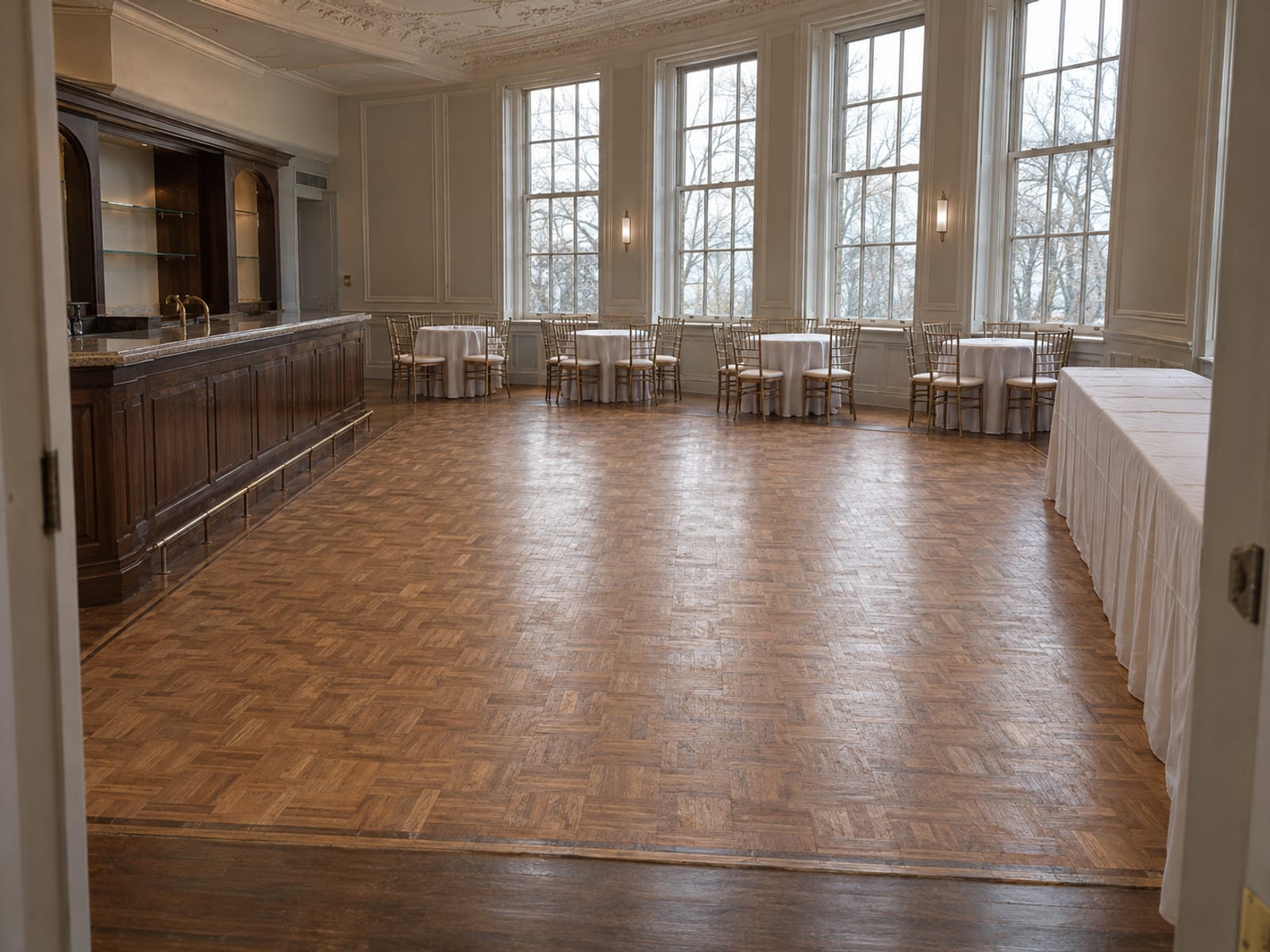
Ask one more question about the diagram: does it show the usable floor once the bar, buffet or service stations, dance floor and walking routes are in place? A diagram can show the whole room while the space left for tables is smaller. Confirm that and get the answer in writing.
Venue capacity can also change with the format of the event. BLACKBARN, for example, publishes different capacities for a seated dinner and a cocktail-style event. Confirm which number applies to your reception and whether the couple, children and vendors count toward it.
How many guests fit at each table
Capacity depends on the table size and on the supplier. Abbott's Party Rental in Manhattan publishes this list, read November 5, 2026. Its page notes that pricing changed as of November 1, 2024, so confirm prices and availability with the company.
Tap or hover a row to highlight it.
| Table | Published seats | Published rental price |
|---|---|---|
| Table30-inch round | Published seats2 to 4 | Published rental price$10.25 each |
| Table48-inch round | Published seats6 to 8 | Published rental price$10.25 each |
| Table54-inch round | Published seats7 to 9 | Published rental price$11.00 each |
| Table60-inch round | Published seats8 to 10 | Published rental price$11.00 each |
| Table4-foot rectangle (48 x 30 inches) | Published seats6 | Published rental price$10.25 each |
| Table6-foot rectangle (72 x 30 inches) | Published seats8 | Published rental price$11.00 each |
| Table8-foot rectangle (96 x 30 inches) | Published seats10 | Published rental price$12.00 each |
Other suppliers give similar ranges. A SoHo63 wedding information sheet lists 8 to 10 guests at a 60-inch round, and East Coast Event Rentals recommends 8 to 10 seats at an 8-foot by 30-inch banquet table. Use the figures from the supplier or venue you are actually booking.
The top of a range is a maximum, not always a comfortable number. Chargers, large centerpieces, shared platters and room for a wheelchair or a server to pass all take space, so ask what the venue seats comfortably.
Round, rectangular, king's and mixed layouts each have a place. Rounds make it easy for everyone to talk across the table. Long tables use a room efficiently and suit family-style service. A king's table, one long table for the whole group, can seat family or the wedding party together. No shape is best; choose the one that fits your room and your guests.
Tables or exact seats, and the three kinds of cards
Assigning tables means each guest knows their table and picks any open chair there. Assigning exact seats means every chair has a name. Exact seats help with plated meals where servers need to match dishes to people, with long tables, with family dynamics and with access needs. For a relaxed dinner, tables alone are often enough.
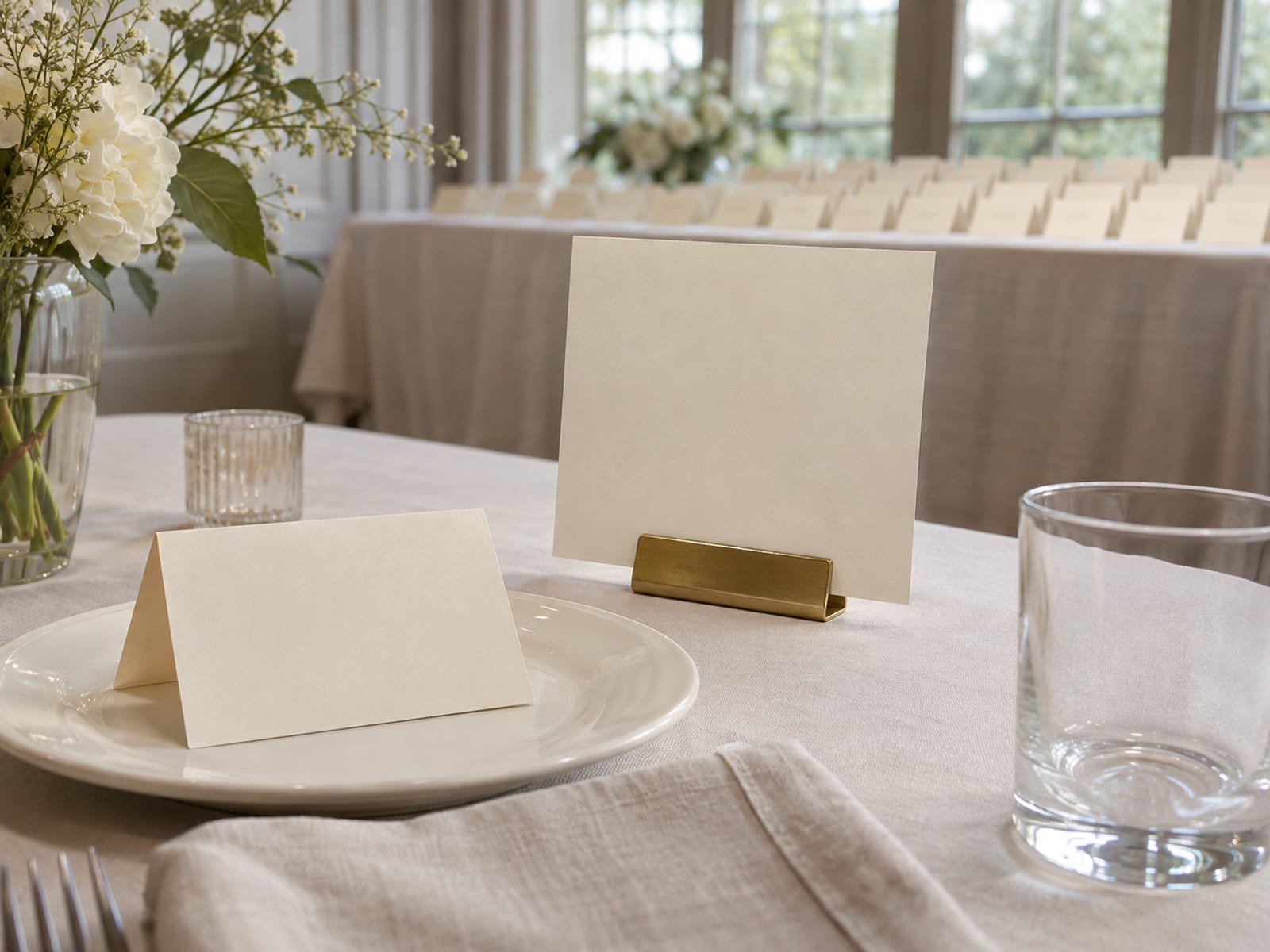
Three items do different jobs:
- A seating chart is one display, often near the reception entrance, that lists guests and their tables.
- An escort card is a small card a guest picks up on arrival that names their table.
- A place card sits at the table and marks one specific chair.
A seating chart and escort cards solve the same problem, finding the table, so most couples use one or the other. Add place cards only if you are assigning exact chairs or the caterer wants meal information at the seat. For a large display, listing names alphabetically helps guests find themselves quickly; listing by table works too. Confirm with your venue where the display can stand and who sets it up.
Where to seat the couple, the wedding party and your parents
The Knot describes several arrangements as choices. A sweetheart table seats only the two of you. A head table seats you with your wedding party and their partners. A family table can seat parents, grandparents, the officiant and close family or friends. You can also use a king's table or place your closest people at nearby tables.
Two small points from the same guidance may help. Wedding-party partners generally should not be separated because only one of them is in the wedding party. A couple should not end up on opposite sides of a large centerpiece.
For help deciding who stands with you, see choosing your wedding party in NYC. Where you sit also affects sightlines and sound for toasts, so ask your photographer, DJ or band where they will set up before you commit.
Seating families, friends, guests on their own, children and guests with access needs
Start with natural groups: a family branch, college friends, coworkers. Keep couples and invited plus-ones together. When you must split a group, split it so nobody is left alone at a table of strangers.

For guests attending without a plus-one, seat them with friends, family or people likely to enjoy the conversation. The Knot advises against a designated singles table because it can make guests feel singled out.
Children usually do best near their parents. A children's table can work when it is close to the adults who know them. Ask the parents what they prefer, and check the venue about high chairs and meal timing.
Guests with access needs may need a table near an entrance, a wide route to the table, a place away from loud speakers or a seat with a clear view. Ask the guest what would help rather than assuming. Then confirm with the venue that the route from the door to the table is clear on your room diagram.
For divorced or remarried parents, there is no standard formula. The arrangement depends on the people. Some families sit together comfortably; in others, separate tables or extra distance feel kinder. Ask each parent what they would prefer. Emily Post's ceremony-seating advice makes a similar point, suggesting a carefully planned arrangement with clear instructions when parents are divorced.
Marking meal choices and knowing when the chart is due
Your caterer decides how meal choices must be marked. Some use icons, initials, colored cards or codes; others work from a separate table-by-table service list. Confirm with the caterer before you print anything:
- Whether meal choices must appear on place cards, and whether dietary and allergy notes must be visible to servers.
- Whether children's and vendor meals use separate codes.
- Whether the caterer needs seat numbers or only table numbers.
- Who supplies and places the cards, and what happens if a guest changes a meal after printing.
Skip made-up symbols until the caterer approves them. A chicken icon that means nothing to the kitchen helps no one.
The deadline lives in your contract. BLACKBARN publishes a guaranteed guest count due 14 days before the wedding, and the count may rise up to 10 percent afterward but cannot fall. The Columns Banquets also publishes a 14-day final-count deadline in its 2026 wedding guide. These are examples of those venues' policies, not a citywide rule, so your venue may differ.
Ask for each date separately, because they can be different: the RSVP deadline, final guest count, meal-choice deadline, dietary and allergy deadline, seating-chart deadline, rental cutoff, place-card proof and final payment. Also ask whether the chart can change after the final count.
What to send the venue and caterer, and a final check
Send one checked package: the final guest count, meal totals, dietary and allergy notes, table and seat assignments if the caterer asks for them, the room layout, a proof of any printed cards, the table-number list and the name and phone number of the person who approves late changes.

Before you send it, check each of these:
- Every name is spelled the way the guest spells it, including accents and hyphens.
- Every RSVP is confirmed, and each plus-one is listed.
- Meal choices and allergy notes match the RSVP sheet.
- No table holds more guests than the supplier's capacity.
- Table numbers on the chart match the numbers on the tables.
- Printed cards are proofed, with a spare set of blank cards.
- One person is named to place cards on the day and to fix a late change.
A few simple supplies help that person: an accordion folder or clipboard for the diagram, contract dates and meal report, a fine-tip marker, removable tape and blank cards that match the printed ones. If your seating display will be outdoors or on a rooftop, look for materials that resist moisture and keep a backup file ready to reprint.
The chart is a planning document, not a permit. If your reception is in a park or on a beach, NYC Parks says an event with more than 20 attendees needs a special-event permit, applied for at least 21 days ahead, and tents, sound or signs may carry added requirements. Occupancy and exit rules are a separate matter, so ask the venue for its approved capacity and aisle requirements.
Quick check: your seating chart
Answer every question to check.
Questions about wedding seating charts
These short answers cover what couples ask most often.
Do you have to assign exact seats?
No. You can assign tables only. Exact seats are worth the extra work when the meal is plated, the tables are long, accessibility matters or family dynamics call for it.
How many people fit at a round table?
It depends on the diameter and the supplier. Abbott's Party Rental publishes 6 to 8 at a 48-inch round, 7 to 9 at a 54-inch round and 8 to 10 at a 60-inch round. Check the number for the tables your venue or rental company will actually bring.
Should the seating chart be alphabetical?
An alphabetical display helps guests find their names fast, especially at a larger wedding. A table-by-table display also works. Choose the one your guests can scan most easily where it will stand.
Who sits at a sweetheart table?
Only the two of you. The wedding party and family can sit at tables close by.
Does the seating chart need a permit?
No. The chart is a plan for your guests. A permit may apply to the place where the reception happens, such as a park, so confirm that with your venue or the permitting office.
Your next step
Open the venue contract today and write down every deadline that touches seating: the final count, meal choices, the chart and any rental cutoff. Then email the venue and caterer for the room diagram, the table sizes and the meal-marking format they want. With those three answers in hand, you can start grouping guests.
Terms in this guide
Tap a term to see what it means.
Seating chart. One display, often near the reception entrance, that lists guests and their tables.