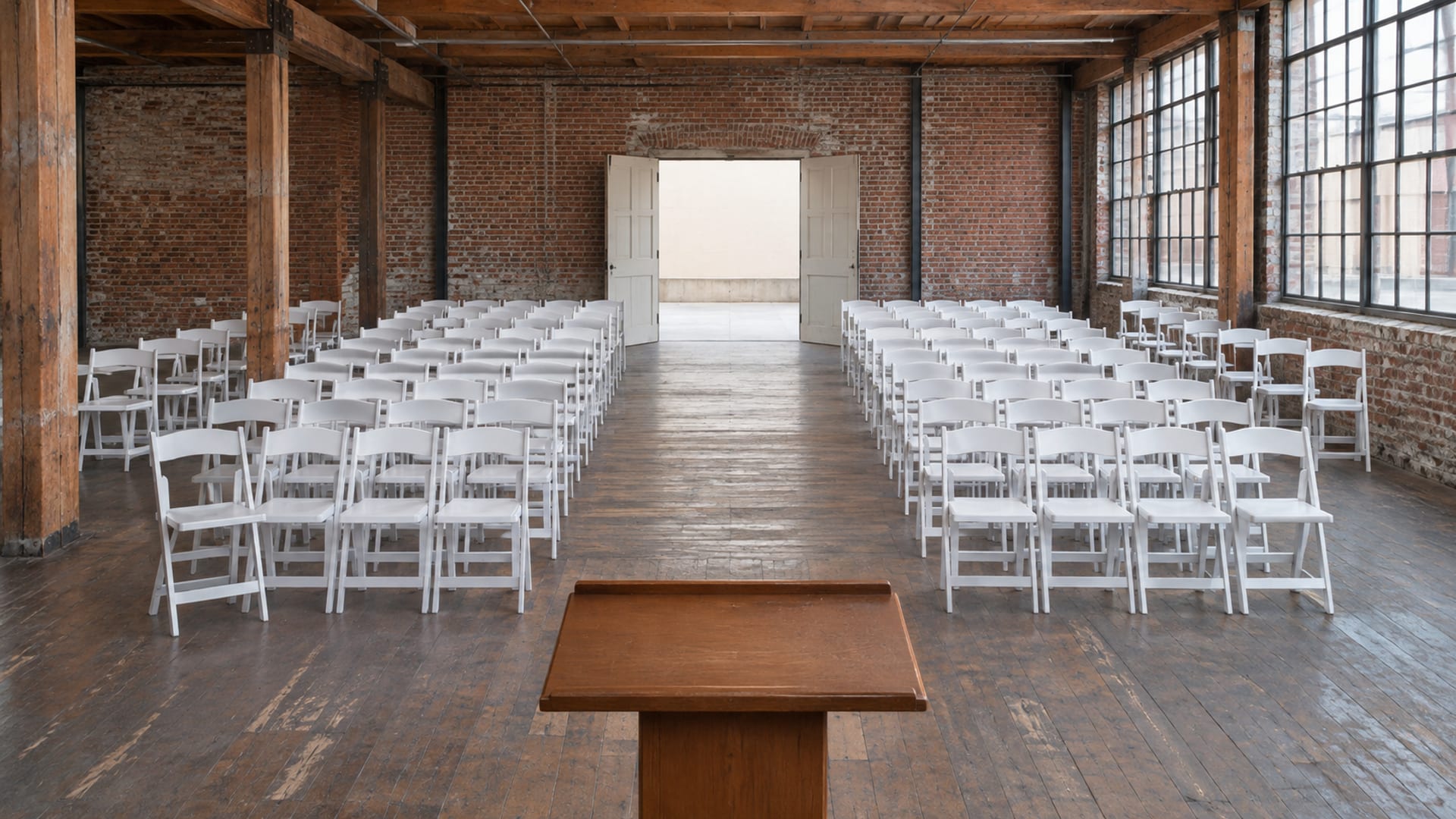
A venue's advertised capacity is where your planning starts, not where it ends. In New York City, a space where 75 or more people gather indoors (or on a roof terrace), or 200 or more gather outdoors, generally needs a Place of Assembly Certificate of Operation from the Department of Buildings, and an FDNY Place of Assembly permit on top of it.
Ask the venue for those two documents and its Certificate of Occupancy before you pay a deposit.
Then do two things. Ask for the approved seating plan and hold it up against your own ceremony seats, tables, bar, band, dance floor and guest count. And search the venue's address in DOB's Building Information System (BIS) and DOB NOW, so the records and the sales page tell the same story.
One more line for your list: candles, decor and temporary layouts can need their own review under the Fire Code. The sections below cover each step in the order you will likely meet it.
Key takeaways
Tap a card to bring it forward.
- Ask for the Certificate of Occupancy, the Place of Assembly Certificate of Operation and the current FDNY permit, not just a capacity number.
- The certificate generally applies at 75 or more people indoors or on a roof terrace, and at 200 or more outdoors.
- Seated, standing and ceremony capacities are different numbers; ask for the one that matches your exact layout.
- Look up the address in both BIS and DOB NOW, because DOB NOW filings do not appear in BIS.
- Candles and open flames have their own rules and may need an FDNY permit, so ask before you order them.
- Put the stated layout, the maximum and who handles permits into the contract.
What does a venue's capacity number actually tell you?
The number on a venue's website is a marketing figure unless the venue ties it to an approved plan. The legal limit comes from the building's approved occupancy, its layout, whether people sit or stand, and its exits. A venue can honestly list a bigger number for a standing cocktail hour than for a seated dinner, and a smaller one once a dance floor and a band take up the middle of the room.
Ask three plain questions. Does the posted occupancy cover the whole building or only your room? Do staff and vendors count toward it? And what is the number for your ceremony, your dinner and your party, each on its own? The 75-person threshold covers people gathering in the space, and you should ask the venue to confirm how it counts staff for your event.
Once you know the real limit, the guest list becomes a design problem you can solve. For help building and trimming that list, see how to build your wedding guest list in NYC.
When does a Place of Assembly certificate apply, and who issues what?
DOB describes the Place of Assembly Certificate of Operation (often shortened to PACO) as the certificate for premises where people gather for social, recreational, religious, educational or political reasons, or to eat and drink. A wedding reception fits the social and food-and-drink uses. The threshold is 75 or more people indoors or on a roof terrace, and 200 or more outdoors.
Two agencies are involved, and the documents are not the same. DOB issues the certificate after plan approval and inspection. FDNY separately inspects and issues the Place of Assembly permit, which NYC311 says is renewed every year. Ask the venue for both, and ask to see the current permit rather than an old copy.
Below 75 people, the Fire Code still applies. Smaller restaurants and rooms keep their obligations for exits, aisles and open flames, so ask which approvals cover your space and your date even when your guest count is modest.
How long a certificate lasts is described differently on DOB's pages. DOB's project page says the initial certificate is good for one year, while NYC311 says it does not expire. The venue's actual record is the thing that counts, so ask for the current one and ask when the FDNY permit was last renewed.
How do seated, standing and ceremony capacities differ?
The same room carries different numbers depending on how you use it. Venues publish these themselves, and they are a useful way to see the gap between formats. They are the venues' own figures, not legal determinations, so each venue still needs to match them to its approved plan.
Tap or hover a row to highlight it.
| Venue | Published capacity | Layout |
|---|---|---|
| VenueThe Pierre, Cotillion Ballroom | Published capacity360 seated, 450 standing | LayoutBallroom and ceremony setting |
| VenueThe Pierre, Rotunda | Published capacity50 seated, 100 standing | LayoutEvent space |
| VenueDuggal Greenhouse | Published capacity1,200 seated at rounds with a stage; 1,400 seated theatre-style; 3,000 standing | LayoutRaw, custom-build venue |
| VenueThe Green Building | Published capacity160 sit-down dinner with dance floor; 250 cocktail; 200 standing in the courtyard | LayoutIndoor and courtyard space |
The pattern is the point. At Duggal Greenhouse, rows of theatre-style seats hold more than dinner rounds with a stage, and standing holds more than either. At The Green Building, adding a dance floor to a sit-down dinner brings the count to 160, well under the 250 listed for a cocktail party. The American Museum of Natural History lists 400 for a seated dinner with a dance floor and stage, and says that figure is an estimate that can vary with the design and setup.
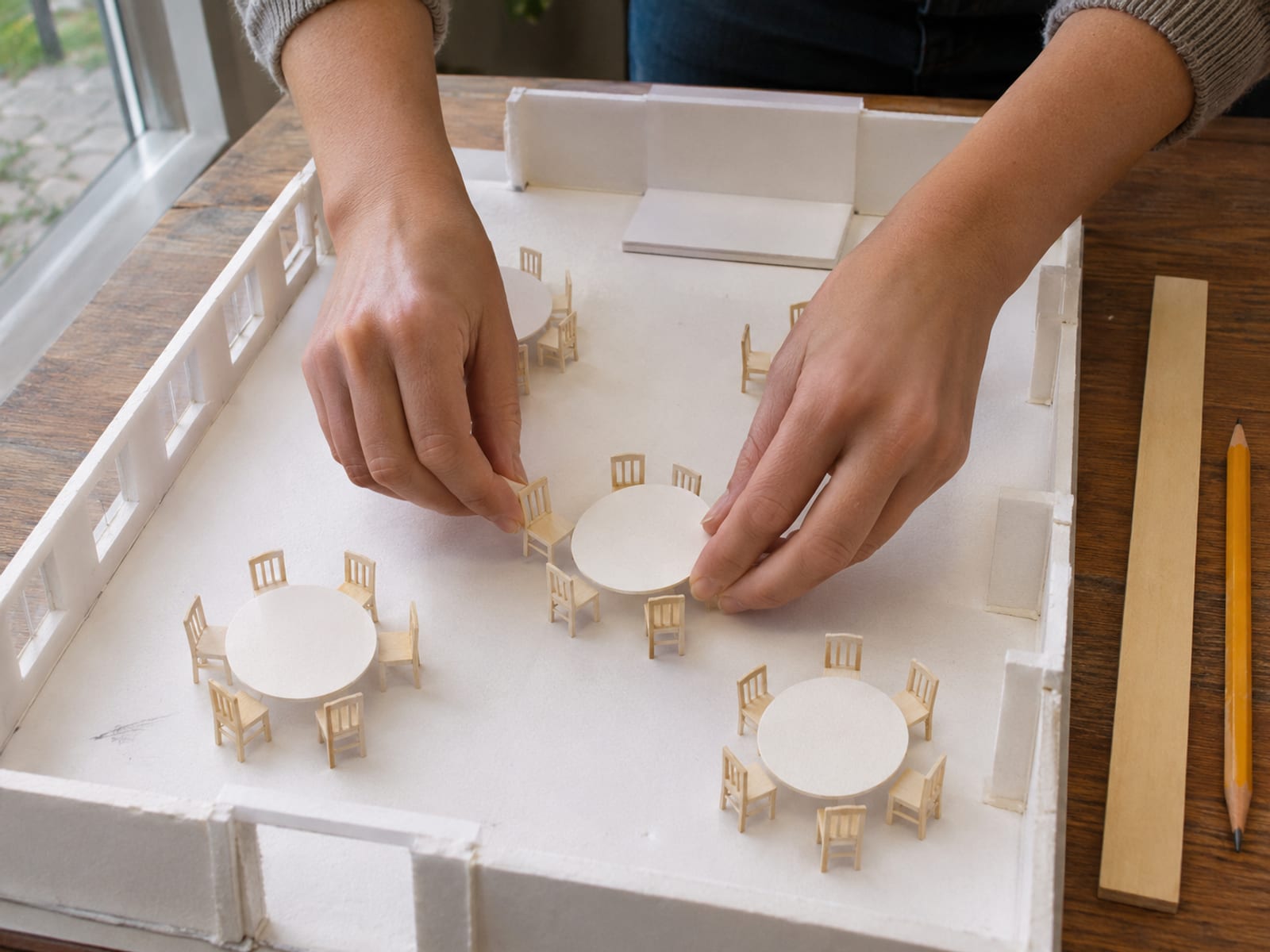
When a venue quotes a number, ask which row of that table it belongs in.
Which documents should you ask for before booking?
Make the request in writing, with the exact room, floor and street address in the message. A venue that runs events regularly will usually have these ready.
- The Certificate of Occupancy for the building.
- The Place of Assembly Certificate of Operation that covers your room.
- The current FDNY Place of Assembly permit.
- The approved seating plan, and the capacity for your ceremony, dinner and standing layouts.
- A photo or note of the posted occupancy sign; DOB says the sign must be permanently posted in a conspicuous place.
- The venue's policy on candles and open flames.
- Any temporary Place of Assembly approval, if your space does not have a permanent certificate.
If a venue cannot or will not produce these, pause the booking. Ask the venue to explain, and confirm its status with DOB, FDNY or 311 before you commit money.
How do you check a venue in BIS and DOB NOW?
An online record is not a final safety ruling, but it shows you whether the venue's paperwork and its marketing match. You need the venue's full street address, and its building identification number (BIN) if you can find it. DOB's FAQ notes that a BIN search catches more than an address search, since one building can have several addresses.
- Pick the borough and enter the full address, or the BIN, in the DOB NOW public portal.
- Open the Property Profile, and use the More Options control to see the approved Schedule of Occupancy where it is available.
- Look at the Certificate of Occupancy, any violations, complaints and applications listed for the address.
- Search BIS separately for older jobs, Certificates of Occupancy, filings and violations. DOB NOW jobs do not appear in BIS, so you need both.
- Look for Place of Assembly records, then compare the address, floor and room use with the space the venue is selling you.
- Ask the venue to explain anything that does not line up, such as an open violation, an expired permit or a different use from the one on your contract.
DOB says an NYC.ID account is needed for some DOB NOW functions, so set that up before you start if the portal asks for it.
What do the fire rules mean for aisles, exits and layout?
This is where a floor plan meets real safety rules. FDNY tells the public to look for lighted exit signs, working fire alarms, sprinklers and exits that are not chained or blocked, and to watch for shoulder-to-shoulder crowding where people cannot move.
In practice, that means the posted occupancy notice should be visible, the room should have more than one clear way out, and no exit should be blocked, chained or left unlit. Furniture and decor stay out of aisles and exit paths. Spaces with seats and tables need aisles that lead to exits, and the building code sets minimum aisle widths. The code text DOB publishes lists 42 inches for a level aisle with seating on both sides, with stated exceptions.
Do not work out an aisle width from that number yourself. The approved plan and the venue's actual arrangement control, so when a caterer wants one more table or a band wants the corner by the door, ask the venue to check the plan first.
Can you use candles, sparklers and other decorations?
Often yes, within limits, and the limits come from the Fire Code. Candles and other open flames in assembly spaces are generally prohibited unless an exception and its safety conditions are met. The 2022 Fire Code adds that lit open flames must be attended, protected from accidental contact, held in a secure holder so they cannot tip, set on a noncombustible surface, and kept at least 3 feet from combustible material.
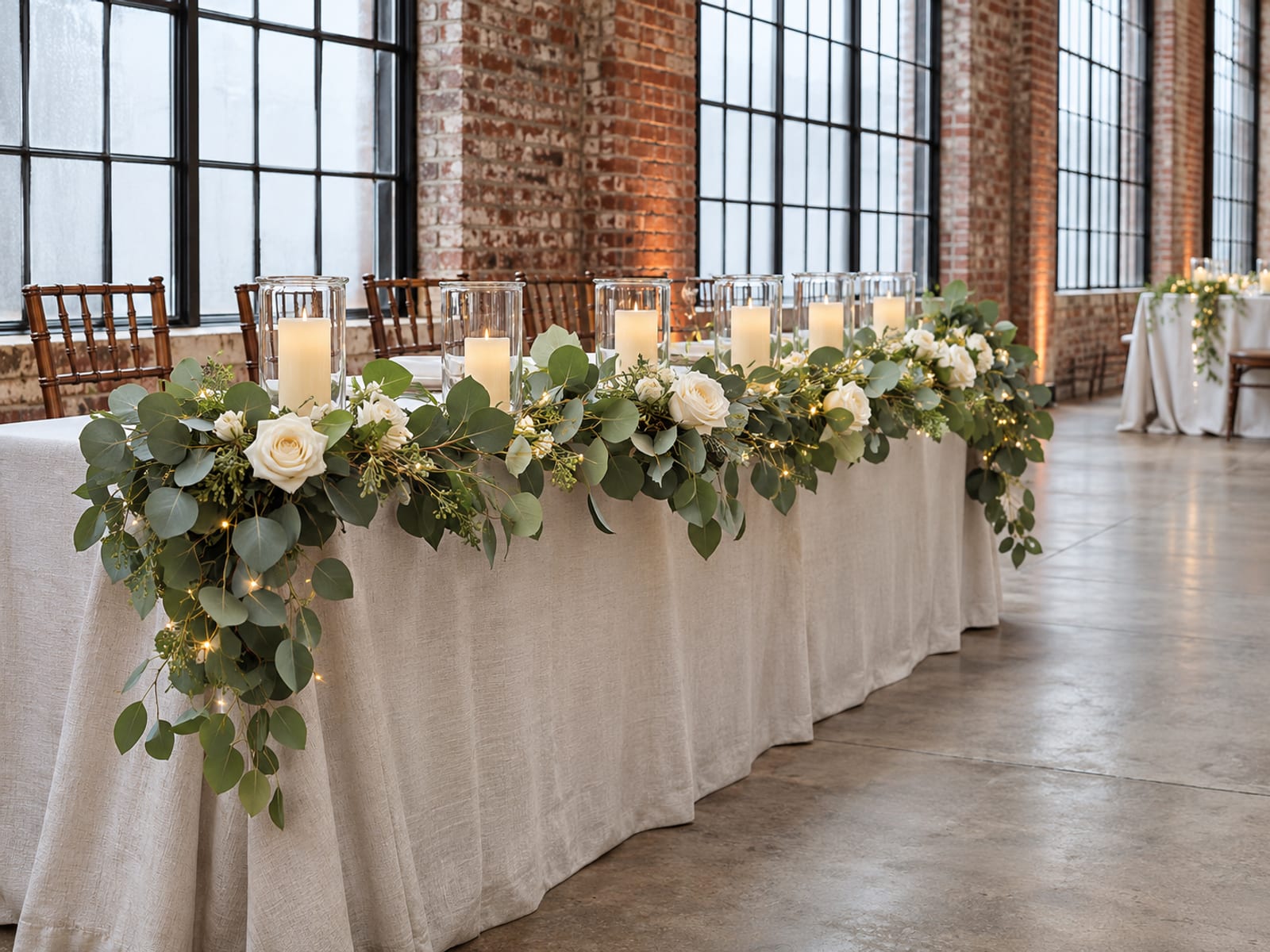
FDNY's rules prohibit lighted candles in an aisle or exit, or where people stand. Decorations near flames should be flame-resistant. Fireworks and special effects need their own permit.
An FDNY Open Flame Permit may be required for tabletop candles and decorative devices. FDNY's restaurant fire-safety guide lists a $210 inspection fee for that permit, so ask whether the venue already holds it, whether it covers your setup or your vendor, and confirm the current fee with FDNY. Ask which candle holders are allowed and where candles can sit, and get approval in writing before you order anything.
What changes for rooftops, lofts and raw spaces?
Rooftops are the surprise for many couples. DOB treats rooftop terraces and rooftop spaces 20 feet or more above or below grade as indoor spaces for this purpose, so the 75-person threshold applies, not the 200 outdoors. DOB also counts the occupant load of a rooftop terrace at 10 square feet per person for the area in use, with attention to exits, travel distances and lighting. Our guide to rooftop weddings in NYC covers permits, cost and the weather plan.
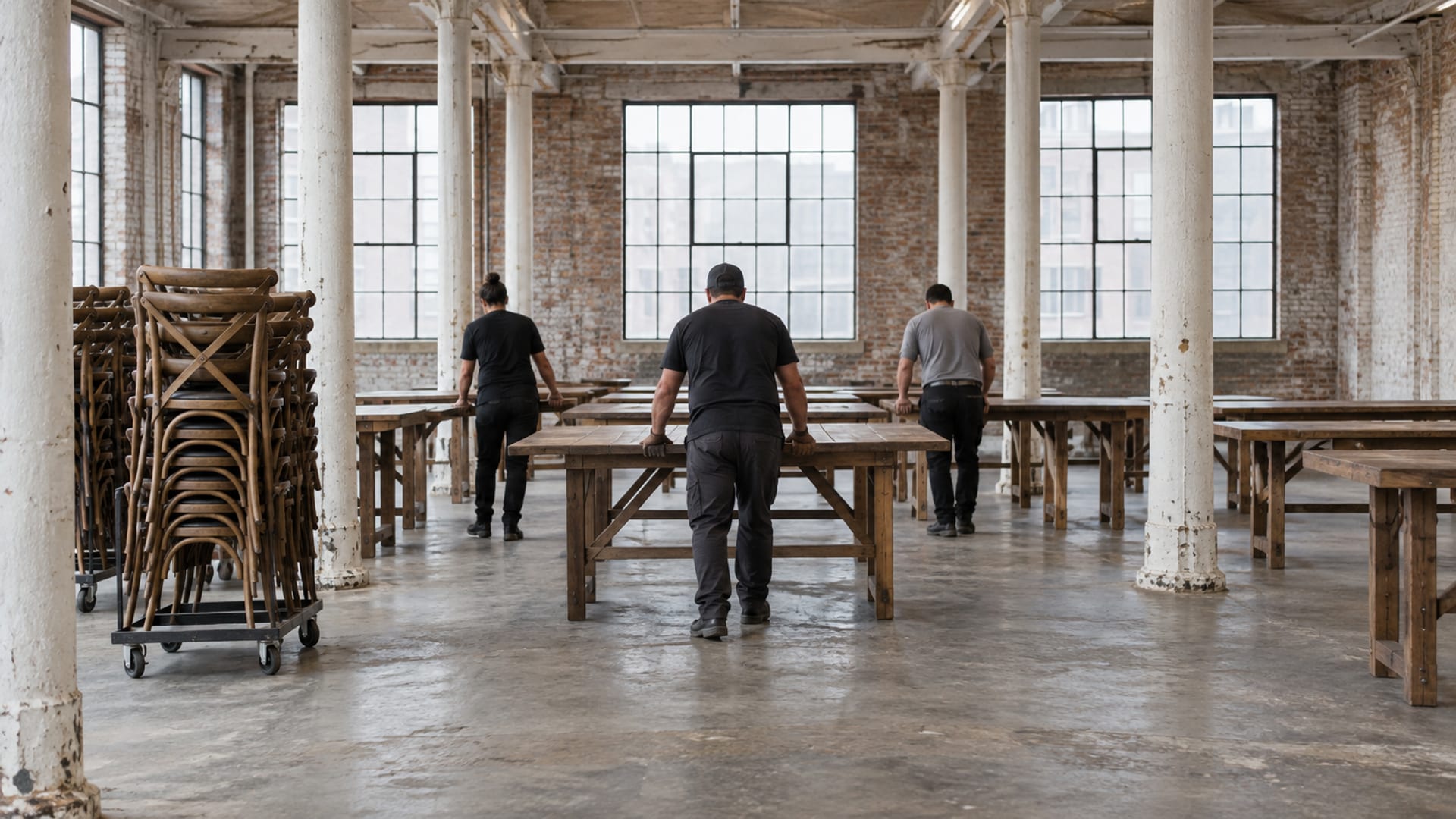
Lofts, galleries and raw industrial rooms are more varied. Where no permanent certificate covers the space, DOB says a temporary Place of Assembly Certificate of Operation may be needed, especially when tents, grandstands or bleachers are installed. A 2022 code note lists a $250 application fee plus $100 a day when the filing is late, and DOB's FAQ suggests filing at least 10 business days before the event. Confirm the current fee and timing with DOB, and ask who files it.
An unnamed warehouse or private loft with no venue information is a reason to ask more questions, not a reason to assume it is fine. See loft and raw space weddings for the layout side of those rooms.
What belongs in the venue contract?
Your contract is where the checks you did become promises. Write down the exact room, the layout you are booking and the maximum guest count for it, whether the figure counts staff and vendors, and which document backs the number.
Say who obtains permits and who pays for them, including any temporary Place of Assembly filing, an open-flame permit and any fire-safety personnel the event needs. Add what happens if the layout you want differs from the approved plan: who decides, who pays for a change, and whether you can cancel if the venue cannot deliver the room as sold.
If your guest list is small, a smaller room may fit more comfortably and stay under the 75-person line. See small wedding venues in NYC for those options.
Quick check: capacity and fire rules
Answer every question to check.
Questions couples ask about venue capacity and fire rules
These are the short answers to the questions that come up most often once the paperwork starts.
Does every NYC wedding venue need a Place of Assembly permit?
A certificate and an FDNY permit are generally required when 75 or more people gather indoors or on a roof terrace, or 200 or more gather outdoors. Smaller gatherings still fall under the Fire Code, so ask the venue which approvals apply to your event.
Is the posted occupancy the same as the wedding capacity?
Not necessarily. The posted occupancy is the legal limit for the space, while a venue's wedding capacity can be lower for a given layout once you add ceremony seating, a stage and a dance floor. Ask for the figure that matches your exact setup.
Does a short, private wedding need a temporary Place of Assembly filing?
It can. A temporary event in a space that is not permanently approved for assembly, or one with temporary structures, may need a temporary certificate. Confirm with DOB or the venue's registered design professional, and allow time to file.
What if I would rather read this in Spanish?
Not every DOB and FDNY page has a Spanish version. The NYC Business Spanish page says a location hosting events for 75 or more people needs a place-of-assembly permit, and 311 can help with language access. Useful terms to bring to the venue include aforo máximo, certificado de operación de lugar de reunión, plano aprobado and salida de emergencia.
What should you do next?
Pick your top venue and send one written request this week. Include the exact address and room, your guest count and your planned layout, and ask for the Certificate of Occupancy, the Place of Assembly certificate, the current FDNY permit, the approved seating plan and the capacity for your ceremony, dinner and party formats.
While you wait, search the address in BIS and DOB NOW. If what comes back matches what the venue told you, you can book with confidence. If it does not, ask the venue to explain before you sign.
Terms in this guide
Tap a term to see what it means.
PACO. The Place of Assembly Certificate of Operation, which DOB issues after plan approval and inspection.