Build the photo timeline backward from three fixed points: the ceremony start, sunset on your exact date, and the places you want in your portraits. Everything else fits around those.
A first look creates a pre-ceremony block for couple portraits, wedding-party photos and some family groups. Without one, plan a post-ceremony block (photographers often suggest at least 45 to 60 minutes) plus travel time.
Give the family photos a named list and one person who gathers relatives. When time is short, pick one compact photo zone, and confirm park and equipment rules before you count on a location.
Key takeaways
Tap a card to bring it forward.
- A first look is optional; it moves portraits before the ceremony and usually protects cocktail hour.
- Published family-photo estimates run 15 to 30 minutes for the block and 2 to 3 minutes per grouping, so list size sets the time.
- Plan at least 30 minutes of travel between NYC photo locations, and choose one zone when time is tight.
- Look up sunset for your exact date: June 1, 2026 was 8:21 PM and December 1, 2026 was 4:29 PM.
- Simple handheld or tripod photography generally needs no film permit, but equipment, crowd control, vehicles and managed parks change the answer.
First look or no first look: what each one changes
With a first look, you see each other privately before the ceremony, and the photographer captures it. Studio 1 Photo and Film describes this as the modern structure, set against a traditional timeline where you first see each other at the ceremony.
The choice mostly decides where the portraits land. A first look pulls couple, wedding-party and some family photos ahead of the ceremony, which leaves more of cocktail hour and the reception for you. Skipping it keeps the reveal at the ceremony, and the portrait work moves to after it.
Both are fine. If the moment at the aisle matters to you, or your family's tradition asks for it, plan the post-ceremony block and protect it. If you would like a quiet moment together first, or you want cocktail hour back, a first look is a sensible trade.
What can happen before the ceremony
A pre-ceremony stretch can hold getting-ready details, the first look, couple portraits, wedding-party photos and selected family groups. Daria Orlova Photography says a first look can add 30 to 45 minutes of portrait time before the ceremony in NYC; that is one photographer's guidance, not a rule.
The table shows the durations Studio 1 publishes, plus the per-grouping estimate from Photos by Siobhan.
Tap or hover a row to highlight it.
| Photo block | Published duration | Source |
|---|---|---|
| Photo blockFirst look | Published duration15 to 20 minutes | SourceStudio 1 |
| Photo blockCouple portraits | Published duration30 minutes | SourceStudio 1 |
| Photo blockWedding party | Published duration30 minutes | SourceStudio 1 |
| Photo blockFamilies | Published duration15 to 30 minutes | SourceStudio 1 |
| Photo blockEach family grouping | Published duration2 to 3 minutes | SourcePhotos by Siobhan |
Studio 1 also gives longer windows for getting ready: 90 to 120 minutes for bridal preparation and details, and 60 minutes for groomsmen. Treat every range as a starting point to confirm with your own photographer.
Before the ceremony, with a first look
Tap or hover a step to follow the order.
Getting-ready details
Studio 1 allows 90 to 120 minutes for bridal preparation and details, and 60 minutes for groomsmen.
First look
15 to 20 minutes.
Couple portraits
30 minutes.
Wedding party
30 minutes.
Families
15 to 30 minutes for the block, or 2 to 3 minutes per grouping.
How long family photos take, and how to build the list
The two published numbers fit together. Studio 1 allows 15 to 30 minutes for the family block, while Photos by Siobhan says each grouping typically takes 2 to 3 minutes. Ten groupings at 2 to 3 minutes each is 20 to 30 minutes, so a list of twenty will not fit in a 30 minute block. Children, mobility needs, a missing relative and the location all stretch it.
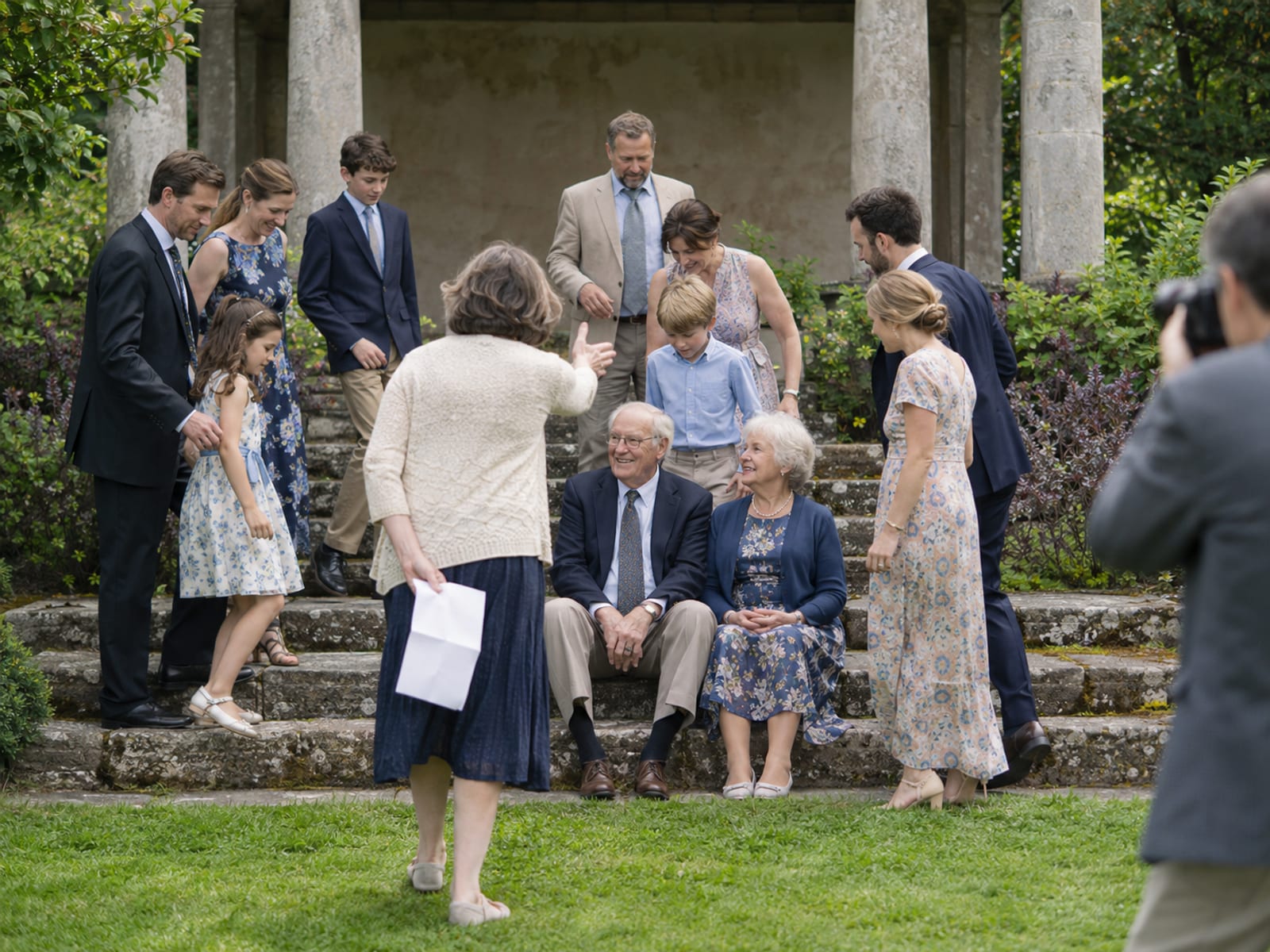
Photos by Siobhan recommends a written list with each person's first name, so the photographer knows who to call, and asks for it a few weeks before the wedding. Its sample runs from grandparents out to immediate family, each side's siblings and parents, and then the couple with additional relatives.
For each group, add a group number, the exact people, a priority level, and a note if children, mobility devices or pets are involved. Note anyone who must leave early, and where the group should gather. Then name one wrangler with a phone number, someone who knows the relatives by face and will call them into place.
Tap or hover a row to highlight it.
| Order | Group | Priority | Note |
|---|---|---|---|
| Order1 | GroupGrandparents with the couple | PriorityHigh | NoteOffer a seat if standing is hard |
| Order2 | GroupYour immediate family and grandparents | PriorityHigh | NoteList every first name |
| Order3 | GroupYour partner's immediate family | PriorityHigh | NoteWrangler confirms everyone is present |
| Order4 | GroupEach side's siblings | PriorityMedium | NoteAdd partners and children if wanted |
| Order5 | GroupCouple with additional relatives | PriorityLower | NoteFirst to cut if time slips |
Two sample timelines, with and without a first look
These are examples from named photographers, not rules. Rob Allen Photography publishes this sample for a Brooklyn wedding with a first look.
Tap or hover a row to highlight it.
| Time | What happens |
|---|---|
| Time12:00 PM | What happensHair and makeup finishes |
| Time12:30 PM | What happensPhotographer arrives, photographs details |
| Time1:15 PM | What happensGetting dressed |
| Time2:00 PM | What happensFirst look and couple portraits |
| Time2:45 PM | What happensWedding-party photos |
| Time3:30 PM | What happensFamily photos |
| Time4:30 PM | What happensHide and freshen up |
| Time5:00 PM | What happensCeremony |
| Time5:30 PM | What happensCocktail hour |
| Time6:30 PM | What happensReception |
| Time9:00 PM | What happensOptional golden-hour portraits |
| Time10:30 PM | What happensFinal dance or exit |
Another example comes from Luisrivlux, published February 2, 2026. It runs a 3:00 PM first look, couple portraits at 3:30, travel and wedding-party photos at 4:30, a 6:00 PM ceremony, cocktail hour at 6:30, golden-hour family photos at 6:45 and the reception at 7:30.
Without a first look, the same blocks move after the ceremony. The table keeps the order and uses the Studio 1 durations; set the clock times with your photographer once you know your ceremony start.
Tap or hover a row to highlight it.
| Block | Where it falls | Published duration |
|---|---|---|
| BlockGetting-ready details | Where it fallsBefore the ceremony | Published durationAsk your photographer |
| BlockCeremony | Where it fallsFixed start | Published durationSet by your venue |
| BlockFamily photos | Where it fallsRight after the ceremony | Published duration15 to 30 minutes |
| BlockWedding party | Where it fallsAfter the ceremony | Published duration30 minutes |
| BlockCouple portraits | Where it fallsAfter the ceremony, near sunset if possible | Published duration30 minutes |
| BlockTravel between spots | Where it fallsBetween blocks | Published durationAt least 30 minutes per move (Rob Allen) |
Photographer guidance from Studio 1, Photos by Siobhan and Rob Allen points to at least 45 to 60 minutes after the ceremony for family, couple and wedding-party photos together, plus travel and delays. Studio 1 suggests family photos before the ceremony when the ceremony is on site, and after it for a church ceremony.
Travel between photo spots, and choosing one compact zone
Map time is not photo time. Rob Allen recommends at least 30 minutes between NYC locations. Luisrivlux describes a nominal 15-minute ride between DUMBO and Greenwich Village becoming 35 minutes on a Saturday.
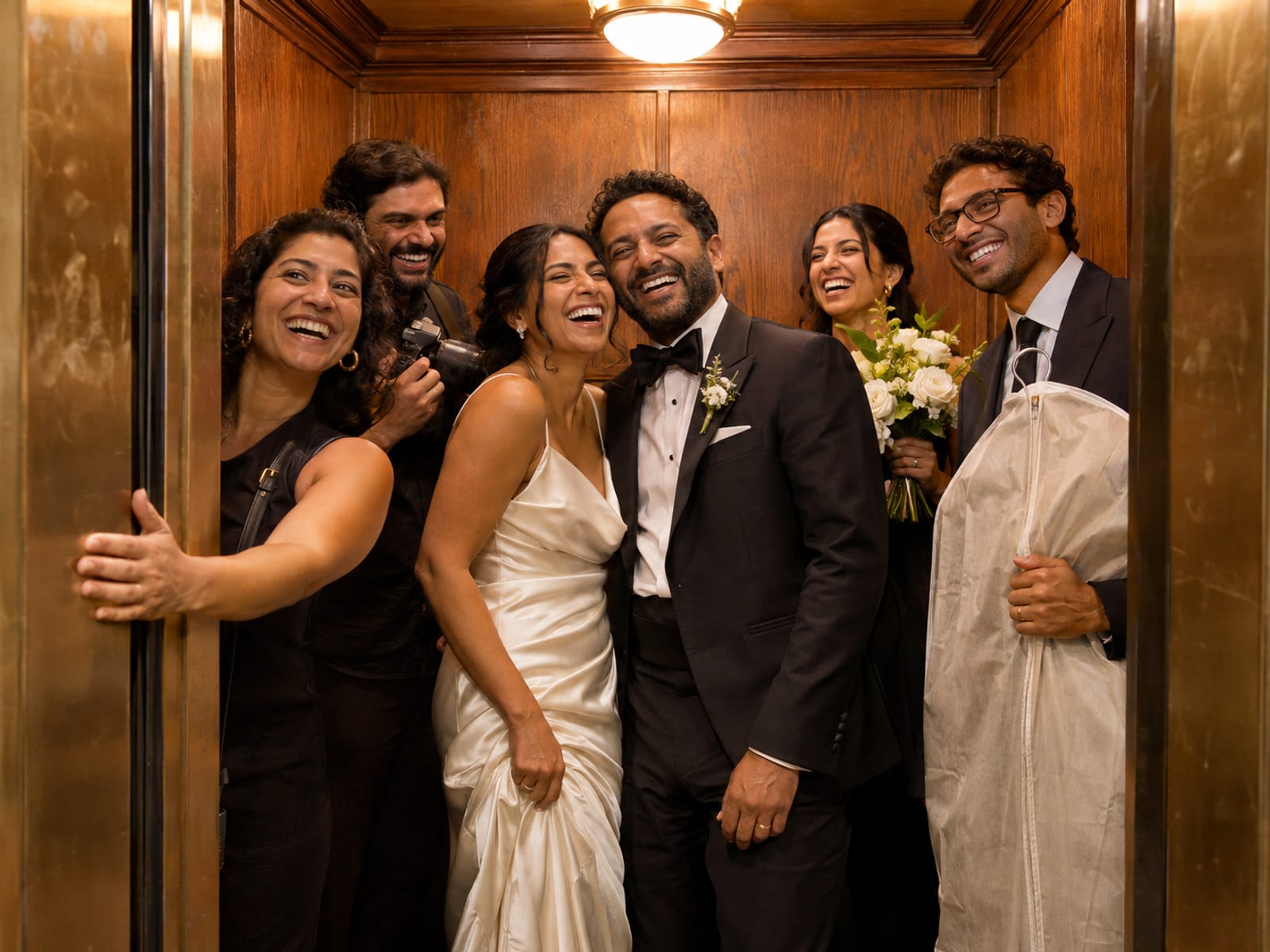
Arrakis Films says Midtown to Brooklyn Bridge Park in late afternoon can take 25 to 40 minutes by car, and suggests 45 to 60 minutes in one focused area, or 90 to 120 minutes across several nearby locations. Add time for changing, walking to the car, loading, elevators, security and crowds, then the walk to the exact viewpoint.
When time is short, pick one zone and stay in it. These neighborhoods work as a single area, and each has its own access rules:
- Civic Center and City Hall Park, close to the Marriage Bureau.
- Central Park.
- DUMBO and Brooklyn Bridge Park. Julian Ribinik Weddings gives 75 to 90 minutes for a DUMBO and waterfront route, and 90 minutes to two hours when Brooklyn Heights is added; those are session lengths, not drive times.
- Battery Park City and the Seaport. Arrakis Films calls City Hall to Battery Park City close on the map but slowed by elevators, traffic, walking and loading.
- Long Island City, including Gantry Plaza State Park.
- Washington Heights, including Fort Tryon Park.
Susan Stripling Photography lists more location examples if you want to compare zones.
Sunset and the season
Use the sunset time for your exact date, not a seasonal guess. Timeanddate's New York table for June 2026 lists sunset at 8:21 PM on June 1, and its December table lists 4:29 PM on December 1.
Tap or hover a row to highlight it.
| Date | Sunset (local time) |
|---|---|
| DateJune 1, 2026 | Sunset (local time)8:21 PM |
| DateDecember 1, 2026 | Sunset (local time)4:29 PM |
In winter, the light you want may be gone by late afternoon, so outdoor portraits belong earlier in the day. Buildings, trees and bridges can also cut direct sun before the published sunset, so allow time to reach your viewpoint and start before the sun is at the horizon.
When a photo location needs a permit or permission
The permit question depends on where you are and what the photographer carries. MOME says a film permit is generally not required for a handheld camera or tripod when you do not claim exclusive use of City property, use prohibited props or ask for production-vehicle parking. MOME's Letter in Lieu page adds that the activity must stay on a City sidewalk, park pathway or bridge walkway and keep pedestrian access clear.
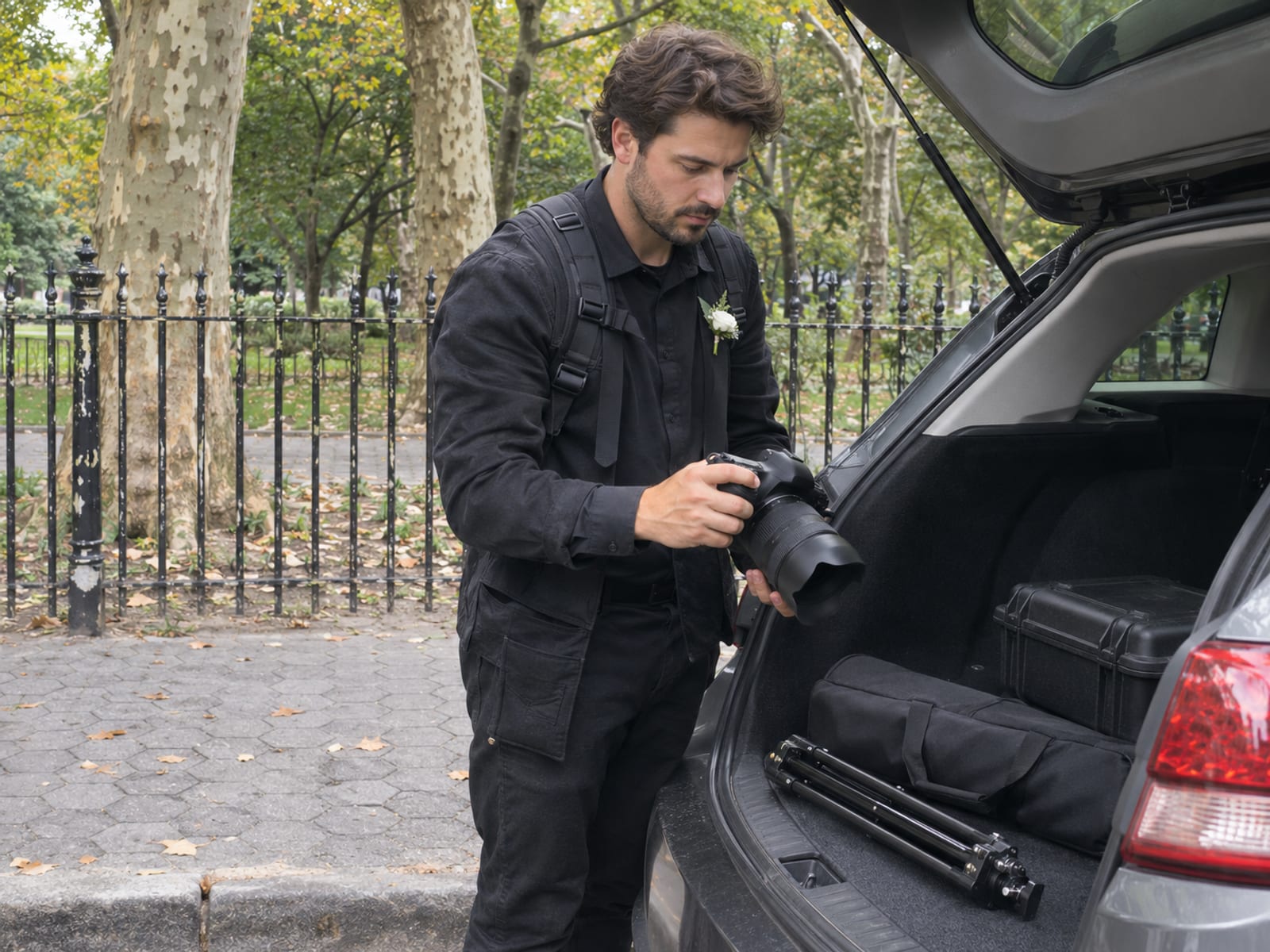
NYC Parks says both a MOME permit and a Parks Media Production Authorization may be needed for equipment beyond a handheld camera or tripod (lighting, drones, generators), crowd control or restricted access, props or stunts, and production vehicles or parking.
For a park, start with the park manager. MOME's park page says to allow at least five business days for a manager's response before submitting the Film Office permit. When a film permit is required, MOME lists a $500 fee per consecutive 14-day period or portion; that is a production-permit figure, not a wedding photo fee.
Some places run their own procedures. MOME lists Battery Park City, Brooklyn Bridge Park, Bryant Park, Central Park, the High Line, Hudson River Park, Madison Square Park and Prospect Park as having separate instructions. A 2022 Central Park Conservancy application for the Conservatory Garden lists $100 for a 30-minute wedding photo shoot and a 25-person limit; confirm both with the Conservancy before you plan around them. For Brooklyn Bridge Park, confirm group size, equipment and setup with the park.
Park ceremonies have their own steps; see park wedding permits in NYC.
A City Hall or short civil ceremony
A short ceremony works best with a short route. Keep portraits close to the building, and choose nearby spots unless your coverage window can absorb travel, since a second neighborhood adds at least 30 minutes each way.
Confirm your appointment time and access rules separately with the Marriage Bureau, and bend the photo plan around those. Decide beforehand which family groups matter most, because a short ceremony leaves little time for a long list.
For specific spots and what each offers, see City Hall wedding photo spots.
What to confirm with your photographer before you lock the schedule
Take these questions to your photographer and write the answers into the timeline that goes to your planner, venue and wrangler:
- What time they arrive, and how long each block (first look, couple, wedding party, families) takes for your group size.
- What format they want the family list in, and who will call relatives into place.
- What travel time they assume between spots, and whether they plan to go by car, subway or on foot.
- Who handles permits or park-manager requests, and what equipment they will bring.
- What the rain plan is, and whether a second photographer is included.
- Which images are the priority if time is lost.
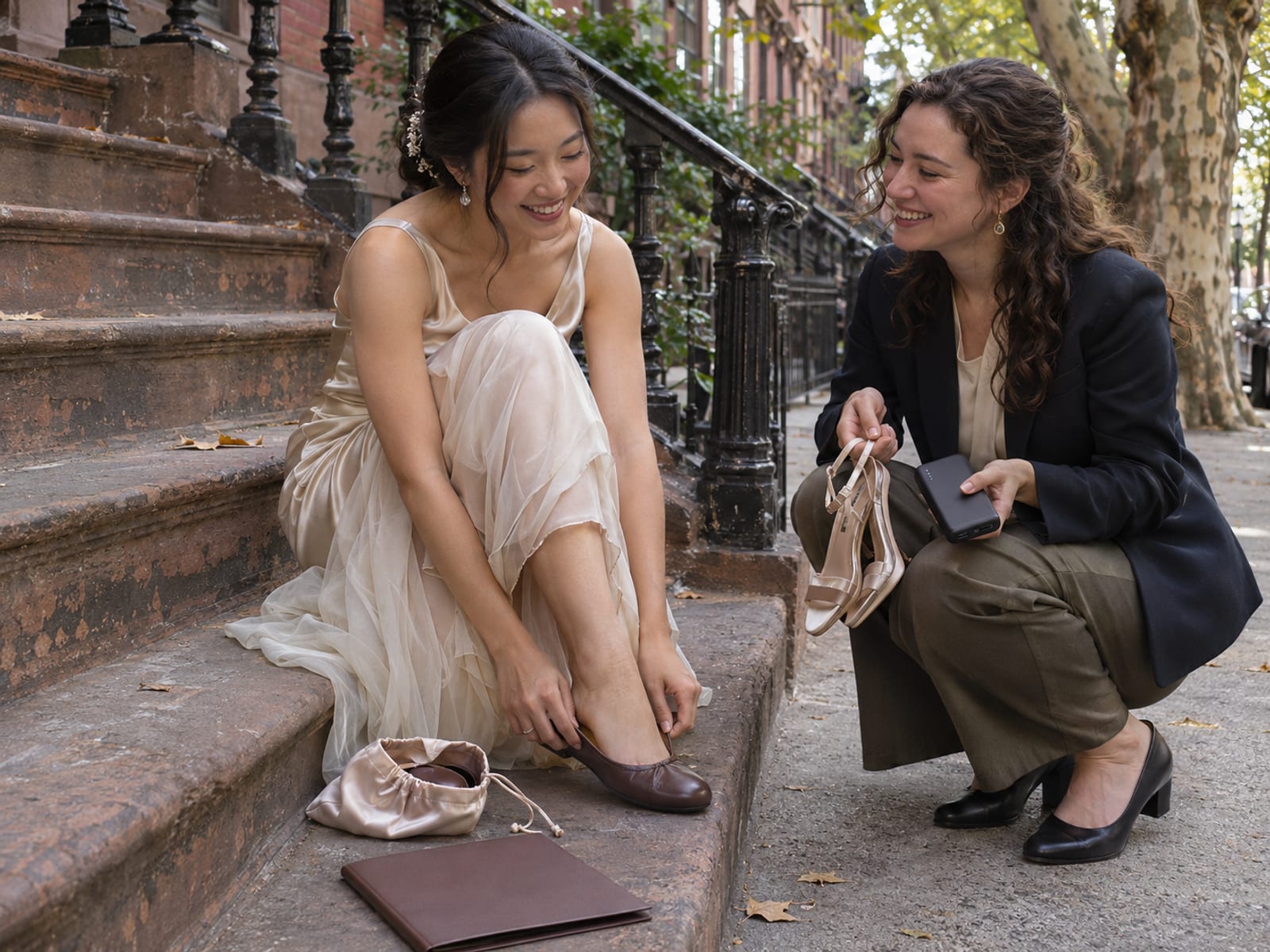
A few practical items help on the day: a folder for the final timeline and family list, a compact power bank for the wrangler, and a pair of foldable flats for the walks between spots.
If you are still choosing someone to hire, how to choose a wedding photographer in NYC covers that step.
Quick check: your photo timeline
Answer every question to check.
Questions couples ask about wedding photo timelines
Can family photos happen before the ceremony?
Yes, if your traditions, privacy preferences and schedule allow it. Studio 1 suggests pre-ceremony family photos for an on-site ceremony and post-ceremony photos for a church ceremony.
What is the best NYC photo location?
The best one fits your time, light, access rules and travel route. Use one main zone when time is short, and confirm the rules for that location first.
How many family groupings should I list?
List only the combinations that matter most, in shooting order, with every person's first name. A shorter list protects both the family block and cocktail hour.
What if the timeline slips?
Cut from the bottom of your priority list, not the top. Tell your photographer which images matter most before the day, so the decision is already made.
Your next step
Send your photographer the ceremony start time, the sunset time for your date and your draft family list, and ask them to turn those into a block-by-block schedule. Then have your wrangler and your planner or venue contact read the same version.
Terms in this guide
Tap a term to see what it means.
First look. A private moment before the ceremony when you see each other, captured by the photographer.