
Getting married doesn't require you to merge your bank accounts, and New York doesn't make every asset or debt you bring into the marriage joint. New York law separates marital property, which is generally what either of you acquires during the marriage, from separate property, which generally covers what you owned before, qualifying inheritances, gifts from someone other than your spouse and personal-injury compensation. The statute has exceptions. You can run joint accounts, separate accounts or a mix of both. For federal taxes, your marital status on December 31 generally decides whether you file as married, and then you choose to file jointly or separately.
Key takeaways
Tap a card to bring it forward.
- No law requires married couples to share a bank account; joint, separate and hybrid setups are all open to you.
- In New York, what you owned before the wedding is generally separate property, and what either of you acquires during the marriage is generally marital, whatever name is on the title.
- Marriage alone generally doesn't make you liable for your partner's premarital debt, but joint accounts, joint cards and joint loans change that.
- Your status on December 31 generally sets your federal filing status for the whole year, and a joint return makes both of you responsible for the tax.
- A prenup is optional in New York; it's worth a conversation with a lawyer if you bring property, a business, an expected inheritance, children or large debt into the marriage.
Start with how you want to run your money, then pick the accounts
It's tempting to open with the practical question of whether to get a joint checking account. The better starting point is the decision behind it: how the two of you want household money to work. The Consumer Financial Protection Bureau frames the task as sharing full information first, then agreeing on a plan, and that order holds whether you end up fully joint, fully separate or somewhere in between.
None of these choices costs anything official. There's no government fee for opening a joint account or choosing a tax filing status. If you hire a lawyer, accountant or planner, their fee is a professional charge, not a state or city one.
Which account setup fits your household
Most couples land on one of three setups, compared side by side below.
Tap or hover a row to highlight it.
| Setup | How it works | Good to know |
|---|---|---|
| SetupFully joint | How it worksBoth incomes go into joint accounts, and household bills are paid from them. | Good to knowEach named holder can generally withdraw, transfer or close the account. |
| SetupFully separate | How it worksEach of you keeps individual accounts and pays an agreed share of shared costs. | Good to knowYou still need clear rules on who pays which bill and when. |
| SetupHybrid | How it worksA joint account covers agreed household expenses, and each of you keeps a personal account. | Good to knowWorks well when incomes differ or one of you has premarital savings to keep apart. |
Two points about joint accounts matter more than people expect. First, a joint bank account generally lets either named holder write checks, withdraw money, move funds or close it, without the other's sign-off. Second, the CFPB warns that a creditor of one holder may try to collect from money in a joint account. If one of you has a debt in collection, that's a reason to talk through the hybrid route before pooling everything.

A joint credit card is a different thing from a joint bank account. The CFPB says each joint cardholder is responsible for the full balance, even for charges the other person made.
Whatever you choose, decide who puts in what (a flat split, or shares based on each income), which expenses count as joint, how personal spending works, how you'll build emergency savings, and who can make transfers.
Property you owned before the wedding
Under Domestic Relations Law section 236, separate property includes:
- Property acquired before the marriage.
- Property acquired by inheritance or as a gift from someone other than your spouse.
- Compensation for personal injuries.
- Property acquired in exchange for separate property.
- Increases in the value of separate property, except to the extent the increase comes from the other spouse's contributions or efforts.
- Property that a valid written agreement designates as separate.
That last exception about increases is the one to keep in mind. If you own an apartment before the wedding and your partner puts money or work into renovating it, part of the gain in value may not stay separate. The New York Courts explain that separate property is not divided in a divorce, which is why documenting it matters. Keep statements showing the balance of premarital accounts around your wedding date, and records of what you owned and what it was worth.
Account title alone doesn't settle the question. New York classifies property by the statute's definitions and where the money came from, so keeping an account in one name doesn't guarantee it stays separate, and depositing premarital savings into a joint account can blur the line. If keeping something separate matters to you, ask a New York lawyer how to hold it before you move any money.
What becomes marital property, and what equitable distribution means
The statute defines marital property as property either or both of you acquire during the marriage, before a separation agreement or the start of a divorce case, regardless of whose name is on the title. A car bought in one name with earnings from the marriage is generally marital.

If a marriage ends, New York divides marital property through equitable distribution. Equitable doesn't necessarily mean equal. A court looks at factors set out in the law, including each spouse's income and property at the time of the marriage, how long the marriage lasted, each spouse's contributions, tax consequences, any wasteful spending of assets, and other factors it finds just and proper. None of that happens automatically at the wedding; it's the default that applies if you ever need it, unless a valid agreement says otherwise.
Section 236 was last revised on January 23, 2026, so check the current text before relying on any detail of it.
Whether you take on your partner's debts
Marriage alone generally doesn't make you personally responsible for debt your partner took on before the wedding, or for debt your spouse takes on alone during it, according to the New York State Bar Association. Creditors may still try to collect from accounts or property the two of you own jointly.
Responsibility can arise when:
- You both sign or apply for the loan or card.
- You're a co-borrower or a joint account holder.
- The debt was taken on for household or marital purposes.
- A creditor has a valid claim against jointly owned money or property.
- You file a joint federal tax return and tax is owed on it.
Keep two questions apart. One is what a creditor can collect under the contract you signed. The other is how a divorce court might divide marital debt. They're answered differently, and a lawyer can tell you which applies to a particular balance. For premarital student loans or cards in one name, the practical step is simple: know the balances, decide whether household money will go toward them, and avoid adding your partner to an account unless you both mean to share the liability.
What changes at tax time
For federal income tax, your filing status generally depends on your marital status on the last day of the tax year. Marry on December 31 and you're generally treated as married for the whole year. Married couples choose between married filing jointly and married filing separately.

On a joint return you combine income, deductions and credits, and the IRS says in Publication 504 that both spouses may be jointly and individually responsible for the tax, interest and penalties due. If both of you have income, run the numbers both ways before you choose.
New York State generally follows your federal choice. The Form IT-201 instructions say you generally use the same filing status as on your federal return, with exceptions, including when one spouse is a New York resident and the other is a nonresident or part-year resident. The state has both joint and separate statuses, with different deduction and credit rules, and the same instructions cover New York City resident tax if you live in the five boroughs.
Marriage is also a good time to review your paycheck withholding, estimated tax payments, and any health insurance marketplace details, and to update your name and address where they change. Filing rules follow the current year's IRS and New York State instructions, and a tax professional can answer questions about your own return.
Quick check: money and marriage in New York
Answer every question to check.
When a prenup is worth asking about
A prenup is not required in New York. It can be worth a conversation if either of you has substantial property from before the wedding, owns a business, expects an inheritance, has children from before, carries significant debt, has complex pay or international assets, or simply wants to define ahead of time what stays separate. Section 236 lets couples make an agreement before or during marriage about property, maintenance and certain other matters, and it has to be written, signed and acknowledged in the way the law requires for a deed.
The terms themselves are a matter for a New York lawyer. For what the law requires and how the process works, read Prenuptial Agreements in New York: What the Law Requires.
A before-the-wedding checklist
Work through this together in the weeks before the wedding:
- List both incomes and where each is deposited.
- List recurring expenses and due dates.
- List every debt with its balance, interest rate and whose name is on it.
- List property, investments, retirement accounts and beneficiaries.
- Identify premarital property and keep records of its value around the wedding date.
- Choose joint, separate or hybrid accounts.
- Agree on how household bills will be funded and who pays what.
- Talk through who is liable on any joint account or joint card before you open one.
- Compare married filing jointly and separately, and adjust withholding if needed.
- Book a New York lawyer about a prenup if your situation calls for one, and a tax professional for filing questions.
- Store account and legal-document information somewhere safe that you can both reach.
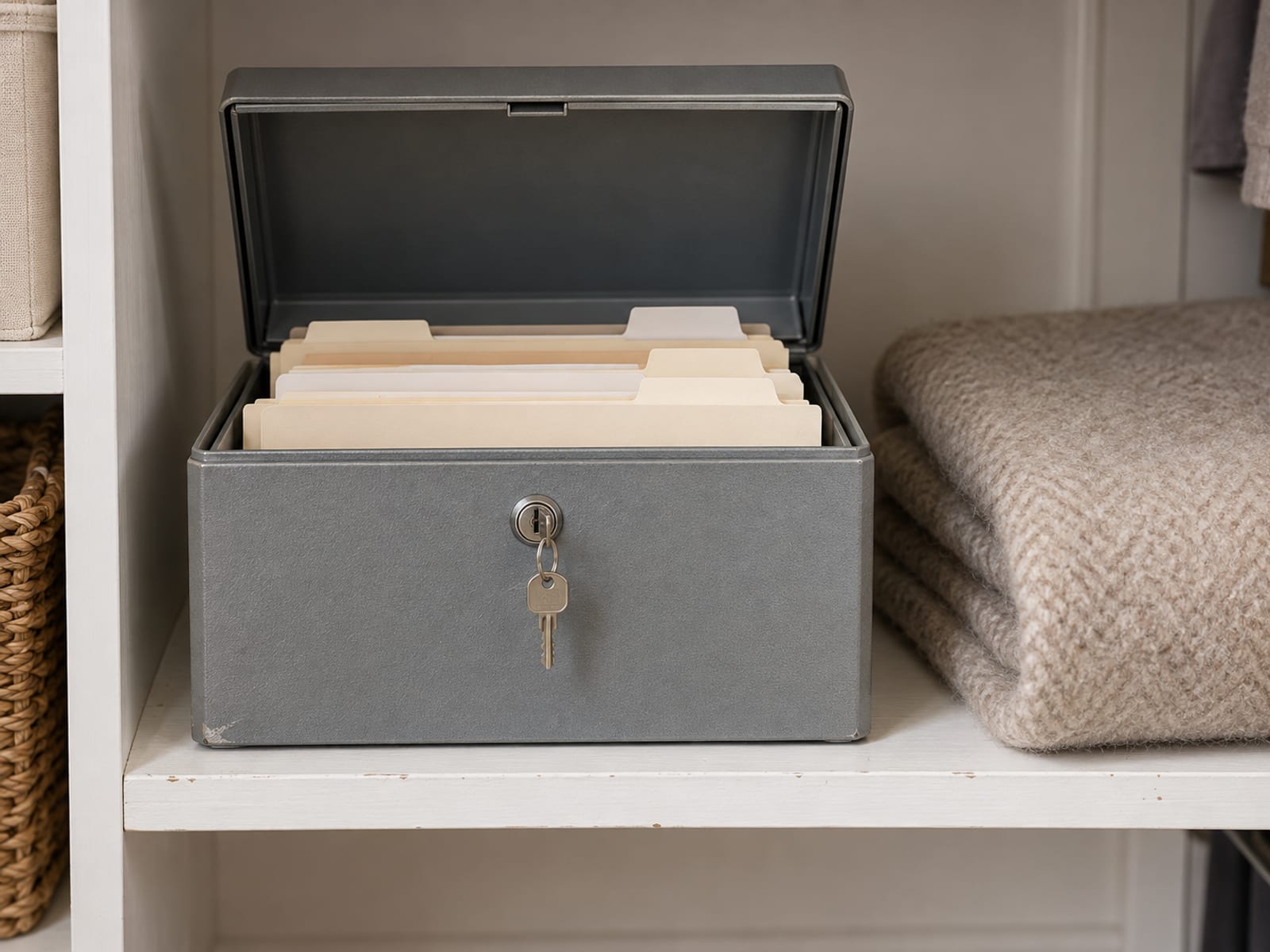
For that last step, a fireproof and water-resistant document box keeps paper records together, and a password manager with two-factor authentication and a clear recovery option makes shared access simple to set up.
Questions couples ask about money before marriage
These cover a few points the sections above don't.
Can a creditor take money from our joint account for one of our debts?
It can try. The CFPB warns that a creditor of one joint holder may seek to collect from money in the account. If one of you has a debt in collection, ask a lawyer before pooling savings.
Does filing separately protect me from my spouse's tax bill?
Filing separately means you aren't signing on to a joint return, and the joint and individual liability the IRS describes in Publication 504 attaches to joint returns. Separate filing can change your deductions and credits, so compare both results with a tax professional before deciding.
Do we both need to be on a joint credit card to share expenses?
No. You can pay shared bills from a joint bank account or split them between individual cards. Adding both names to a card makes each of you responsible for the full balance, so do it only if you both want that.
What happens to an inheritance one of us receives during the marriage?
Property acquired by inheritance is generally separate under section 236, even if it arrives after the wedding. Mixing it into joint accounts or using it on marital property can complicate that, so a New York lawyer is the right person to ask how to hold it.
Who can answer a question about our own situation?
A New York lawyer or the New York State Bar lawyer referral service for legal questions, and a tax professional for filing questions. Court help centers can explain court procedures but don't give advice on an individual case.
Your next step
Set a time this week to go through the checklist together with your statements in front of you. Once you've shared the full list and settled on an account setup, decide whether your situation calls for a prenup conversation, and if it does, start with Prenuptial Agreements in New York: What the Law Requires so you arrive at a lawyer's office knowing how the process works.
Terms in this guide
Tap a term to see what it means.
Separate property. Generally what you owned before the marriage, qualifying inheritances, gifts from someone other than your spouse and personal-injury compensation, under Domestic Relations Law section 236.